





The Phoenix Suns enter this month’s draft holding the number 47 overall pick.
As mentioned in my last piece (linked below), do not be surprised if they look to trade up.
I will break down specific targets if that happens in a follow-up piece to this one. But for the time being, let’s dive into five prospects that make sense for the Suns with their mid-second round pick. There’s a good chance a few of these guys may be off the board when they pick, but also a strong chance that at least one or two of them
will still be there.
Either way, Phoenix will have a chance to add another impactful player, second round or not.
The Prospects
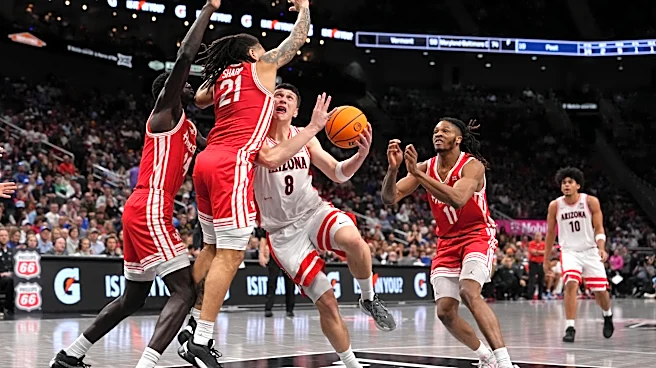
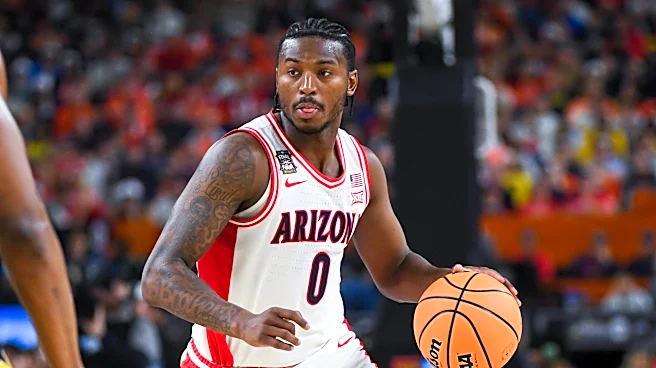
1. Jaden Bradley – Guard, Arizona
2025-26: 13.3 PPG / 4.3 APG / 3.3 RPG / 1.4 STL | 46.3% FG / 39.4% 3PT
Bradley had a full transformation in his senior season. He won Big XII Player of the Year, earned All-Defense honors, and anchored Arizona to the Final Four. He’s an elite paint-touch creator and a defensive disruptor who makes guards uncomfortable from the opening possession, and he does it while shooting nearly 40% from three on volume.
The Fit: Think Jordan Goodwin-ish with more playmaking upside. He’s got some tough shot-making ability, too. Bradley is the physical guard this backcourt rotation needs, someone who doesn’t get rearranged at the point of attack and can handle the dirty, high-intensity assignments that keep the engine running.
2. Alex Karaban – Forward, Connecticut
2025-26: 13.2 PPG / 5.3 RPG / 2.4 APG / 0.8 BPG | 46.4% FG / 37.4% 3PT
Karaban ended his UConn career as the program’s all-time leader in wins, starting all 40 games and leading the Huskies back to the National Championship. At 6’8″, he’s a championship-tested connector. Intelligent defensive positioning. Strong floor spacing at 37.4% from three. High processing speed in transition. He is as plug-and-play as it gets, even if the upside is capped.
The Fit: Karaban is plug-and-play in the modern frontcourt. Phoenix desperately needs floor geometry to free up Devin Booker, and Karaban gives them an instant pick-and-pop threat with the size to compete on the interior and the IQ to keep ball movement alive. He feels more like a James Jones pick to me, but there is a world where they could look to add a stretch big forward.
3. Joshua Jefferson – Forward, Iowa State
2025-26: 16.4 PPG / 7.4 RPG / 4.8 APG / 1.6 STL / 47.1% FG
Jefferson was Iowa State’s hub. He scored, facilitated out of the short roll, and anchored a switching defense. There isn’t another frontcourt playmaker in this draft class who does as many things at a high level.
The Fit: The Suns’ bench has gone completely stagnant in isolation-heavy sets. Jefferson changes that. He connects plays, he forces turnovers, and his instinct to push in transition is exactly what Jordan Ott’s pressure system asks for. Between him and Oso, the secondary playmaking would be off the chain.
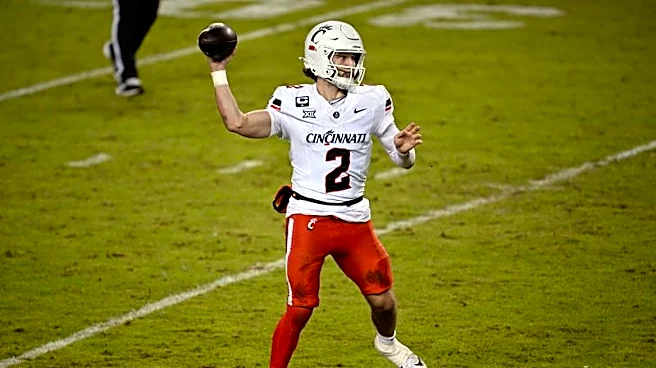
4. Baba Miller – Forward, Cincinnati
2025-26: 13.0 PPG / 10.3 RPG / 3.7 APG | 52.9% FG
Only three players in the country averaged a 13-10-3 line this season. Miller was one of them. At 6’11” with a perimeter-switching wingspan that looks almost unfair, Miller led Cincinnati in points, rebounds, and assists after transferring. His blend of ball-handling and vertical defensive range is rare at that size. He’s one of those players who could make a difference from day one in a variety of ways.
The Fit: Miller is the exact “athletic freak” profile this front office has chased for two years. He can anchor weak-side rim protection alongside Khaman Maluach and still switch perimeter actions without losing his footing. He raises the physical ceiling of this roster in ways depth charts alone don’t capture.
5. Keyshawn Hall – Forward, Auburn
2025-26: 19.3 PPG / 7.1 RPG / 2.6 APG | 45.1% FG / 37.9% 3PT
Hall set an Auburn program record with 228 free throws made. He earned Third Team All-SEC honors and ranked fifth in the SEC in scoring. He punishes contact, stretches the floor at 37.9% from deep, and has the frame to post up smaller defenders without adjusting his game. There’s a lot to like in his game from a physicality standpoint, but how much bullying will he be able to do at the next level?
The Fit: When Phoenix plays a team that decides to make the game physical, the Suns have often looked talented but brittle. Hall doesn’t absorb that treatment. He dishes it out. He hits corner shots when help collapses inside, and he creates foul trouble for opposing wings who think they can body him.
Who do you like best from this group? Who do you want covered next? Let us know in the comments.