
gambit – noun
a chess opening in which a player risks one or more pawns or a minor piece to gain an advantage in position
Now, if your mind immediately went to the Marvel Comics character and you were confused, fair enough. Here’s the clip you likely thought of, so we can all feel better and get to the heart of the essay.
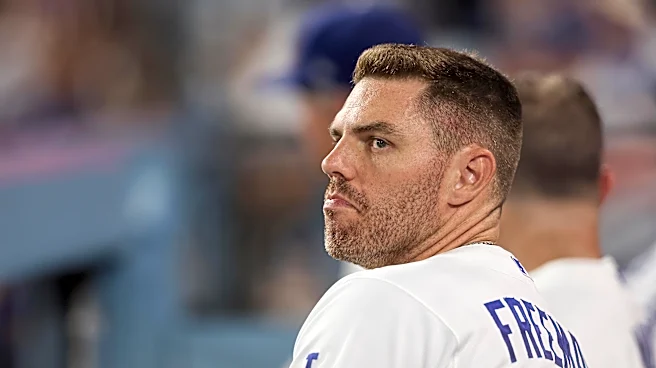
And for the record, Freddie Freeman is hardly a minor piece, but giving up a major piece for tactical advantage is called a sacrifice, which wouldn’t be appropriate given the circumstances
here, as Freeman returned to the lineup for the September 15 game against the Cincinnati Reds.
A funny thought occurred to me while watching Freddie Freeman these last few months:
“Where did his power go? He sure seems like he’s hitting into more double plays than I remember.”
Looking at Freeman’s stats for the year, apart from the power and RBI numbers being down a bit, nothing looks amiss. Honestly, I originally dismissed the feeling that something was wrong because Freeman was hitting up a storm for about a month after the All-Star Break.
There wasn’t much power behind it, but when someone has a slash line of .367/.402/.411 over 24 games starting from the All-Star Break, pointing out fault feels like searching for a fly in the ointment. Yes, Freeman only had four doubles, eight RBIs, and nearly three times as many strikeouts as walks, but the overall body of work looked pretty good.
Freeman had a solid couple of games in Denver where he hit for doubles power and used the entire field. However, since the Denver series, where Freeman was hitting for average, he’s just not.
When you aren’t hitting for either average or power, alarm bells tend to finally ring.
Power drained
On September 9, Freeman was kept out of the lineup for right knee soreness and was considered day-to-day. To his credit, Dave Roberts did mention Freeman’s slump on September 9.
Roberts said there was no one incident that caused Freeman’s knee soreness, but he believes it has impacted his performance at the plate lately.
“Freddie does a really good job of hitting against his front side, and then when you can’t do that with your front side, your right knee, then you’re compromised,” Roberts said. “I see there’s a lot more swing-and-miss the last few days. That’s just not who he is.”
In the 18 games since the Colorado series until the start of play on September 15, Freeman has a slash line of .215/.338/.292. He does have his only home run of the second half, and his strikeouts-to-walk ratio is about 1.5/1 instead of 3/1 earlier in the year.
The problem is more of the eye test: Freeman is starting to finally look, and maybe move, like his age.
The splits on Baseball Savant from last year to now tell a pretty glaring tale: if you want to beat Freeman in 2026, go low and in. Also, Freeman feasted on center-cut pitches last year, not so this year.

I’m not a hitting expert, but having a diminished knee would make it harder to rotate to hit stuff middle in. On the September 13 broadcast of the finale against the Miami Marlins, Dontrelle Willis pointed out how Freeman is compromised rotationally generally, as pitches he would normally drive the other way are being weakly hit.
Even after Freeman hit a career-high and now league-high in double plays on Sunday, the Dodgers are not seriously entertaining putting Freeman on the injured list, per Katie Woo of The Athletic:
“I think it’s one of those things where we’ve got to manage it … just pick spots to give him an off day here or there,” Roberts said. “Again, we’ve just got to make sure he’s at optimal health when we finish the season. So I think that he might not love it, but giving him a day off here or there might be beneficial.”
The Dodgers don’t believe an IL stint is necessary. Instead, Roberts is working in frequent off days. That’s rare for Freeman, who hasn’t played in fewer than 147 games in any season as a Dodger. Freeman had a scheduled day off over the Dodgers’ previous nine-game homestand and also served as the designated hitter twice in that span. He wasn’t in the lineup in the last game of the homestand on Wednesday, and following a team travel day, he also sat out Friday’s game.
[Emphasis added.]
Freeman insists he feels fine.
Freeman hitting into two double plays and having a key miscue that contributed to the season and series loss to the Miami Marlins seems to indicate otherwise. It’s worth noting that Freeman hit another tailor-made ground ball to second on a pitcher’s pitch in his final at-bat that likely would have turned into another double play had Mookie Betts not doubled earlier in the frame.
At least, Roberts isn’t buying Freeman’s diagnosis.
“Just talking to him today, he said he felt good,” Roberts said. “Obviously, the swings don’t indicate that, don’t validate that. On the defense, he’s obviously not moving as well as he’s used to.
“I think that he’s doing anything and everything he can to prepare. But yeah, the last week, it’s pretty obvious that he’s not himself in the box.”
Freeman won’t be in Monday’s starting lineup, Roberts said, but should play Tuesday…
[Emphasis added.]
Much like the sense one had when watching the Americanized remake of the original 1954 classic Gojira, Godzilla: King of the Monsters, one would expect a sense of deja vu right now, even with character actor Raymond Burr long dead.
Japanese Original, American Remake
I am typically not one to mince words, and I shall not do so here. Along with Dustin Nosler of Dodgers Digest, I was dead on the money regarding the Dodgers’ malpractice in not acting decisively on Ohtani and his reluctance to admit injury in the face of personal dogma of success.
I argued that the Dodgers had bungled spectacularly, and events worked themselves out to prove my initial hypothesis correct on all fronts. Now the team has backed itself into a corner regarding Ohtani.
Contrary to what some might think, I did not enjoy being right. Frankly, I am correct often enough that I do not need the constant validation, unless it comes from either the Dodgers broadcast team or national media. (In which case, gimme.)
On September 11, Katie Woo of The Athletic wrote an op-ed recently that pulled few punches:
Nobody is blameless in the Shohei Ohtani injury saga. Not the Los Angeles Dodgers’ front office, which should have been more proactive in protecting the team’s biggest star. Not Ohtani, who downplayed the severity of his symptoms. And while hindsight is always 20-20, there were warning signs throughout the last few weeks that suggested a stint on the injured list was the safest course of action if the organization wanted to give its prized star the best possible chance at healing in time to begin the Dodgers’ quest to win three straight World Series.
As the Dodgers prepare to be without Ohtani until Sept. 23 at the earliest, their biggest concern has become a reality. When Ohtani — who is expected to be placed on the injured list on Friday — does return, there is no guarantee he’ll be in optimal condition for the postseason.
[Emphasis added.]
Um, excuse me? To quote one of the finest bits of media from the 2010s, I get to channel Chris Taylor for once and declare the following:
I know, Ms. Woo means nobody relevant, but words matter, and any excuse for referential comedy is a good one.
“I think that if it were a postseason game tomorrow, (Ohtani) would be in the lineup,” manager Dave Roberts said Wednesday afternoon, hours before announcing Ohtani would be placed on the IL. “I think that now you’re talking about two weeks, 14 days. I feel that that’s substantial. He’ll be in a much better place than he was today. Is it going to be to 100 percent? Probably not. But I do think that with this time that we’re taking now he’ll be in an adequate spot to finish the season.”
Adequate is a far cry from healthy. It is fair to question how Ohtani was handled in the second half. Should he have attempted a pitching comeback, knowing his physical health was limited? Should the Dodgers have stopped that push sooner, or placed him on the injured list earlier? In their first season of managing Ohtani as a full-season two-way player, there was always going to be some trial and error. That was acknowledged from the start of the season by both Roberts and president of baseball operations Andrew Friedman. And in fairness, there was a cognizant effort to keep Ohtani as rested as possible, including a season-long six-man rotation and an attempt to maneuver Ohtani’s starts to line up on games prior to a team off day, when possible.
Hindsight is generally 20/20. I am sure if the Dodgers were armed with foreknowledge in a do-over, they would not have Ohtani’s best pitching starts of the year be in Houston and San Francisco … in May.
At the risk of retreading previously covered ground, we shall conclude this portion with Roberts’ regret, especially considering that Ohtani tweaked his arm in his last played game and did not immediately tell anyone about it:
Looking back, it is something Roberts wish happened a week ago.
“I think if we look right now, here today, I would love to go back and put him on the IL,” the manager said. “But I did feel at that moment in time, we all felt that giving him four days was sufficient. He was agreeable. Getting him out there on Monday with the hope that he would be able to play tonight. But where we’re at right now, sure.”
The Dodgers should have followed their own advice or learned from their handling of Ohtani to send Freeman back to Los Angeles for ten days before arriving in Cincinnati.
They didn’t.
The Dodgers have calculated that whatever value Freeman can generate in the waning days of the season is greater than the potential benefit of having Freeman recuperate for ten days, having three days against the already-eliminated San Francisco Giants to use as a tune-up. Hence, the title of this essay: the Freeman Gambit.
Yesterday’s game showed promise, even with a couple of moments that made one grimace. Freeman talked about how his three-hit performance likely ensured he would play on September 16.
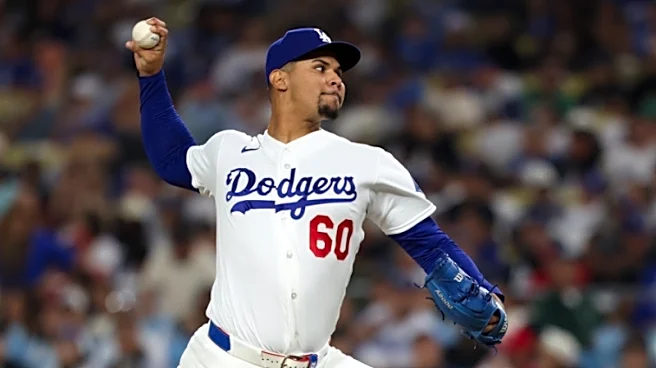
Fabian Ardaya of The Athletic reported Roberts’ comments on the health issues of players like Ohtani, Freeman, and Edgardo Henriquez after the Dodgers clinched their fourteenth consecutive postseason appearance:
“I think right now it’s front of mind, it’s not great,” Roberts said. “But I will say this: Once you get to October, athletes have a magical way of feeling better. It happens every single year, where there’s that extra adrenaline that athletes get when you get to the postseason.”
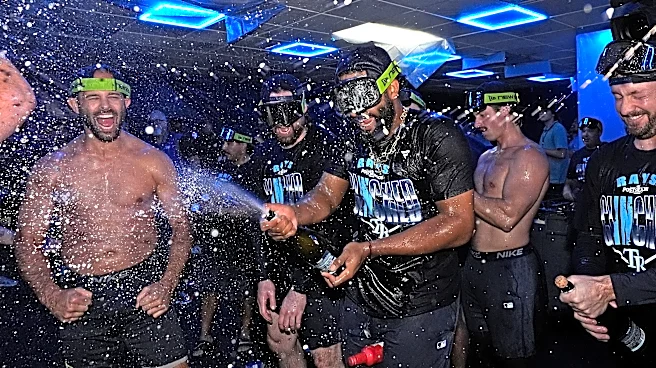
The Dodgers still boast what is likely baseball’s most talented roster and an established track record of postseason success that might be enough to make history. That was the heart of Roberts’ toast: that the Dodgers have not yet played their best baseball.
They still can.
“We just haven’t really gotten everyone all synced up at the same time,” Muncy said. “So it is a scary thought to think what we could possibly do if we did that. So hopefully that’s still ahead for us at the right time.”
Whether the Freeman Gambit pays off over the next two weeks before the upcoming postseason tournament is an open question. Gambits are risky, even when they work.