
HONOLULU – Read the box score from Saturday night and Hawaii won most of the volume stats. It lost the ones that decide games.
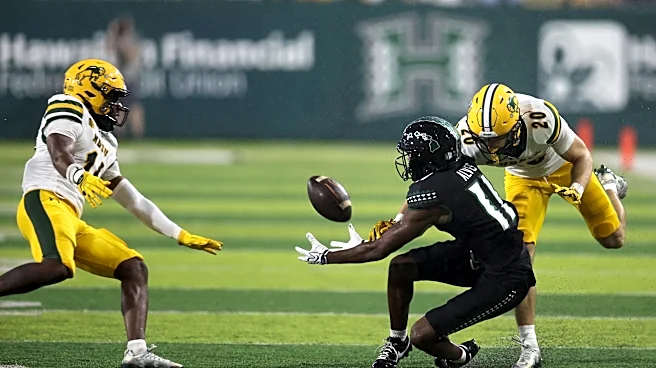
The Rainbow Warriors had more first downs (18-12), more yards (262-183) and more plays (73-56). They forced four three-and-outs to North Dakota State’s one. Two lines explain the 21-13 Bison win at the Ching Complex. Points off turnovers: NDSU 14, Hawaii 0. Red zone touchdowns: NDSU 2-for-2, Hawaii 1-for-3.
That gap says a lot about two fan bases that care equally but are living
very different seasons. One came in with real hope after 2025. The other is an FBS newcomer that already acts like it’s been here for years.
Defense runs on energy, offense runs on precision
Hawaii’s defense did its job. NDSU had outscored opponents 59-9 in third quarters this season. Hawaii held the Bison scoreless in the third and kept them to 2.4 yards per carry on 36 runs.
Hawaii linebacker Jamih Otis saw the matchup coming: “Our opponent this week kind of matches with our identity: fast, physical, downhill.”
He was half right. The defenses matched. The offenses didn’t.
Effort carries over on defense. Eleven players flying to the ball can cover a lot of mistakes. Offense needs protection, timing, reads and checks to line up on every snap, where one late piece kills the play. You can’t hype your way out of a missed check against a bear front. SJSU fans have watched the same trap all fall.
Hawaii ran 26 times for 31 net yards and lost 48 yards on those carries. With no run game to worry about, the Bison front teed off for eight tackles for loss, five of them sacks. Hawaii’s defense didn’t record one.
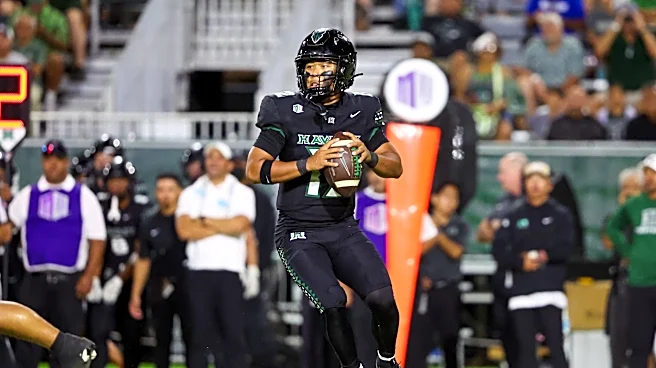
Hawaii quarterback Micah Alejado went 31-of-47 for 231 yards, with no touchdowns and two interceptions. Both picks became NDSU touchdowns. NDSU’s Logan Larson picked off the first, setting up a 7-yard score from the 11. Bison linebacker Ray James Jr. took the second one back 49 yards for an eight-point lead with 6:27 left. Alejado held the ball too long all night, the classic sign of a quarterback trying to do too much. He looked best on sprint rollouts, where he could actually see the field.
Two offensive coaches leaning on defense
Both head coaches are offensive minds. Tim Polasek built his name as an offensive coordinator at NDSU and Wyoming, with a stint coaching Iowa’s offensive line in between. Timmy Chang is Hawaii’s record-setting run-and-shoot quarterback, and Saturday’s game was dedicated to June Jones, the coach who made that offense famous in Manoa and died Oct. 28.
Neither offense showed up. Hawaii settled for 28 and 33-yard field goals on two third-quarter trips inside the 20. Bison quarterback Nathan Hayes completed 13 of 20 passes for 97 yards.
The difference is what each team falls back on when things get ugly. Trailing 13-7 late in the third quarter, the Bison didn’t get fancy. They ran a 16-play, 77-yard drive that took 8:37 off the clock and ended with a 1-yard touchdown by Bison running back DJ Scott. It wasn’t pretty. It’s who they are.
The defense behind that drive came to Honolulu ranked second in the FBS in scoring defense (11.9 points per game), total defense, pass defense and red zone defense. James’ pick-six was the Bison’s fifth defensive touchdown of the season. When your defense scores, your offense only has to avoid losing the game.
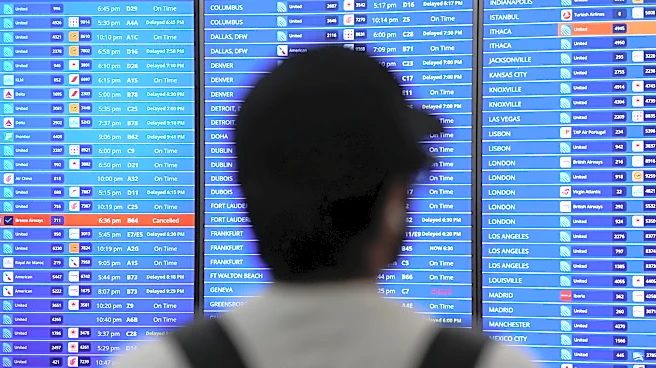
Polasek’s message before the trip was “there is no rearview mirror, there is no big picture.” His team lived it. The charter landed roughly 13 hours late, before dawn Friday, with players stretching on the tarmac at 5 a.m. They still won the fourth quarter 14-0.
The ecosystem behind the identity
The green-and-gold section, well over a thousand strong, didn’t happen by accident. NDSU’s 10 FCS national titles trained a fan base to make January road trips to the championship game. More than a decade of winning built that habit, along with the booster money, recruiting pull and roster continuity that come with it. Winning is still the cheapest NIL pitch out there.
Hawaii has fewer of those shortcuts. The ‘Bows will log about 37,000 air miles this season, roughly double NDSU’s 18,906 and their fans can rarely afford to follow. Home games are played in a 15,014-seat campus stadium, and Saturday’s crowd was announced at 12,005. If fans can’t travel, home field has to be the advantage, and Hawaii is now winless at home in conference play for the first time since 2015.
That’s why losing the 2025 momentum hurts for Hawaii. A first winning season since 2020, a Hawaii Bowl win over Cal and 24 touchdown passes from Alejado built real expectations. Now the ‘Bows are 3-7 and can’t reach bowl eligibility and Chang has his fourth losing season in five years.
Chang said before the game his team would be “tested physically, mentally.” Hawaii’s defense passed the physical test. Its offense failed the mental one, where you protect the ball and take what the defense gives you.
The fix isn’t a reinvention. It’s a floor: a run game that keeps a pass rush honest, a quick game and more rollouts so Alejado can see. That starts with the offensive line, which is less glamorous than chasing the next transfer quarterback and lasts longer.
In Fargo, winning built the fan base and the fan base pays for more winning. Hawaii has the passion but not that loop yet. Until its offense can stand on its own, Hawaii will keep losing games its defense keeps close.
Hawaii visits Nevada on Saturday. NDSU, 8-2 overall and 5-2 in the Mountain West, stays in the title race and comes to San Jose State on Nov. 27.