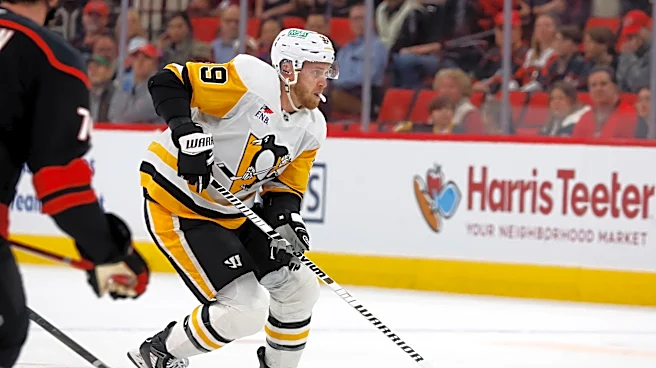







Kyle Dubas mentioned earlier this offseason that if the Pittsburgh Penguins are not able to complete a major, blockbuster move, they might need to focus on rebuilding this thing brick, by boring brick. That can take on a lot of different forms, and one of them for the Penguins under Dubas has been their willingness to take on bad contracts (or just simply helping teams out of their salary cap messes) and getting draft picks for the cost of doing business.
Dubas has been moderately successful with
that process over the past couple of years.
Some of the examples:
- In the summer of 2024 he acquired a 2025 second-round pick from the St. Louis Blues for taking on the remainder of Kevin Hayes’ contract. He then traded that pick back to the Blues for a 2026 second-round pick and a 2025 third-round pick to allow the Blues to offer sheet Dylan Holloway. It all still turned out to be a net-win for the Penguins, especially since that 2026 second-round pick was one of the main pieces used to acquire Egor Chinakhov from the Columbus Blue Jackets.
- That same offseason he acquired third-and sixth-round picks from the Nashville Predators to take on the remainder of Cody Glass’ contract. Glass was then eventually traded to the New Jersey Devils for another third-round pick (as part of a larger deal that also included John Gruden and some minor league’s coming back to Pittsburgh). They turned Jordan Frasca (who went to Nashville as part of the original Cody Glass trade) into three draft picks, including two third-rounder selections.
- This past offseason they acquired future second-round picks for taking on the contracts of Connor Clifton and Matt Dumba.
- During the season they took on a second-round pick to take Sam Girard’s contract from Colorado, while sending Brett Kulak’s expiring deal the other way.
These are not all apples-to-apples trades, because in some of them there were other players involved, and perhaps even some hockey layers to it. But it was still a case of the Penguins using their salary cap space to buy draft picks.
Given the rising salary cap in the NHL this offseason, there have not been as many teams in salary cap trouble that need that extra relief this summer.
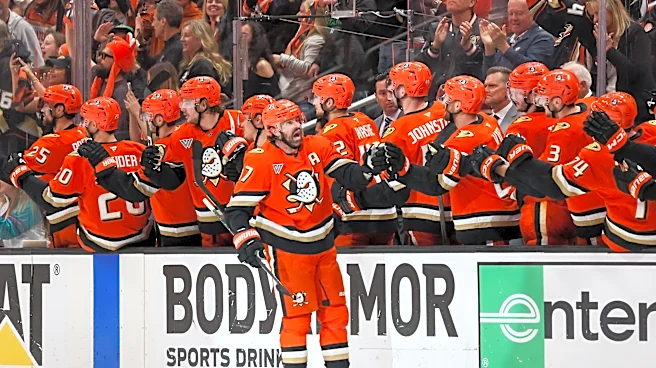
The Anaheim Ducks, however, have become one of them.
The Leo Carlsson offer sheet, as well as the threat of an offer sheet for defenseman Pavel Mintyukov, has rapidly eaten up most of their salary cap space that existed this offseason, while they still need to get Cutter Gauthier re-signed and figure out ways to upgrade their defense.
The cap space offseason? It is going away. Fast.
In future seasons? There is less flexibility.
Given that the Ducks have three second-round picks in 2027, it is enough to wonder if maybe there is a chance for the Penguins to add another boring brick if they could help out the Ducks.
Would Anaheim be desperate enough to move one of those picks to get the Penguins to take on the contract of, say, Alex Killorn? Or perhaps a Chris Kreider? Or how about the remaining two years of Frank Vatrano at just over $4.5 million per season?
The argument against this is the reality the Penguins are already full of forwards on their roster, and might even need to eventually move one or two to create some space. They don’t really NEED more forwards.
My counter point to that is … who cares? I still maintain the Penguins are, in fact, looking ahead to the future more so than they are this season, and even if they want to be competitive this season and avoid a full-on tank, they should still be looking for ways to add more future assets. This would be an easy way to do that.
I think it would be worth it to take on one of those contracts if you could, say, get Detroit’s second-round pick away from the Ducks.
Especially when there is a chance you could take that veteran player (whether it be Killorn, Kreider or Vatrano) and potentially build their value up into something meaningful where you could get even more picks for them at the trade deadline if it comes to that.
It’s not necessarily just the fact that the Penguins could potentially give themselves more draft picks. It’s the reality those picks can also be used as future trade assets. Assets that can potentially be used to take chances on talented players that might need a fresh start. More assets to maybe be the final piece of a larger trade. More assets to give yourself more swings at finding a successful draft pick. It is not overly exciting. But it is absolutely and most definitely practical.
It is something I would be looking into, even if there is no obvious spot on the roster right now for another forward. You can make wrong. Especially if it helps land you another potential long-term asset for what would basically be almost no cost.