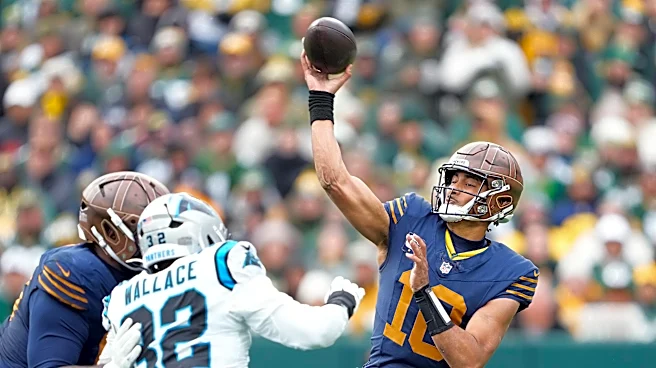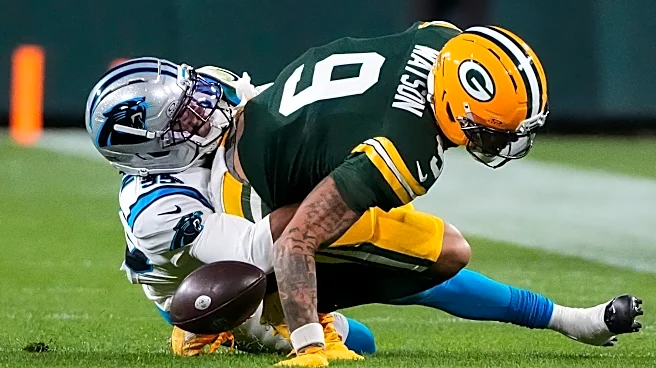




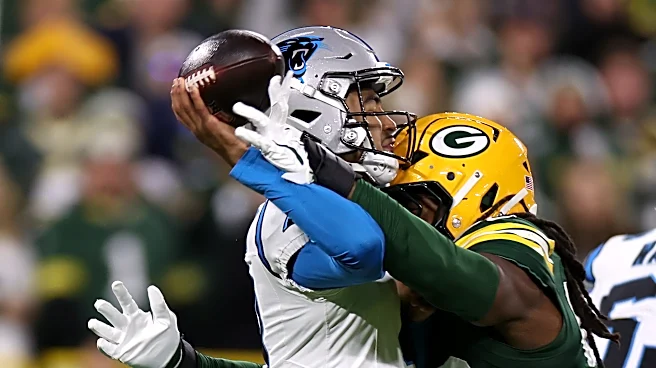
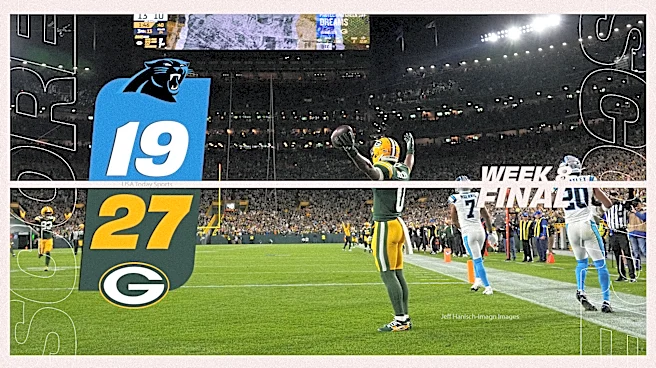

As we do every week in this space, we’re looking at some stats from the Green Bay Packers’ most recent game, courtesy of SumerSports. Today we’re looking at the 27-19 win over the Carolina Panthers in Week 8.
First things first: it’s the first time in history the Packers have won a game directly following a Brewers World Series victory, so that’s certainly worth celebrating on its own merits (enjoy the parade, everybody).
Offense
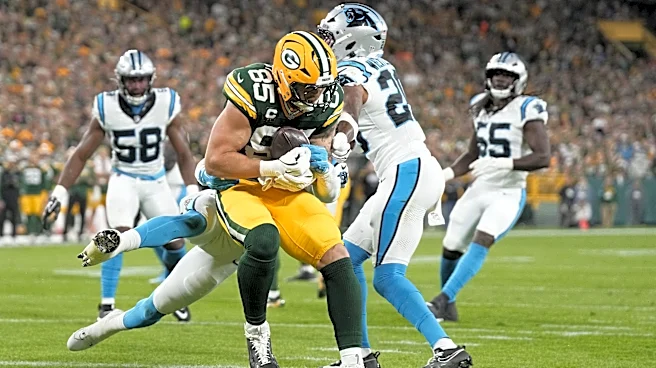
SumerSports does not have this listed, but it is (I believe) the first time in
history that a game-clinching catch was made by a receiver who was taken to the hospital mid-game. When you hear things like “that won’t show up in the box score,” I believe this is what they’re talking about.
This was a game where I found myself saying, “it certainly looks like Jordan Love has time to throw,” only to check the numbers later and find out that it was not true. On the game, Love averaged 2.32 seconds to throw, 0.39 seconds below the NFL average. When he held onto the ball, it wasn’t necessarily for a long time: his average time to pressure was 2.5 seconds.
In part due to the quick time to throw, Love was able to stay relatively pressure-free in this game. Despite the Panthers blitzing on 43.9% of his dropbacks (13.6% above the NFL average), Love was only pressured on 31.7% of his dropbacks (7.3% below the NFL average). That’s a walk in the park compared to what he’s been seeing this year.

In this game, Love was actually better against the blitz (+0.38 EPA per Play) than when he wasn’t blitzed (-0.17 EPA per Play). In an inversion from what we’ve been seeing, Love was better on early downs (+0.14 EPA per Play) than he was on late downs (-0.06 EPA per Play).
I’m curious if these numbers would look any different if Josh Whyle had stayed in the game, but the personnel mix from the Packers looks similar to how it looked last week. The main difference is that they essentially replaced the 13 personnel usage (1 RB, 3 TE, 1 WR) with 12 (that absolutely feels like it would be different if Whyle had played the full game).

The pass rate was high last week (70.8% in Week 7), and I expected that to continue this week. Despite a lackluster run game (again), they were at 61.2% pass rate this week. That holds fairly consistent from quarter-to-quarter. If you strip out the red zone it’s still in that range: they had a 64.3% pass rate outside the red zone this week. Coming into the game, the Panthers’ run defense was much worse than the pass defense, so this feels like a response to that.
It didn’t work. The run game was – once again – really bad. They gained 66 yards on 26 attempts (with 40 of those 66 yards coming after contact), for an EPA per Play of -0.12 and a Success Rate of 30.8%. They had a positive EPA when running Man (most likely just Duo), but nothing else touching positive EPA. Basically, good when running Man concepts, fine when running Inside Zone, terrible when trying anything else.

Christian Watson had a monster day: 8 catches (on 10 targets) for 113 yards (+0.20 EPA per Reception). His target % in the red zone was 0%, which feels like a problem. If you look at the best red zone scoring offenses, they typically have at least 1 of these 3 things:
- A quick-twitch running QB
- A good running game
- A freak WR
Love can move once he starts rolling, but he’s not a quick-twitch running QB. We know they don’t have a run game. Watson fits the bill as a freak WR, and he has had success in this area in the past. I’d like to see some more targets for Watson in this area going forward. Coming into this game, the Packers were scoring TDs on 51.7% of their trips to the red zone, 22nd in the league. It can be tough to score in the red zone, but targeting your tall WR could be a nice place to start.
Matthew Golden’s drop monster reared its ugly head again, but he also turned in a very nice day.

He’s already a problem for opposing defenses. If he can stop dropping passes every game, he’s going to be an absolute demon. (He didn’t really have drop issues in college so it’s baffling that this keeps happening. I keep waiting for the drops to clean up and they just haven’t yet.)
Defense
Despite the Panthers only being in 11 personnel on 60% of their offensive snaps, the Packers played Nickel on 72.9% of their defensive snaps. Typically when they play base, they take Javon Bullard off the field and I am not a fan of defensive alignments that don’t have Bullard. I’m curious how much of this is because of Zaire Franklin’s absence. And, if it is, will this approach change when Zaire is back? They’re a better defense with Bullard on the field, so I like seeing numbers like this.
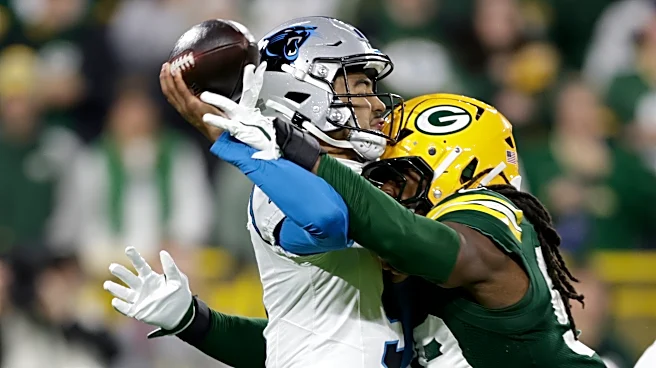
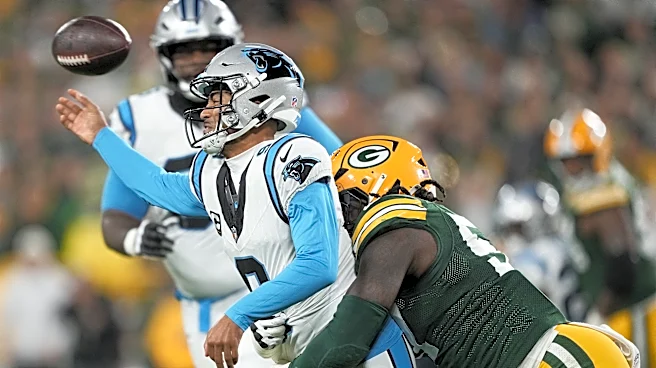
I mentioned Love’s time to throw earlier: Bryce Young did not have a much better day. The Packers blitzed on 31.9% of his dropbacks (1.6% above the NFL average) and pressured Young on 51.1% of his dropbacks (12.1% above the NFL average). Young averaged 2.57 seconds to throw and had an ADOT (Average Depth of Target) of 4.6 yards. In other words, he was pressured a lot and was looking to check it down when pressured. When kept clean, Young had an EPA per Play of +0.17. However, when pressured, he dropped to -0.54 EPA per Play.
Contributing to that pressure was Dani Dennis-Sutton, whom I love dearly. He posted a team-best pressure rate of 26.3%, with an average time to pressure of 2.11 seconds.

After a couple of lackluster weeks, Lukas Van Ness showed up in this game as well.

Albums listened to: Sennen – New Quiet; Fenne Lily – Win Win