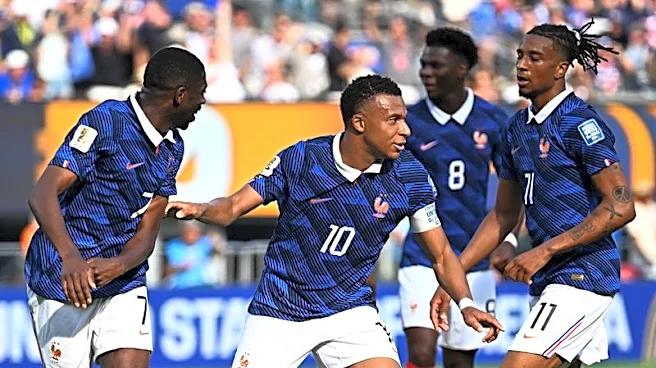








As with most of us football nuts, I’m watching a lot of the World Cup and being entertained by most of it — especially when keeping an eye on all the Sunderland players involved.
However, what I’m not enjoying are the Americans trying to turn it into a game of four quarters; even some of the commentators are now saying things like “That’s the end of the third quarter.”
No!
Coincidentally, this week, I was sent a published paper on half times — more specifically, “What Are The Purposes And Dynamics Of
Half Time, And How Do These Influence Performance In The Second Half?” and I had my eyes opened by some of the points made.
There hasn’t been a lot of research done at all on the impact of half time. There have only been nine published papers and of those nine, only three are about elite football. Research was done with access to top clubs (some in the Premier League) by talking to players, coaches and analysts amongst others.
Firstly, who are half times for?
I would’ve thought that any break in any sport was for the players. But the research shows that if you look at the design of a half time, most coaches will say it’s for them (and their egos!) to get points across to the players.
The structure of a half time hasn’t changed a lot in decades, but the world has moved on a lot in that time. Top teams now have a huge backroom staff, all having and wanting an input and an impact on how the team performs.
From talking to analysts, their point of view is that half time is the worst fifteen minutes of their week.
They have to have clips ready in the right order, sometimes double guessing what the coach wants or is going to say. They also have to have them in the right order, hoping that the technology won’t let them down, and the atmosphere in the changing room can drop immediately if the wrong points are made.

One analyst commented that “You could lose, but you couldn’t win as an analyst at half time.”
The fear of overload dominates and there’s a huge amount of pressure in those fifteen minutes. So from their point of view, it’s high stakes with fragile impact.
The second section of the paper remarked on how some half times could be “under designed chaos.” As one elite footballer said: “Half time isn’t chaotic because people panic, it’s chaotic because nobody designed it.”
It’s been the same process for decades: competing agendas, no choreography or sequencing, everyone wanting their say. Clubs should spend time during pre-season asking the players what they want from a half time. It could well vastly change the structure of those fifteen minutes. Are teams designing their half times or are they simply surviving it?

Clarity beats volume. Everyone agrees that less is often more. (Two messages, and that’s it). Perhaps two or three clips at most. Visuals have often more impact than words — how long do you think the average coach talks in those nine hundred seconds?
This paper suggested that the average talk time by a head coach is seven and a half minutes. Half of the total time where he or she might speak over a thousand words. How much could you remember from a thousand words? Everyone agrees that less is more…until you have the microphone!
Compassion and asking the players for their thoughts is a lot more valuable than ranting and raving.
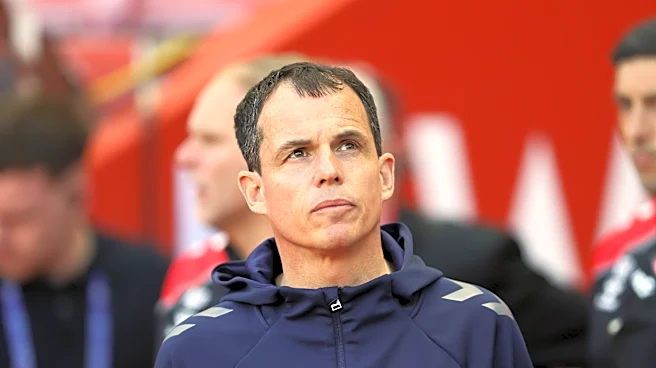
Emotion can often shape performance. A manager can regulate confidence, sometimes without realising it. Aggression can backfire and tone can influence the second half. As I read through the paper, I couldn’t help but put Régis Le Bris and Sunderland AFC into my mind.
In interview, Le Bris himself has said that half times can be hectic. But he does let the players speak, and he only inputs briefly.
Fear is a huge finding in the report — fear of saying the wrong thing.
Silence becomes the safest behaviour, and a ‘damage limitation’ culture starts to dominate. Research overwhelmingly showed that “half time is where confidence meets fear; fear usually wins.” Even if a team is winning, they’re fearful of losing the advantage in the second half; if they’re losing, they’re fearful of retribution from the media, the crowd, etc.

Above all, half times are a dangerous territory for becoming a performance system.
One player was quoted as saying that “The room isn’t loud. It’s crowded with unfinished conversations.”
It’s not just a team talk — it’s about performance, recovery, emotion and hierarchy, and all these things collide if there’s no structure. The findings within elite football clubs are that half times are emotionally constrained and socially fragmented, yet potentially decisive.
Advice has been given to coaches, to think about the messages they are giving to the players and how it’s going to help them.
Players take five to seven minutes to calm down after the first half. They often want to have their say and they’re good at self-regulating if left alone for a period of time. But the coaches will arrive within the first minute and the players pretend to listen to the coaches when they’re not ready to listen.
Also, there’s often an overload of information — at one club, there was a head count of fifty two people in the changing room at half time! That can’t be conducive to good recovery and clarity of information.
In this ever-changing world, it’s often surprising to hear how we just make more pressure and hurdles for ourselves instead of keeping things simple and clear and letting technology help, not hinder us.
As an old Russian proverb says: “If you chase two rabbits, you will not catch either of them.”