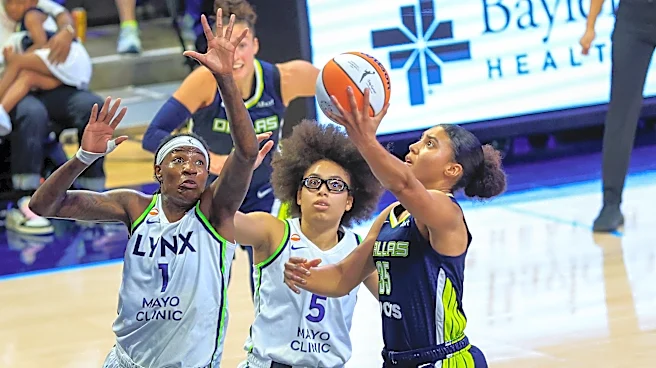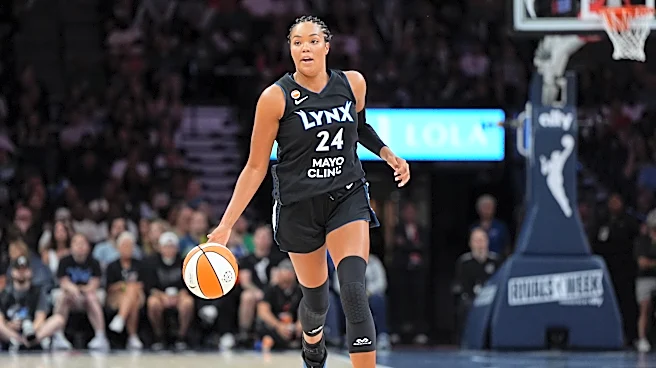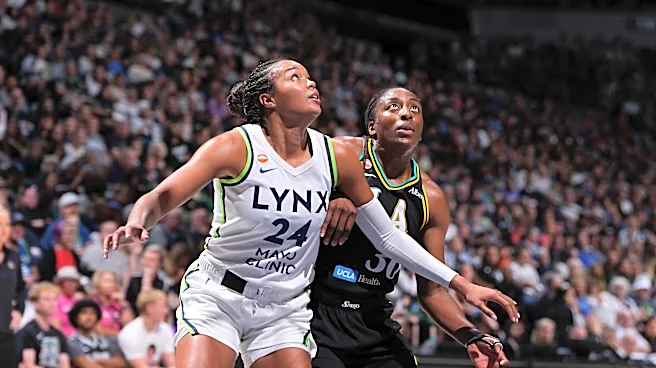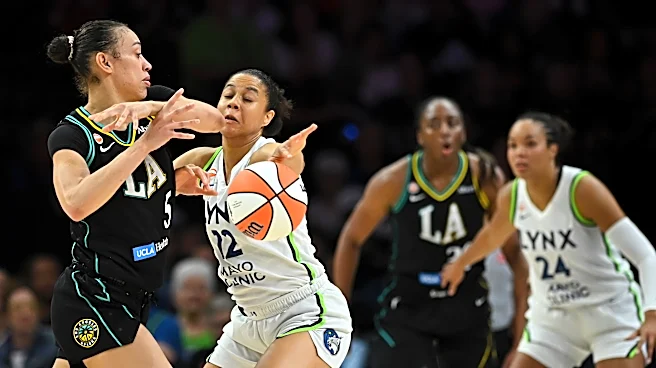







Stop us if you’ve heard this one before: The Minnesota Lynx are the best team in the WNBA.
At 25-7, Minnesota is once again atop the league’s standings, and they recently went nearly an entire month without losing. From July 8 to August 2, the Lynx were a perfect 10-0, their winning streak fueled by a potent, selfless offense and a budding backcourt star.
To say that the Lynx are for real wouldn’t be very groundbreaking analysis.
This is a team that many expected to compete for a championship, and thus
far, Minnesota has met those expectations and then some. Ahead of their game on Aug. 8, they’re 2.5 games ahead of the defending champion Las Vegas Aces for first place in the WNBA standings.
Still, whenever superlatives like double-digit winning streaks are in play, a deeper statistical dive can be fun. The numbers behind the Lynx’ dominance reflect what we’ve come to expect from Cheryl Reeve’s squad: skilled, unselfish, and championship-caliber.
1. Minnesota’s offense has been an avalanche

To state the obvious, mediocre teams don’t go on 10-game winning streaks. The Lynx were widely expected to be one of the WNBA’s best teams once again in 2026, so their recent run of dominance shouldn’t be even a little surprising.
Even so, what the Lynx have done lately has been impressive statistically, even by their own lofty standards. During Minnesota’s winning streak, the Lynx were beating teams by an average of 10.9 points per 100 possessions, which was the highest net rating in the WNBA during that span.
Interestingly, not many of those Minnesota wins were blowouts. In fact, only two of their games were won by double-figures.
They were still plenty convincing, though, mainly due to downright elite team offense. The Lynx hit the 100-point mark six times during the winning streak and hit at least 10 3-pointers eight times, good for an offensive rating of 113.5. The box scores may have indicated semi-close games, but most of them were never in doubt, simply because of how easily Minnesota has been scoring the basketball.
Again, none of this is new. Minnesota has won more games than any other WNBA team since 2024, thanks in large part to an unselfish offensive approach that emphasizes generating efficient looks. In that respect, the 2026 Lynx are just continuing where last year’s iteration left off.
There’s been just one key difference, and it comes in the form of a dynamic rookie guard from TCU.
2. Olivia Miles has taken the Lynx to another level

The 2026 WNBA Draft yielded quite a few pro-ready players, but none of them have made an immediate impact like Minnesota’s Olivia Miles.
Drafted at No. 2 overall, Miles proved early on that she not only belonged in the WNBA, but would become one of the league’s best guards in short order. That’s happened faster than even Lynx brass could have hoped; Miles was named an All-Star starter, seems like a shoo-in for Rookie of the Year, and has even garnered All-WNBA and MVP discussion in her very first season.
Individually, Miles has been known for stuffing the stat sheet since her very first collegiate season. During her senior campaign at TCU, Miles averaged 19.6 points, 6.3 rebounds and 6.5 assists per game, recording six triple-doubles along the way.
Miles’ game has translated to the WNBA seamlessly, and her brilliance was front and center during Minnesota’s recent winning streak. During those 10 games, Miles was massively productive, averaging 22.3 points, 4.4 rebounds and 6.1 assists; this was highlighted by a 28-point, 11-for-14 shooting masterclass against Indiana and a 32-point, 8-rebound, 8-assist demolition of Seattle.
Miles’ strengths as a lead guard—namely, her ability to attack off the dribble, get into the paint and either finish at the rim or kick it to an open teammate—has changed Minnesota’s offensive metrics somewhat, but not its overarching philosophy. The Lynx are assisting on far fewer of their baskets this season (63.4 percent) than in their previous two seasons (72.6 percent in 2025 and 76.4 percent in 2024), but that’s mainly because they now have a player who can reliably create her own shot unassisted.
Miles’ skill with the ball has also done wonders for her teammates. Natasha Howard, in particular, has looked rejuvenated at age 34, averaging 15.3 points per game and shooting a career-best 59.8 percent on 2-pointers, many of which have come from Miles assists. Veteran shooting guard Kayla McBride is also having her best season in years, and she led the Lynx in scoring (22.7 points per game) during their recent winning streak.
3. Napheesa Collier is just starting to round into form

At the end of the day, though, Minnesota is still Napheesa Collier’s team, and though the star forward missed a considerable amount of time to start the season, she’s playing as if she hasn’t missed a beat.
Collier, who had surgery on both of her ankles during the offseason, only recently made her 2026 debut, but she’s looked every bit of the player who was on track to win MVP last season before suffering an untimely foot injury. In five games (three of which were played under a minutes restriction), Collier is averaging 18.8 points, 7.4 rebounds and a career-high 3.8 assists per game, and her shooting splits (51.7 percent on 2-pointers, 40 percent on 3-pointers and 83.3 percent on free throws) are remarkable considering what she’s coming back from.
Here’s the scary part: The Lynx were 21-6 without Collier in the lineup, and they’ve gone 4-1 since her return. While other WNBA teams with championship aspirations may have been trying to improve their rosters at the trade deadline, Minnesota was simply waiting for its best player to return from injury.
We already saw what the Lynx are made of when they reeled off 10 wins in a row. Now that Collier is fully healthy and finding her rhythm with Miles and the rest of Minnesota’s veterans, we’ll know what the team’s ceiling truly is. And while there’s still plenty of regular-season basketball to be played, it would be shocking if the Lynx weren’t hosting games come playoff time.