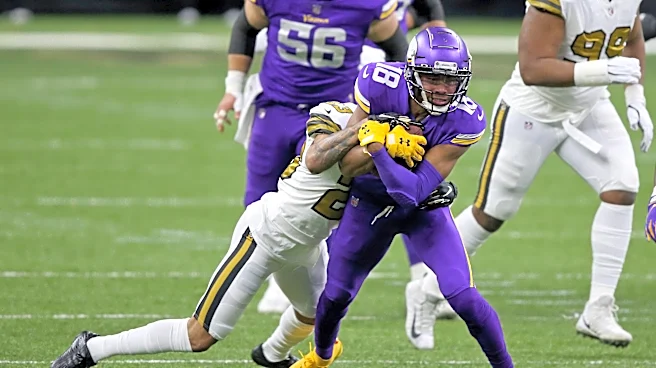




The Detroit Lions need a bounce-back win in a big way, and they certainly have an opportunity to do so with the 1-3 Arizona Cardinals on deck. The Cardinals have hung with the 49ers and beat the Chargers in Week 1, but they were dominated by the Seahawks and lost a disappointing game against the Giants.
Where do the real Arizona Cardinals lie, and what does it mean for this week’s Lions matchup?
Let’s find out in our Lions vs. Cardinals preview, prediction, and statistical breakdown. It’s On Paper
time.
Lions pass offense (9th in DVOA) vs. Cardinals pass defense (31st)

It hasn’t been as consistent as the Lion want, but Detroit passing offense remains a clear top-10 unit, bordering on a top-five unit. Some of their key efficiency metrics:
- Sixth in passer rating (108.6)
- 10th in yards per attempt (7.5)
- Fourth in dropback EPA (0.274)
- Fifth in dropback success rate (52.2%)
Jared Goff is off to a phenomenal start, and he’s helped by a pretty decent pass-blocking unit. Detroit ranks fifth in ESPN’s pass block win rate (57%), seventh in PFF pass blocking grade (69.0), and they have the 10th-lowest pressure rate allowed (32.8%).
The only thing that really seems to be holding this unit back is the amount of explosive plays and drops. They have just four passes of 30+ yards through four games, which ranks t-15th in the NFL. Pro-Football-Reference has the Lions with seven drops so far, which ranks t-sixth most.

You may think the Lions have the worst pass defense in the league, but the Cardinals have a pretty good case for it. They rank:
- 31st in passer rating allowed (114.9)
- 32nd in yards per attempt (9.1)
- 31st in dropback EPA (0.346)
- 25th in dropback success rate (49.6%)
If you’re a common reader of On Paper, you know that if success rate looks better than every other stat, it’s usually explosive plays that are to blame, and that’s exactly the case here. The Cardinals have given up 14 plays of 20+ yards through the air, good for t-ninth most. But with a 25th-ranked success rate, the problems obviously run deeper than that.
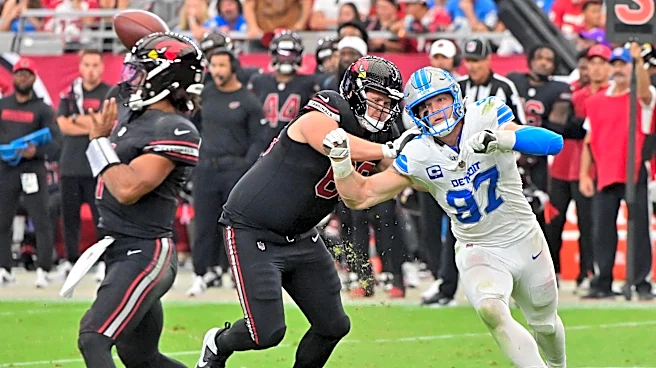
One major issue is pass rush. They sport a 30.3% pressure rate (29th), yet they opt not to blitz very often (23.8% rate, 23rd). Last week against the Giants, the Cardinals opted to up the blitz rate (30.3%, 12th) and it resulted in a better pressure rate (48.5%, seventh) and four sacks—so don’t be surprised if they opt to send extra pressure to Goff.
They also seem to have issues in coverage. They have the fifth-worst team PFF coverage grade (48.2), and the worst offenders appear to be the linebacking corps. Mack Wilson Sr. (49.8) and Jack Gibbens (43.7) have some of the worst coverage grades on the team, meaning the middle of the field could be open for Detroit.
Player to watch: Sam LaPorta. Last week, when the Lions had to largely abandon the run game and get consistent yardage over the middle, no one was more reliable than LaPorta. He is now second on the Lions in targets (32) after tallying 13 last week.
Advantage: Lions +3.5. This seems like an absolute monster advantage for Detroit, and it’s hard to imagine things going south for this unit. Detroit has weapons to attack every part of the field, and Goff with time is dangerous. When he’s not pressured, Goff has completed 72.2% of his passes, thrown for 7.9 yards per attempt, eight touchdowns and zero interceptions. Arizona’s best shot is to send blitzes, where the Lions have been inconsistent. But Goff still has a 119.1 passer rating (sixth) and +0.28 EPA/dropback (fifth) when blitzed.
Lions run offense (4th) vs. Cardinals run defense (10th)

The Lions run offense is in a weird place where the stats don’t seem to be passing the eye test. The perception is Detroit’s running game has been extremely inconsistent and not there when it needs to be. The advanced statistics, though, still point to this as a top-10 rushing attack, maybe even better. Detroit ranks:
- 16th in yards per carry (4.2)
- 17th in EPA (-0.093)
- Seventh in success rate (44.9%)
High success rate, low EPA and YPC means one thing: no explosives. While the Lions do rank t-ninth in 10+ yard rushes through four games, they only have a single run of 20+ yards (t-23rd). That lack of explosiveness can make your rush totals look pretty low with the sample sizes so small this year in the year.
Some other positive signs: Detroit ranks sixth in adjusted line yards (4.62), fifth in yard before contact per attempt (1.9), 10th in success rate in power situations (75%), and have PFF third-highest run blocking grade.
Some bad signs: They have the seventh-highest stuffed rate (19.4%), rank 27th in yards after contact per attempt (2.36), and rank 22nd in run block win rate.
So… I don’t know. To me, it still seems like they are on the precipice of breaking out a long run, which will go a long way in upping the YPA, EPA, and yards after contact numbers. But the high percentage of negative plays is legitimately concerning. They’ve also clearly been much worse on the road, which could very well be an offensive line communication issue—although I’m not so sure how loud Arizona is going to be on Sunday.

The Cardinals have been similarly inconsistent the run game. Two bad performances against decent rushing attacks, and two decent games against mediocre-to-bad run offense. Overall, they rank:
- 17th in yards per carry (17th)
- Third in rush EPA (-0.241)
- 11th in success rate (38.0%)
Without a doubt, the strength of the Cardinals defense is how their front four defends the run. Former Lion Roy Lopez is having another fantastic season, sporting PFF seventh-highest run defense grade (76.3) among defensive tackles, and EDGE Zaven Collins has the third best run defense grade (90.6) among defensive ends.
The Cardinals do a pretty good job limited explosive plays (only two 20+ yard rushes allowed) and their stuffed rate (17.0%) is average (14th). They find their success by stacking the box. Their 27.7% stacked rate is eighth highest in the league.
What is also ballooning their EPA is their success in short-yardage situation. They are allowing just a 29% success rate in power scenarios, which is first by a significant amount. The league average is around 65%.
Player to watch:
Advantage: Draw. I’m fascinated to see how this plays out. It’s a strength vs. strength matchup, even if both teams have been a bit inconsistent week-to-week. If I were the Lions, I’d lean more in to the passing game this week, but I know they also want to have more consistency in the run game, and it may make sense to control the ball for longer to keep the defense off the field.
Cardinals pass offense (17th) vs. Lions pass defense (28th)

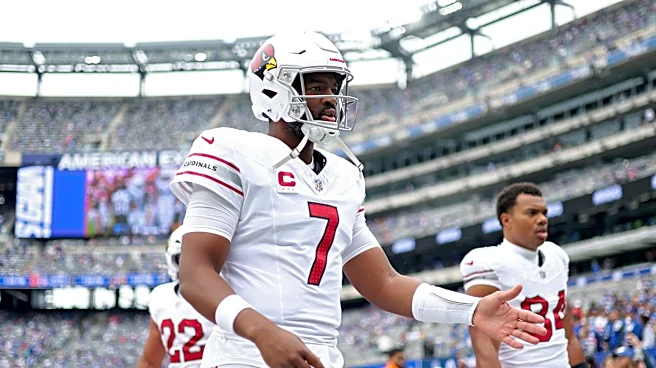
The pressure is mounting on Jacoby Brissett after a rough outing against the Giants last week, but the Lions could be the bounceback game he needs. For the season, the Cardinals pass offense ranks:
- 21st in passer rating (83.2)
- 32nd in yards per attempt (5.4)
- 22nd in dropback EPA (0.010)
- 17th in success rate (46.8%)
The main complaint about the Cardinals’ passing attack is the toothlessness of it. Brissett is a checkdown machine, averaging just 6.2 air yards per pass (29th). Brissett’s 5.9 deep ball percentage ranks 26 out of 29 qualifying quarterbacks.
Brissett has also been extremely ineffective when pressure, as I outlined earlier in the week:
-0.32 EPA/dropback vs. blitz (25th out of 29)
-0.67 EPA/dropback vs. pressure (25th)
Pass protection hasn’t been a huge issues for the Cardinals so far this year, but it could be this week. For the season, Arizona has the ninth-lowest pressure rate and seventh-lowest sack rate (4.4%). That is a bit misleading, though, because Brissett gets the ball out QUICK. He averages just 2.6 seconds to throw, which is fourth quickest in the NFL. The offensive line isn’t actually blocking all that well. They rank 17th in PFF grade and 31st in pass block win rate. And now they will be without their best pass blocker in left tackle Paris Johnson Jr. (80.8 pass blocking grade) and they’ll be replacing him with seventh-round rookie Jayden Williams.
Of course, the Cardinals tend to get rid of the ball quickly, because they have two very good receivers in the short-to-intermediate game: tight end Trey McBride and wideout Michael Wilson. McBride ranks second in the NFL in short-pass receiving yards (184) and Wilson is 23rd with 127.

Alright, let’s get it over with. The Lions pass defense remains a disaster:
- 29th in passer rating allowed (110.4)
- 27th in yards per attempt (7.9)
- 30th in dropback EPA (0.294)
- 31st in success rate (53.0%)
The biggest bummer of it all is that the Lions are doing an outstanding job pressuring the quarterback, and it hasn’t mattered. The Lions rank fourth in pass rush win rate (56%), second in PFF pass rushing grade (81.6%), eighth in pressure rate (39.3%), and sixth in sack percentage (7.9%).
But the coverage behind these players is so historically bad, it’s literally unprecedented to see such a mis-marriage between the two units:
It’s hard to find stats that measure coverage, but PFF’s 49.8 coverage grade (26th) doesn’t seem to capture how bad it truly is.
And, of course, the explosive plays are killing the Lions. They’ve allowed 20 passes of 20+ yards, three more than any other team.
Player to watch: McBride. The unfortunate part for Detroit is that the underneath stuff has been killing nearly as much as the downfield stuff.
- Short passes: +0.09 EPA/play allowed — 21st
- Intermediate: +0.78 EPA/play allowed — 29th
- Deep passes: +1.99 EPA/play allowed — 32nd
So while the Cardinals don’t present much of a downfield threat, McBride can—and probably will—kill them over the middle.
Advantage: Cardinals +2. If Detroit can’t right the ship this week, I’m not sure it’s ever going to come. At this point, I’d take death by a million paper cuts, and that may be exactly what the Cardinals do. Prepare for 13-play, 80-yard drives.
Cardinals run offense (13th) vs. Lions run defense (30th)

This chart doesn’t look too dangerous, but there are some sneaky-good numbers behind this Cardinals rushing attack.
- 21st in yards per carry (3.9)
- 13th in rush EPA (-0.069)
- 6th in success rate (45.0%)
To be clear, they aren’t very explosive in the run game. Their longest run of the season is 22 yards, they only have six 10+yard rushes (t-last) and they only have three rushing touchdowns on the year (t-16th). However, they thrive in one important categories: yards after contact per rush (3.17, ninth).
Jeremiyah Love and Tyler Allgeier are two talented backs who could give Detroit problems.
Arizona does most of their damage on the edge, because their interior offensive line isn’t very good, but their tight ends can block. Elijah Higgins has the second-best run blocking grade among all NFL tight ends (77.0).

Despite this chart looking inconsistent, it’s mostly been bad for the Lions run defense this year, yet another disappointment at the feet of defensive coordinator Kelvin Sheppard. Detroit ranks:
- 21st in yards per carry allowed (4.4)
- 29th in rush EPA (0.025)
- 21st in success rate (41.5%)
Stop me if you’ve heard this before, but explosive plays have been a problem. Detroit has allowed the second-most rushes of 10+ yards (16) and the second-most of 20+ yards (five).
The issue for the Lions this week is their biggest weakness in the run game is the Cardinals’ biggest strength: the perimeter. From my earlier report on the Cardinals:
They’re producing an impressive +0.26 EPA/rush outside the left tackle (fourth best) and +0.36 EPA/rush outside the right tackle (second)—while producing negative numbers pretty much everywhere else.
Meanwhile, the Lions have been terrible at defending perimeter runs. They’re allowing +0.36 EPA/rush outside left tackle (second worst) and +0.17 EPA/rush outside right tackle (fifth).
Detroit will need much better discipline from the second-level defenders in the run game this week.
Player to watch: Whoever is playing box safety. Christian Izien was absolutely awesome against the Jets, and Detroit had their best run defense performance of the year. He was awful last week against the Panthers, and the Lions were a sieve. He may have played himself out of a job now that Jalen Mills is getting some attention from the coaching staff, but whoever they throw out there will need to be extremely disciplined in their gap integrity, especially with a tight end crew ready to put them in the dirt.
Advantage: Cardinals +1. Arizona isn’t likely to put up 150 yards or rushing, and between the gut, I don’t expect them to see any success. But I wouldn’t be surprised to see them pop a few 10+ yard runs to the perimeter of Detroit’s leaky defense, and that could make the difference.
Last week’s prediction:
On Paper tallied it’s first loss of the season, falling to 3-1 overall and 2-2 against the spread. I only gave the Lions a +0.5 advantage over Carolina, so I don’t feel particularly bad about how I previewed the matchup. I had the passing games right, but I did not expect the Panthers to significantly outrush the Lions. So I’ve lost a little more faith in both the Lions’ run offense and defense.
In the comment section, we didn’t have a lot of people pick a Carolina win, but there were a few traitors great predictions. 2007LION was the closest with their 34-31 Panthers prediction, even if they didn’t believe it.
It seems too on the nose that someone named 2007LION would win, considering Detroit had the 32nd ranked defense back in 2007. For your “prize” I am going to just give you a side-by-side of the 2007 Lions starters compared to the 2026 Lions starters.
There is a problem here:

This week’s prediction
The Lions come out with an uninspiring +0.5 advantage, all of it coming from the monster mismatch between their passing offense vs. the Cardinals pass defense. I don’t particularly feel good when it’s just one of four matchups tipping the scales, particularly when it wouldn’t surprise me to see the Cardinals “win” the other three matchups.
This truly feels like a toss-up, but there are opportunities for Lions to at least look like they’re righting the ship against a Cardinals offense that lacks any kind of explosiveness. Unfortunately, I think Detroit is just as susceptible to get diced up 5-10 yards at a time.
I won’t go against the advantage here, but I am going to predict another nailbiter for Detroit. Lions 38, Cardinals 37.