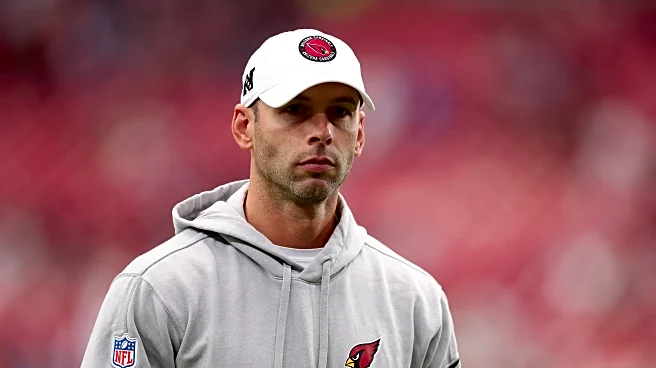

Let’s keep chipping away at what new Green Bay Packers defensive coordinator Jonathan Gannon will bring to the green and gold. Earlier today, we broke down his career resume. This time, we’re going to do a deep
dive into the types of coverages that he runs. Spoiler: He loves Quarters/Cover 4.
To set the table, let’s get a couple of terms nailed down so that we can have a conversation about what Gannon is or isn’t. For the most part, we’re going to talk about coverages split into three categories: man coverages, old zone coverages and the quarters family of coverages.
Man Coverage
- Cover 0 variations
- Cover 1 variations
- 2 Man
Old Zone Coverage
- Cover 2 (including Tampa 2 and Inverted Cover 2)
- Cover 3 (including Match 3)
Quarters Family
- Cover 4 (sometimes called quarters)
- Cover 6 (sometimes called quarter-quarter-half)
- Cover 7 variations (which are almost always indexed as Cover 4 or Cover 6 by data services)
If I had to explain what all these coverages are and their variations, it could take 50,000 words. Instead, I’ll link you to a video that does a good job of giving you the basics on what these schemes are.
The Cliff Notes version is that man coverage is when defenders cover eligible route-runners based on where they line up pre-snap. They do not pass these players off.
Zone coverages, be it old zone coverages or the quarter family, have defenders cover players (or even just grass) based on the route combinations that these eligible receivers run. The old zone coverages are mostly three-deep coverages (most Cover 2 at the NFL level is Tampa 2), while the quarters family generally allocates an extra player to the deeper portion of the field. The exception is when teams play Cover 6, which is Cover 4/Quarters to one side of the field and Cover 2 to the other side of the field.
And here is where things get very confusing. There’s also a whole family of coverages called Cover 7, where the coverages essentially turn into man coverage after a certain depth. There are very specific play calls made to change the ways players sort these route combinations. (This is very much a thinking man’s defense.)
Instead of spot drop zone (old zone coverages where defenders are covering space instead of players and are supposed to have their eyes on the quarterback to make a break on the ball), this Cover 7 family has defenders reading releases and routes to determine who they end up picking up in (at least hypothetically) tight coverage down the field.
If you want to learn about Cover 7, the best way to do so is by listening to this clinic from former Alabama defensive backs coach Karl Scott, who now serves as the Seattle Seahawks’ defensive backs coach.
Who the Packers have been under Joe Barry and Jeff Hafley
Before we get into Gannon, we have to talk about what Green Bay’s defense has looked like in recent years for context.
Over the last five seasons, here’s how the Barry and Hafley defenses, together, have shaken out from the man/old zone/quarters family standpoint:
- Man Coverage: 22% (26th in the NFL, 28% is average)
- Old Zone: 52% (9th in the NFL, 49% is average)
- Quarters Family: 26% (12th in the NFL, 23% is average)
With that said, these trends have fluctuated a lot year-by-year.
Joe Barry was a long-time Rod Marinelli (his father-in-law) assistant, who ran an old zone scheme. In 2020, though, Barry worked under Los Angeles Rams defensive coordinator Brandon Staley, who learned the quarters family system under Vic Fangio during their time together in Chicago and Denver. After one year of Barry learning the system, Packers head coach Matt LaFleur hired Barry to run that Fangio-style system in Green Bay.
2021 Packers (Barry)
- Man Coverage: 22% (27th)
- Old Zone: 42% (23rd)
- Quarters Family: 36% (1st)
He did just that in 2021, leading the league in quarters coverage snaps played. After that, though, Barry toned down the quarters system and reverted to playing more spot drop zones.
2022 Packers (Barry)
- Man Coverage: 22% (25th)
- Old Zone: 57% (6th)
- Quarters Family: 20% (20th)
2023 Packers (Barry)
- Man Coverage: 24% (19th)
- Old Zone: 50% (13th)
- Quarters Family: 27% (16th)
After 2023, Barry was fired by Green Bay, and the team hired sitting Boston College head coach Jeff Hafley to come in and run their defense. Hafley played a lot of Cover 1 (man) and Cover 3 (old zone) at the college level, but he stated that he needed the extra body in the box in college to stop the quarterback run game, which is why he played that type of system.
In the NFL, Hafley’s DNA came from the old zone schemes, mostly relying on Cover 2, Cover 3 and Cover 6 (quarter-quarter-half). His change-up wasn’t tight coverage or blitzes; it was disguising who the deep half defenders would be in Cover 2 and Cover 6. Usually, those deep half defenders are typically safeties who are easy to determine from a pre-snap look. Hafley’s defenses made virtually any defensive back on the field eligible to drop into a deep half from any alignment.
And that spot drop DNA reflects in Hafley’s Green Bay coverage buckets.
2024 Packers (Hafley)
- Man Coverage: 22% (25th)
- Old Zone: 57% (6th)
- Quarters Family: 20% (20th)
2025 Packers (Hafley)
- Man Coverage: 20% (21st)
- Old Zone: 52% (11th)
- Quarters Family: 28% (14th)
Now, let’s take an overall look at both Barry and Hafley.
Packers Under Barry (2021-2023)
- Man Coverage: 23% (27th)
- Old Zone: 50% (13th)
- Quarters Family: 27% (8th)
- 16th in Cover 4
- 5th in Cover 6
Packers Under Hafley (2024-2025)
- Man Coverage: 22% (26th)
- Old Zone: 54% (8th)
- Quarters Family: 25% (17th)
- 26th in Cover 4
- 9th in Cover 6
Beyond the first Barry season, Green Bay has been a team that has rarely used man coverage, almost always on blitzes, played a lot of spot drop coverages and has primarily used Cover 6 instead of Cover 4 when they have played quarters family coverages.
That is very different from what Gannon has done.
Gannon (2021-2025)
- Man Coverage: 24% (between 24th and 25th)
- Old Zone: 42% (between 26th and 27th)
- Quarters Family: 35% (between 2nd and 3rd)
- 1st in Cover 4 (more than any team)
- Between 11th and 13th in Cover 6
Relative to the rest of the NFL, Gannon leans out of man coverage and old zone coverages, which has been true when he was with the Philadelphia Eagles and the Arizona Cardinals, and instead leans into the quarters family coverages. Since 2021, no single NFL team has played more Cover 4 than Gannon’s units. Again, that’s a big change for the Packers, who played a lot more Cover 6 than Cover 4 under both Hafley and Barry.
So what does Gannon want to do? He plays lots of guys in deep zones, but those coverages (in the Cover 7 world) can be much tighter (deep, usually not short) than Hafley and Barry’s spot-drop zones. If you want a point of reference, here are the four teams that have played the most quarters family coverages in the NFL since 2021-2025:
- Eagles: 35%
- Chargers: 35%
- Rams: 33%
- Seahawks: 31%
These squads being on the list shouldn’t be surprising. The Eagles had Gannon for two years and have now had Fangio for two years. The Chargers had Staley, who taught Barry the system with the Rams, for three years and then added Jesse Minter, who coached the system at the University of Michigan under Jim Harbaugh. The Rams have sort of carried on the system after losing Staley in 2021. The Seahawks have been running a quarters-heavy system under Mike Macdonald, another guy who learned it under Harbaugh at Michigan.
This is sort of the way things are trending in the NFL. If you want to watch tight press-man coverage, it might be time to crank up old games instead of watching modern football on Sundays. You’re just not going to find it. Now, the edge seems to be these sorting coverages, where you line up deep, let receivers declare their intentions and then snap to the route once they’re recognized.
From a Packers’ perspective, their zone coverage calls really had a 2:1 ratio of being a spot-drop coverage call (grass coverage), rather than a quarters family call, under both Barry and Hafley. Based on Gannon’s five years as a defensive coordinator and head coach, though, his zone defenses should be closer to 50/50.