

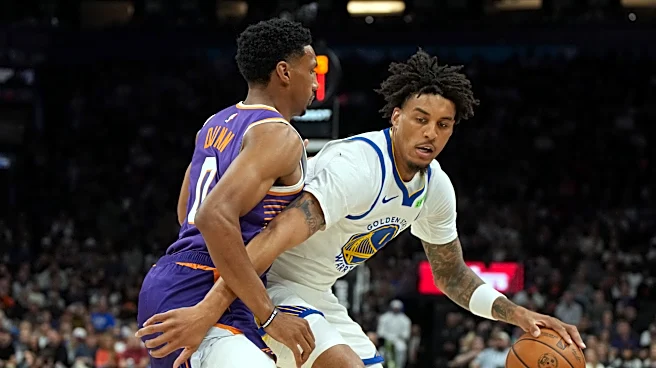


After yet another double-digit loss on Wednesday night, this time to the Portland Trail Blazers (again), the Phoenix Suns find themselves at 1-5. They are a team desperately searching for an identity. Players are trying to establish defined roles, while the coaching staff continues experimenting with combinations in hopes of finding something that can ultimately translate into success.
When you take a step back and look at the bigger picture as it pertains to the Suns’ future, things begin to look rather
grim. Between the significant amount of dead cap money on the books and the fact that Phoenix has surrendered control of its draft assets for the next several seasons, there was one thing we understood entering this year that could help keep the franchise competitive: development.
After all, continuity and development were the two pillars this organization leaned on throughout the summer. The belief was that returning so many familiar faces would provide a foundation for improvement, while the younger players would take meaningful steps forward in their progression. That was the formula. That was the plan. Yet through six games, the continuity has been noticeably absent, and the opportunities for development have been puzzling.
Yes, the organization was forced to adjust its developmental timeline when Mark Williams suffered a shoulder injury in September that required surgery on his left shoulder. Suddenly, the buffer that would have allowed Khaman Maluach to develop behind Williams and Oso Ighodaro in the rotation was gone. The second-year big man out of Duke was now positioned to receive considerably more playing time than the organization likely anticipated entering the season.
While that certainly wasn’t the original plan, there was a potential silver lining. Reluctance to play Maluach could no longer serve as an excuse for limiting his opportunities. The Suns were going to need him out of sheer necessity, and that necessity could provide the very developmental experience this organization had spent the summer emphasizing.
Those opportunities have certainly presented themselves early on this season. Through the first six games of the season, Khaman Maluach has started all six, averaging 7.2 points, 6.0 rebounds, 1.2 assists, 0.5 steals, and 1.0 blocks in 19.4 minutes per game.

The opportunity to develop has been there, but I’ve noticed a troubling trend recently that has me asking one simple question: What are we doing here? Because winning basketball games certainly isn’t what we’re doing right now, and of the many reasons why that’s the case, the minutes being given to Khaman Maluach aren’t anywhere near my top 10.
In fact, his absence becomes increasingly noticeable on a team that desperately lacks size and has been horrific at consistently securing rebounds. Phoenix ranks 29th in the NBA in rebounds per game at 39.5 and dead last in rebound percentage at 45.3%. Yet despite those struggles, the Suns continue to limit the playing time of one of the few players on the roster capable of providing a legitimate interior presence.
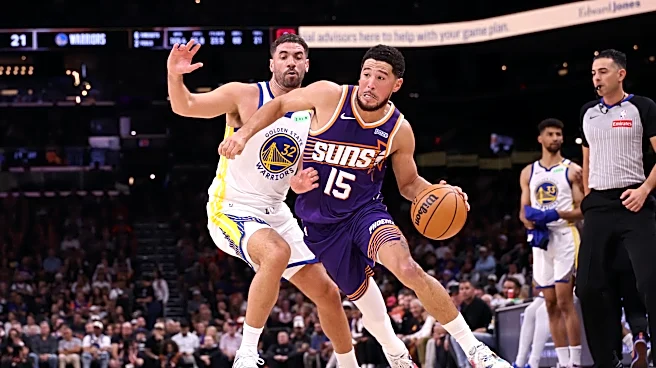
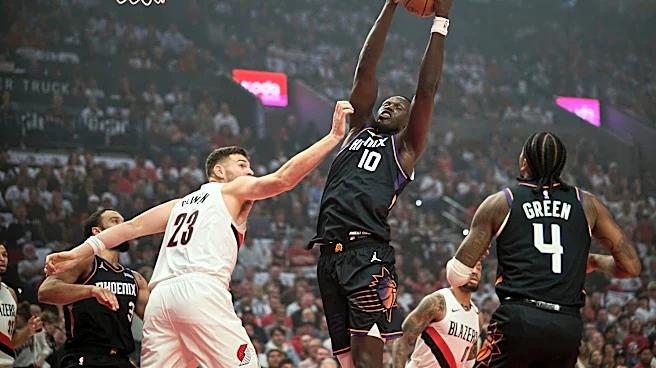
And that brings me to the trend that’s becoming increasingly difficult to understand. In each of the last three games, Khaman Maluach hasn’t played a single minute in the fourth quarter. Against both Denver and Golden State, he was pulled with 7:04 remaining in the third. Against Portland on Wednesday night, his final appearance ended with 6:09 left in the third. Why?
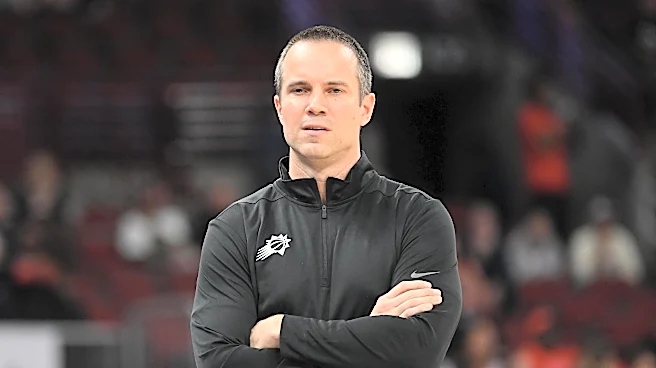
Last night against the Trail Blazers, Jordan Ott followed the same substitution pattern we’ve grown accustomed to seeing early this season. Maluach starts the game before exiting midway through the first quarter. He returns midway through the second, plays roughly five minutes, and then starts the second half. But somewhere around the midway point of the third quarter, Ott pulls him from the game, never to be seen again.
We’ve now witnessed that exact pattern in four of the Suns’ first six games, and for a team supposedly committed to development, it’s becoming increasingly difficult to understand why. So let’s try to figure it out.

Without Khaman Maluach, the Suns are left relying on either small-ball lineups or Oso Ighodaro at the five. And while neither option is inherently problematic, the results have been inconsistent, particularly on the boards.
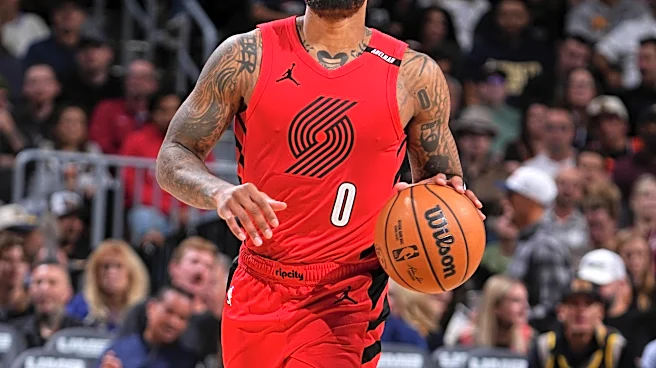
Last night against Portland, Phoenix was actually holding its own on the glass. Yes, the Suns were trailing by 13 points when Maluach exited with 6:09 remaining in the third quarter, but they were winning the rebounding battle 27-25. Over the final 18:09, however, Portland outrebounded Phoenix by 10 and won the offensive rebounding battle 10-5. By the final buzzer, the Trail Blazers had secured a 47-39 advantage on the glass.
It’s important to note that these numbers reflect the team’s performance before and after Maluach’s final substitution, rather than exclusively when he was on or off the court.
The data tells a slightly different story against Golden State. Through the first 28:56, Phoenix had been outrebounded 28-20. But over the final 19:04, after Maluach exited for the final time, the Suns actually outrebounded the Warriors 17-16. Against Denver, Phoenix held a 22-19 rebounding advantage before Maluach’s final substitution, then was outrebounded 21-20 the rest of the way.
So what gives? Why is Maluach being banned from the chat after the two-and-a-half quarters of play? Across these three games, Phoenix was outrebounded 72-69 before Maluach’s final departures and 59-49 afterward. That’s a three-rebound deficit becoming a 10-rebound deficit, despite the latter periods being considerably shorter.
Welp, we’re done here. It’s clear Ott doesn’t know what he’s doing. But wait. As Rafiki once wisely said, “Look harder…”
Rather than evaluating the rebounding numbers based on the point at which Maluach permanently exits the game, let’s examine how Phoenix actually performs on the glass when he’s on the court compared with when he’s sitting on the bench.
Against Portland, Maluach played 15:51, during which the Suns were outrebounded 16-12, with the Trail Blazers collecting three offensive rebounds. During the 32:09 he spent on the bench, Portland still held the advantage, though the margin was considerably smaller, 31-27. Phoenix secured 42.9% of the recorded rebounds with Maluach playing, compared with 46.6% when he was off the floor.
Against Golden State, the disparity was even more noticeable. Phoenix was down seven rebounds in the rebounding battle with Maluach on the court and even when he was on the bench. The Suns secured only 36.0% of available rebounds during his minutes, compared with 50.0% when he wasn’t playing.
And against Denver? Phoenix was even on the glass with Maluach playing and +2 with him on the bench. The Suns collected 50.0% of recorded rebounds when he was on the court and 51.7% when he was off.
Looking at the three games in which Malauch was pulled early, cumulatively, you find that when Malauch was on the court for 46:23, the team was outbounded by 11. Off the court for 97:37? The team was -2.
There’s one variable in all of this that we simply don’t have an answer to. We don’t know how Maluach would perform in these fourth quarters if he were actually given the opportunity. We can evaluate what happens during his minutes and compare those numbers with what occurs when he’s on the bench.
The numbers certainly complicate the argument that Maluach’s absence is directly responsible for Phoenix’s rebounding struggles. In these three games, the Suns actually rebounded at a higher percentage when he wasn’t on the floor, although the degree of that advantage varied considerably from game to game. That’s an interesting finding, especially given the eye test against Portland, where the Suns appeared to struggle considerably after his final departure. The full on/off data paints a more nuanced picture.

This is where the conversation becomes particularly interesting, because at what point do you prioritize development over rebounding percentages when a player is on or off the court? Maluach hasn’t looked great to start the season, but he’s certainly been serviceable. And for a team that desperately lacks size, he’s somebody who should probably be seeing a little more playing time at this point.
But in the grand scheme of things, when you’re looking at a three-game sample in which the rebounding differential is minus-nine, I don’t believe that’s enough to justify limiting the opportunities and potential growth of a young center who needs experience to develop. Especially when you consider that Maluach has consistently demonstrated a desire to compete and remain engaged. This isn’t somebody whose struggles stem from a poor attitude or a lack of effort.
He’s a young player learning how to navigate the NBA, and perhaps we’re overanalyzing a handful of fleeting moments rather than allowing him to work through those experiences.
You have to eventually take the training wheels off and let the kid learn, right? Is it too soon? Apparently, the coaching staff believes so.
But at some point, the Suns have to decide what they’re actually trying to accomplish this season. If winning is the priority, the results suggest their current approach isn’t working. And if development is supposed to be the foundation for the future, Maluach needs opportunities to make mistakes, learn from them, and grow. Those objectives don’t have to be mutually exclusive. But keeping the training wheels on while the team continues losing accomplishes very little. Especially when the kid is never given a chance to finish the ride.