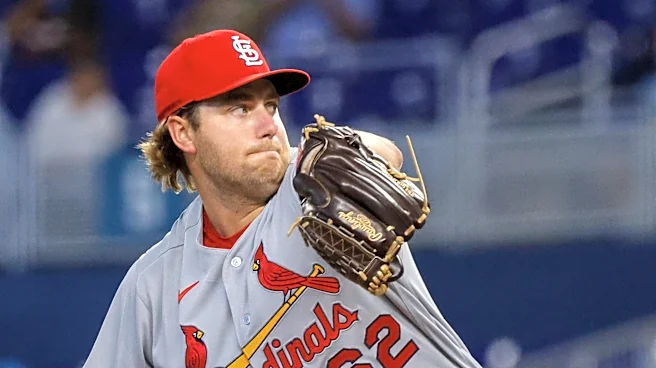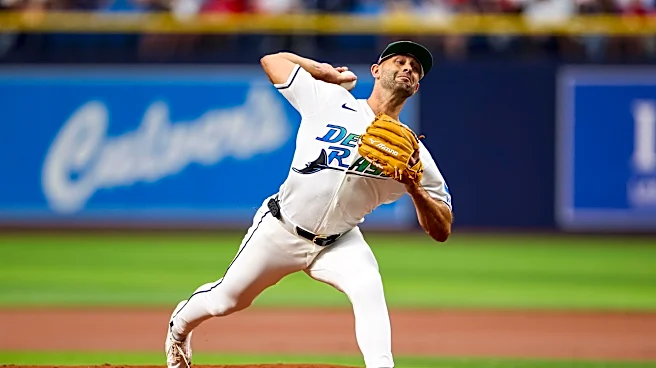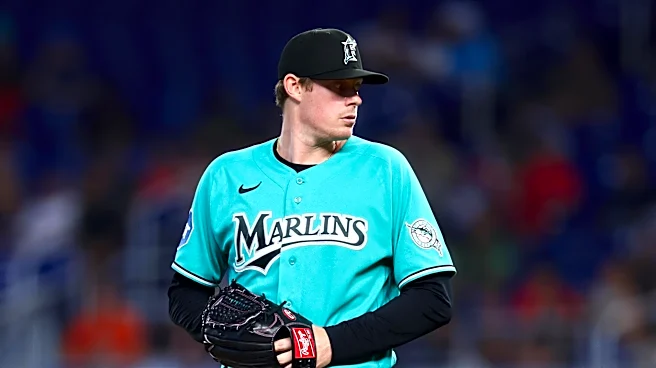





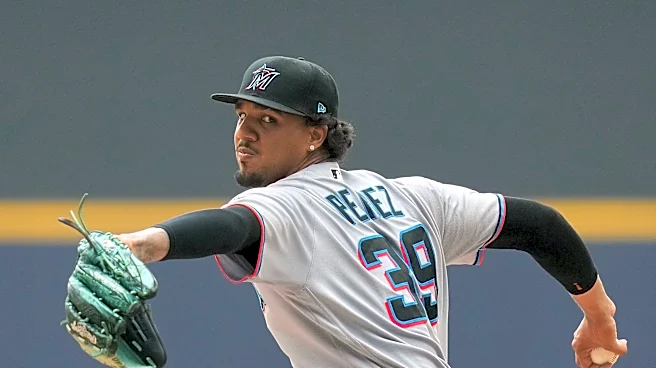
It could not have gone much worse for Pete Fairbanks with the Marlins, but his struggles don’t outline a pitcher exposed after his move away from the Rays — it’s the farthest thing from it. One does not need much to be incentivized to look past Fairbanks’ terrible results and recognize the potential for shutdown quality at the backend of the bullpen.
2026 Statistics (Thus Far): 37 GS, 34.1 IP, 16 SV, 6.55 ERA (154 ERA-), 4.93 FIP (117 FIP-), 30.5% K%, 9.3% BB%, 1.34 WHIP, -0.1 fWAR, -1.2 rWAR
2026
ZiPS Rest-of-Season Statistics: 18 GS, 17 IP, 9 SV, 3.85 ERA, 3.6 9FIP, 27.0% K%, 8.9% BB%, 1.21 WHIP, 0.2 fWAR
First off, the Marlins — much like the vast majority of the National League — find themselves in fringe playoff contention, but a recent losing skid has adjusted expectations on a team that, even if it somehow makes the postseason, has its true contending window a bit more down the road. Taking this into account, it’s not shocking to read Jeff Passan’s report that anyone but Sandy Alcantara and Eury Perez is on the block. One of the likelier names to be dealt if Miami follows through on selling is Fairbanks.
With the Trade Deadline right around the corner, Fairbanks has chosen the ideal time to get on a positive run, having recorded a save in each of his past three appearances with four straight perfect appearances. When you’re in the vicinity of doubling your flyball percentage like Fairbanks is, going from 24.7 percent last year to 43.7 percent this season, that’s just an unsustainable way to live — home runs will plague you, like they have Fairbanks with an HR/9 above 2.00.
There is one notable change to Fairbanks’ arsenal that is a carryover from last season. Fairbanks started throwing a cutter at the end of 2025, and it worked so well that the veteran has retained the pitch as an integral part of his new arsenal, throwing it as often as the slider. The results, much like with the fastball, haven’t been what they were a year ago. However, there is a pretty good argument that at this point in his career, evolving, adapting, or whatever you want to call it, might be a more reasonable task than turning back the clock for Fairbanks.
While 2025 probably represented an outlier in just how effective Fairbanks was at keeping his fastball from being hit in the air, the 2026 campaign has swung at maximum speed in the opposite direction. Projecting what to expect moving forward, Fairbanks won’t be the dominant pitcher he once was, but he shouldn’t also be offering the tasty cookies we’ve seen. With the truth somewhere in the middle, there is more than enough room to be a highly productive pitcher with the rest of his arsenal and experience.
Assessing whether to pursue him or not, the question then becomes one of risk, and just how big of one do you have to take? Doesn’t it always? Will the Marlins let their Wild Card chances and Fairbanks’ recent scoreless outings significantly affect their asking price on this talented closer? Or will Miami simply be happy to take what they can and move on from the pending free agent?