




After all the waiting and planning, the opening of the 2026 World Cup is mere days away, as the United States Men’s National Team looks to achieve a new program-best finish and perhaps win the whole thing. There are still a few small opportunities for growth and preparation, as the federation has set up friendlies against two strong opponents in Senegal and Germany. The African side is set to compete in the tournament for the third consecutive and fourth overall time, having reached the quarterfinal
round at the 2002 edition and the Round of 16 in 2022. Charlotte, North Carolina’s Bank of America Stadium – a 75,037-seat open-air, multi-purpose stadium – hosts the Allstate Continental Clásico.
This is the first-ever match between the two teams. Ranked 14th internationally by FIFA, Senegal reached the World Cup by finishing atop Group B of the Confederation of African Football’s qualifying competition with an undefeated 7-0-3 record, picking up two victories over South Sudan (4-0, 5-0) and Mauritania (1-0, 4-0) and a win and a draw against Togo (0-0, 2-0), DR Congo (1-1, 3-2), and Sudan (0-0, 2-0). The Lions de la Téranga (Lions of Teranga) initially won last winter’s Africa Cup of Nations, but the appeal board awarded the title to Morocco in March, claiming that a mid-match walk-off had caused a forfeit. Recent friendly results include wins against Peru (2-0) and Gambia (3-1).
Faced with the steep task of replacing the high-achieving Aliou Cissé, Pape Thiaw was appointed to lead the program in December of 2024 after holding the position in an interim role: “Rigor, discipline, and respect for essential values” were cited as reasons for his hiring. The 45-year-old retired forward was a member of the Senegal squad that reached the quarterfinals at the 2002 World Cup, previously was the head coach of his boyhood club (Niarry Tally), steered his country’s B team to the 2022 African Nations Championship, and was an assistant under the previous regime. He has earned “widespread acclaim for his tactical decisions,” with an “ability to execute an attacking game plan.”
Thiaw named a 28-player pre-selection roster that “will have to be reduced before the start of the competition.” The entire group is located abroad; France’s Ligue 1 is home to nine of the call-ups, while seven compete in England and three are on the books of Saudi Arabian clubs. Notable absences include Habib Diallo, Boulaye Dia, Nampalys Mendy, and Abdou Diallo.
***
GOALKEEPERS (3): Édouard Mendy (Al-Ahli), Mory Diaw (Le Havre), Yehvann Diouf (Nice)
DEFENDERS (10): Kalidou Koulibaly (Al-Hilal), Krépin Diatta (Monaco), Moussa Niakhaté (Lyon), Ismail Jakobs (Galatasaray), Abdoulaye Seck (Maccabi Haifa), El Hadji Malick Diouf (West Ham United), Antoine Mendy (Nice), Mamadou Sarr (Chelsea), Ilay Camara (Anderlecht), Moustapha Mbow (Paris)
MIDFIELDERS (7): Idrissa Gueye (Everton), Pape Gueye (Villarreal), Pape Matar Sarr (Tottenham Hotspur), Lamine Camara (Monaco), Pathé Ciss (Rayo Vallecano), Habib Diarra (Sunderland), Bara Sapoko Ndiaye (Bayern Munich)
FORWARDS (8): Sadio Mané (Al-Nassr), Ismaïla Sarr (Crystal Palace), Iliman Ndiaye (Everton), Nicolas Jackson (Bayern Munich), Bamba Dieng (Lorient), Cherif Ndiaye (Samsunspor), Ibrahim Mbaye (Paris Saint-Germain), Assane Diao (Como)
***
Thiaw primarily uses 4-3-3 and is “renowned for his attacking philosophy and dynamic approach,” having “built a team that balances flair and discipline” with “aggression, intensity, and creativity.” He endeavors to “play offensively” and “immediately recover the ball after every loss of possession.” Senegal has embraced “bold tactical choices” and “an increasingly fluid style of play,” including playing with a false nine and having the advancing box-to-box midfielders shoulder the scoring burden.

Far removed from “his meteoric rise” that saw him touted as the best in the world, the “late-blooming” Édouard Mendy is still the number one for his country with his undeniable quality. The 34-year-old Al-Ahli goalkeeper can display moments of supreme athleticism and composure when stonewalling attackers from point-blank range and pulling out gravity-defying stops that require every inch of his six-foot-four frame. He can show a bit of sangfroid with the ball at his feet when making very confident attempts to beat pressure but has a stellar ability to drill long passes that shift the focal point to the final third. Despite “claiming crosses very well and showing dominance in the air when called upon,” his work on leaving the area and winning races or contesting attackers has lagged behind the demands of the modern game.
France-born Kalidou Koulibaly is the cornerstone of the defense and is the primary ball winner when claiming headers, making interceptions, blocking crosses, and shutting down the first dribbler to enter the area. The 33-year-old Al-Hilal centre-back has impressive physicality, speed, and athleticism which enable him to cover every manner of opponent in each zone and make the occasional contribution to the scoreline. Lyon’s Moussa Niakhaté is a high-volume passer and progressor who takes the lead during the build-up, opens up the field with his left-footed distribution, and will advance in order to create. First in the tackle and quick to interpret potential danger, he roams the field and throws himself into challenges with the refinement of a couturier, often coming away with possession before the attacker can react. Standing at six feet, four inches tall, Abdoulaye Seck of Maccabi Haifa is a rumbling, stumbling presence who makes things happen through sheer force of will and is equally comfortable taking charge in either box. When not pushing for a chance to engage in an aerial duel, his positioning tends to drift toward the touchline, which puts him in a spot to bully smaller wingers and showcase his impressive crossing.
One of the younger members of the squad, El Hadji Malick Diouf is a “marauding” presence who constantly makes runs into the final third and is known for his “crossing, heading ability, and speed.” The rangy 21-year-old West Ham fullback can perform the necessary preventative responsibilities of his position and holds his own during possession, but his main contribution is to push the tempo. Monaco’s Krépin Diatta is another dynamic front-footed attacking option who breezes up and down the touchline with zigzagging runs before taking the creative lead closer to goal. He is an impediment to the opponent’s advances and swarms the passing lanes with palpable quickness, providing a necessary “stability” while “conserving energy” that enables him to “stay mentally sharp.” When available and unhampered by injury issues, the manager utilizes Ilay Camara of Anderlecht, an incredibly useful safety valve during the build-up who adds necessary stability with safe play. The former Belgium youth international can still operate on the outside and the interior advanced zones as a straight-line runner and is always looking for opportunities to unleash a low-driven shot. France-born Antoine Mendy is also an option, having broken through at Nice and made his senior international debut in 2025 during World Cup qualifying, the result of an unrelenting style. Pacey, ingenious in distribution, and constantly rising above the crowd to win headers due to his six-foot-two-inch height, the Marseillais can pinch inward and serve as an additional centre-back.
Pape Gueye has a large frame which he uses to carve out a bridgehead between the boxes, winning and holding onto possession while shielding away potential challenges and waiting to play the correct pass. The 27-year-old Villarreal midfielder can force the match to be played at his tempo and can only truly be brought down by fouling, which results in the opponents backing away and giving him the space in which to operate. Monaco’s Lamine Camara is a “maestro” who can take an advanced position for his club and “is tasked with progressing the ball into the final third” and dispensing long distribution with a high rate of “volume and success.” Operating from a deeper spot and then pushing forward, he provides connections throughout the formation, makes timely recoveries, and is capable of hitting the necessary final or penultimate ball. Idrissa Gueye of Everton has earned more caps than any other player in Senegal’s history and continues adding to his number, with a noticeable comfort around the area and occasional sublime finish. With hard work, his heat map covers the length of the field, as his contributions also include necessary defensive stops and providing a pressure valve to teammates beset by pressure. The “multifunctional” Pape Matar has a “close control that belies his stature” and came on strong during qualifying with four goals, including the crucial decider in the 3-2 win against DR Congo in September. His versatility sees him popping up in all manner of situations and making an impact: from dropping to the corners and stripping wingers to shuttling and creating or ghosting into the area for a header. Ismaïla Sarr has become an “unsung hero” and a “constant threat” for Crystal Palace due to his “pace, touch, clever runs, and link-up play” fueling a “searing form” that carried over to the international level. Capable of deploying on the wing, the Coaches’ Voice observes “intelligent maneuverings” and a “direct threat,” perfectly timing onto service and utilizing his long stride and acceleration to overcome a “heavy touch.”
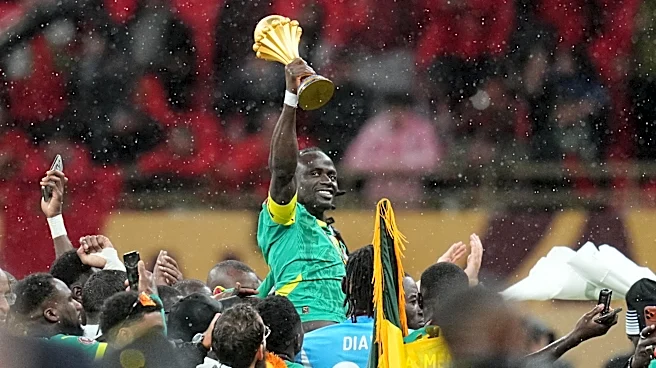
Sadio Mané is well into the back nine of his prolific career that saw him twice named African Footballer of the Year, but his “leadership, creativity, and tactical value” are still immense with six international goals in 2025. The 34-year-old Al-Nassr winger has lost a bit of his sizzling pace and springy agility but can still score in myriad ways, operating as a solo artist and making untraceable runs through the opponent’s lines. Everton’s Iliman Ndiaye “seeks out the central areas to combine, is most dangerous when there are transitional moments, and brings close control, sudden accelerations, and readiness that leaves fans on the edge of their seats.” Hard-working and brimming with “tight-space ability,” he has a rapid, angled turn after receiving service that sees him blowing past hapless defenders and emerging from the pack, ready to place his shot. Assane Diao of Como was forced to miss the Africa Cup of Nations with a “grade 2 hamstring muscle injury,” depriving Senegal of a crafty facilitator, industrious solo progressor, and streaky producer. The former Spain youth international has “powerful and decisive ball carrying” with “long, forceful strides” and a “natural ability to eliminate rivals through direct running rather than elaborate dribbling.”
Nicolas Jackson is still seeking his way at the professional level but has enough underlying talent that top clubs are willing to invest in the hopes that his streaky production alchemizes into consistency. The 24-year-old striker is a few campaigns removed from his breakout 17-goal season at Chelsea and managed a reasonable 11 finishes while on loan at Bayern Munich last season, failing to trigger his flashy 76-million-dollar option to buy. Even when his scoring runs cold, he is serviceable in possession and continually makes himself available as a check-back option, allowing the midfielders to dart into the box through the half-spaces. However, the desire remains for him to exhibit the traditional qualities of the position and convert the high-percentage opportunities from close range that seem to fall into his lap, many of them a product of his six-foot-two size and speed. Samsunspor’s Cherif Ndiaye is the standard target player with a big frame and a poacher’s instincts, finding the hidden creases with shrewd movements, jumping on chances, and shoving opponents out of the way. The Dakar-born forward can also hold onto possession and make plodding progressions into the final third, although his best utility is to be deployed as close to the net as possible, with many of his conversions coming from inside the six. In what could be a coup for the program, then-France youth international Ibrahim Mbaye of Paris Saint-Germain committed to Senegal in November of 2025, quickly racking up three goals and five assists in 10 matches. With darting forays through lines of defenders and a heat map that spans the width of the pitch, his individual dynamism and quick connections with teammates break down packed areas.
The USMNT is heading into the tournament arguably playing a stronger group of opponents than the teams that will be present in the group stage at the World Cup. On paper, Senegal’s roster has a higher level of prestige and more players competing at bigger clubs, which means very little once the whistle blows. The final result is of little importance, but a solid victory for either side could add a bit of optimism heading into the biggest of shows on the largest of stages.
The match is scheduled for Sunday, May 31st at 3:30 p.m. Eastern, 12:30 p.m. Pacific. Viewing options include TNT, truTV, Universo, HBO Max, Peacock, and FuboTV (free trial).