

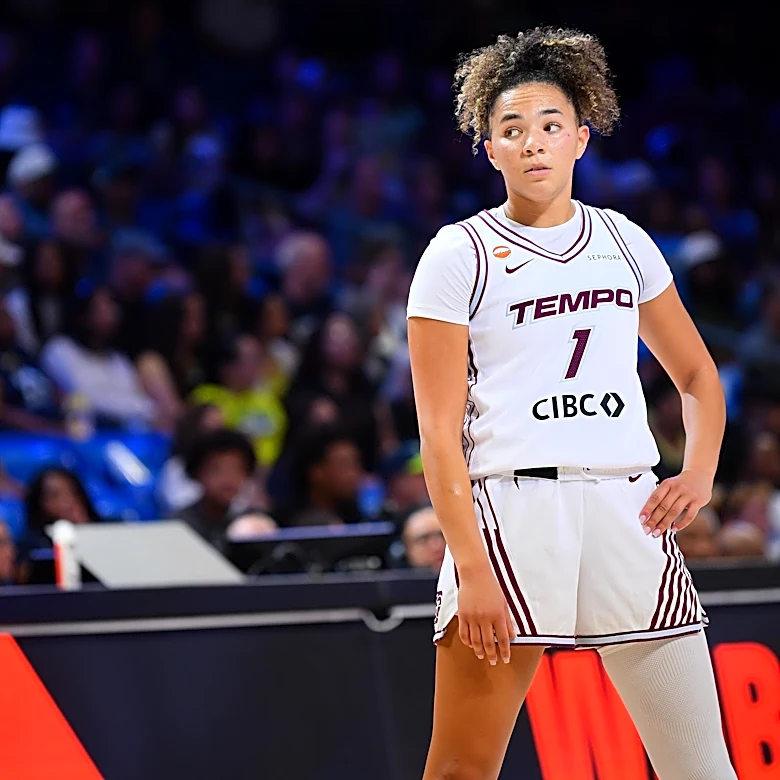
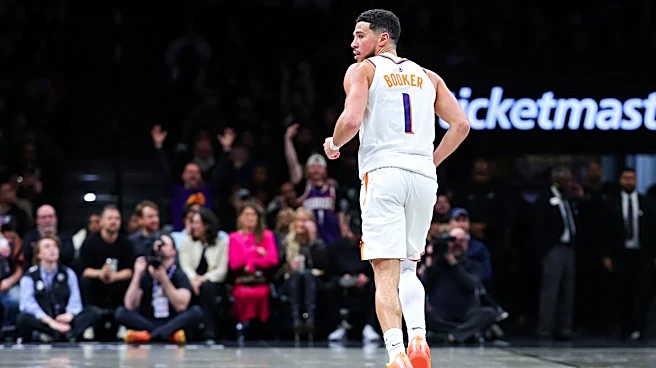
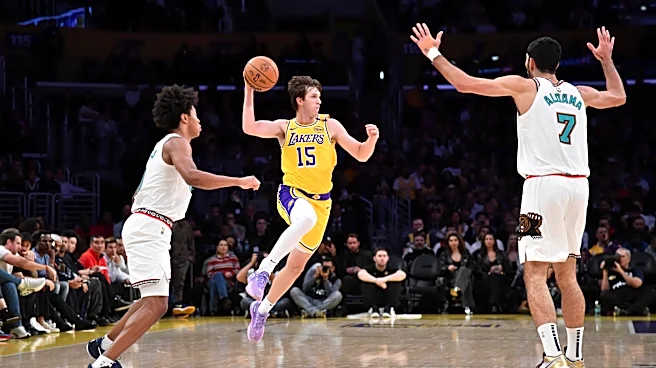
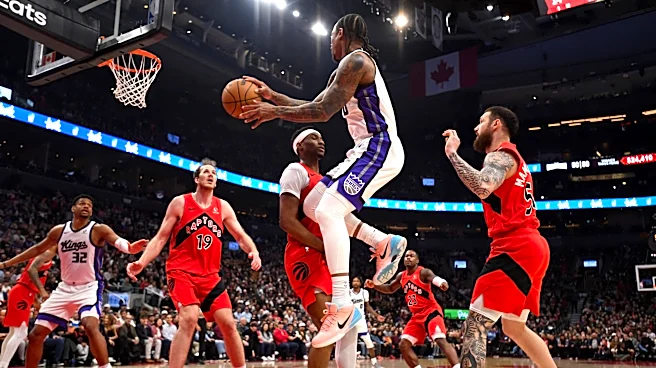
The Phoenix Suns front office has done a solid job over the last two years of identifying under-the-radar talent.
Collin Gillespie and Jordan Goodwin are the latest examples of this. Jamaree Bouyea provided real production for key stretches last season. To a lesser extent, we all saw Dillon Brooks breakout in his new home as well. He was much more on the radar than the others mentioned, of course. You get the point. The Suns have a type.
From a cultural perspective, this is who you want to bring in.
A hard-nosed competitor who isn’t afraid to mix it up, chirp a little, and make winning basketball plays. He doesn’t need the ball to make an impact. He embraces doing the little things.
Enter Pat Spencer
The Suns signed the 30-year-old guard to a two-way contract in early July, an acquisition that sailed under most national radars. On the surface, it’s a sensible depth move. The guard rotation needed fortification after some early offseason uncertainty.
But dig deeper, and this signing tells you everything about how the front office operates in 2026.

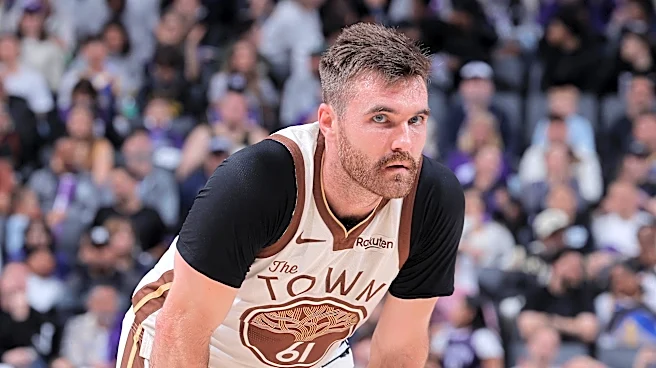
Pat Spencer arrives in Phoenix fresh off the best season of his career with Golden State Warriors.
In 66 games (14 starts), he averaged 7.2 points, 3.5 assists, and 2.4 rebounds, shooting 42.7% from the field and 35.7% from three-point range. Those headline numbers don’t immediately jump off the page, but his starting splits do.
As a starter, he averaged 11.4 points, 5.1 assists, and 3.4 rebounds per game while shooting 40% from three.
Pat was playing in a Warriors system without heavy volume. Steve Kerr wasn’t running the offense through him, becuase they have a guy named Steph Curry (yes he missed time). Yet when he got real minutes in spot situations and starts, he produced with efficiency. He shot a respectable 35.7% from beyond the arc and averaged 0.7 steals per game.
But the stats only matter if the player has the intangibles to stick. Spencer has that in spades.
Spencer embodies toughness, smarts, and competitiveness. Steve Kerr publicly stated that “he’s kind of the perfect guy to have as a backup” because “he can win you games” and brings consistent energy and attitude regardless of playing time. Kerr doesn’t throw praise at role players casually. He meant it.
Why This Fits the Suns’ DNA
Spencer’s competitive fire runs deep. His brother Cam also plays in the NBA, and Pat’s mentality stems from a lifelong need to compete in everything, even in childhood moments like racing to elevators or calling shotgun, displaying a mindset where he’s always trying to prove something. That hunger doesn’t fade because you’re on a two-way contract. It compounds. Phoenix goes after guys with a chip on their shoulder and something to prove.
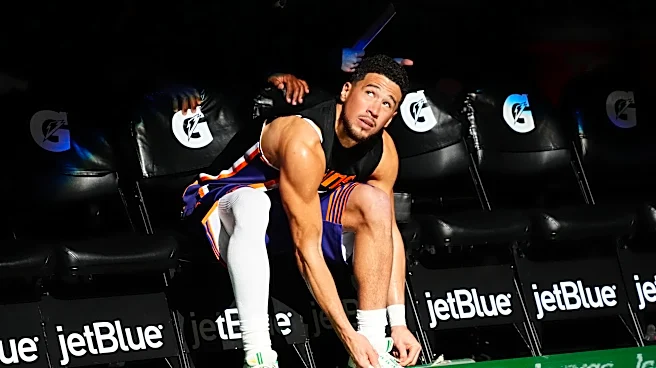
Phoenix’s guard rotation entering 2026-27 features Devin Booker and Jalen Green as primary creators, with Collin Gillespie and Luke Kennard handling secondary playmaking duties. Jordan Goodwin in the “super guard” role as a psuedo small or power forward with several other guards bodes well for Pat, at least.
Spencer will not crack the rotation unless there is an injury…. or two.
He probably won’t see 15 minutes per game if there is one. But the Suns aren’t counting on that. They’re paying him for reliability and availability when injuries or foul trouble demand rotation adjustments. We all saw the constant musical chairs of injuries to the guard rotaiton last season and how necessary it was to have a deep guard group.

Consider the modern NBA playoff reality: small guards get hunted on defense. Perimeter players pick up fouls trying to contain athletic wings. Backup point guards need to run second-unit pick-and-rolls without turning the ball over. Spencer checks all three boxes.
His 40% three-point shooting from the starter sample means he spaces the floor. His assist rate suggests he doesn’t force things when he doesn’t have them. His competitive mentality means he won’t shrink in tight moments. These aren’t flashy traits, but they win games.
The gap between a playoff team and a championship team in the Western Conference comes down to depth. It always does. Not stars. Not All-NBA players. The ability to rotate fresh bodies without losing spacing, decision-making, or intensity.
Spencer’s personal journey amplifies this logic. A standout college lacrosse player at Loyola University Maryland who won the Tewaaraton Award as the nation’s top player in 2019 and was selected first overall in the 2019 Premier Lacrosse League Draft, Spencer pivoted to basketball, using his final year of college eligibility to play at Northwestern University, then played professionally overseas with Hamburg Towers in Germany before working his way through the G League to reach the NBA.
This is someone who earned every inch.
What Happens Next
Spencer will spend chunks of time in the G League with the Phoenix Suns’ affiliate squad. That’s the reality of a two-way contract. But the framework exists for rapid escalation. If any of Booker, Green, Gillespie, Kennard or Goodwin pick up an injury or enter foul trouble, Spencer steps in. If second-unit scoring dries up, Spencer gets run. He’s an insurance piece that you need to have to withstand the rigors of an 82-game season.
The real question isn’t whether Spencer will play. It’s whether he’ll capitalize when the opportunity comes. Based on his track record in Golden State, the answer is yes. One of Spencer’s best games last season came against the Suns back in February, where he scored a career-high 20 points and was one of the Warriors’ main contributors in their fourth-quarter double-digit comeback.
This is who the Suns’ front office is now. They’re building connective tissue through under-the-radar depth acquisitions. Guys who fit the system, bring competitive juice, and won’t require massive contracts or draft capital to acquire.
Spencer is the latest addition to that blueprint. Low-risk. High upside for a backup guard. Proven character in a Warriors system known for demanding toughness.
The Suns have been solid at identifying these types. Spencer feels like the next one in line.