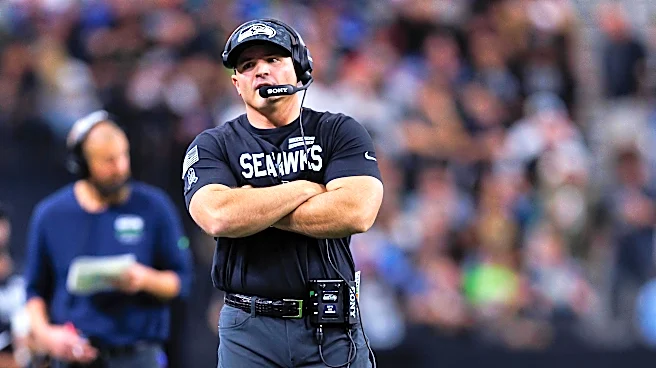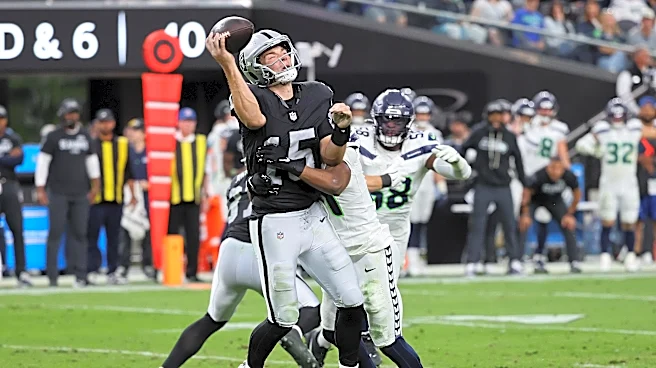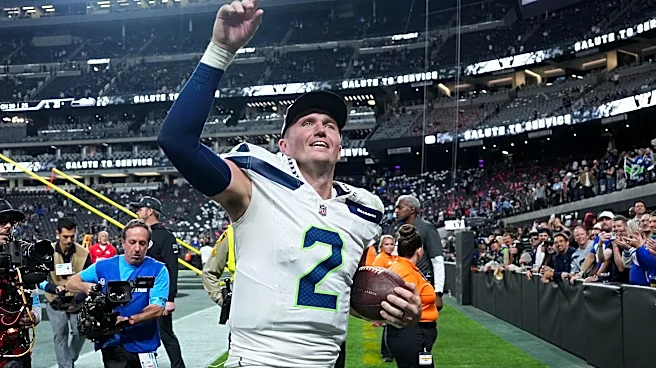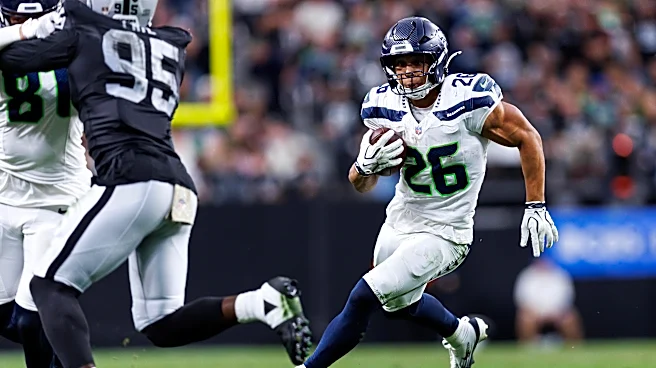


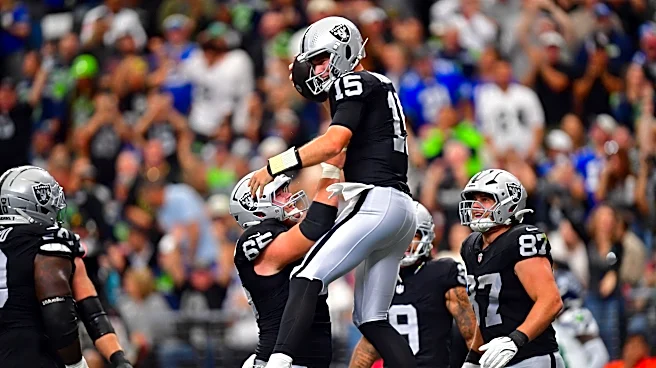
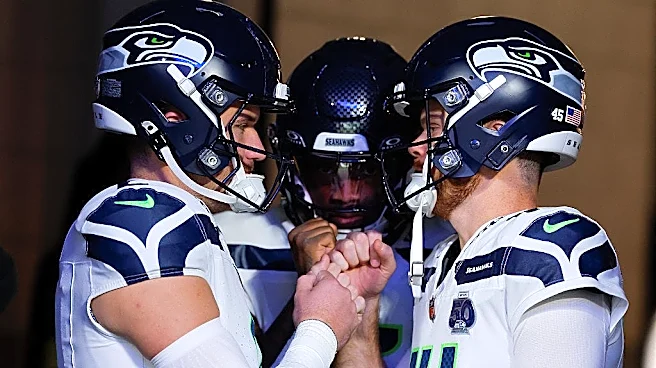
The Seattle Seahawks got the win, but there isn’t much to celebrate when you consider the level of competition against the Las Vegas Raiders. Still, this victory was important. It gives the Seahawks some breathing room heading into the bye week, allowing them to get healthy and prepare for the final stretch of the season.
There was good, there was bad, and there are still plenty of questions to answer.
Let’s get into the film.
The Bad
A defensive start that should raise concerns
The first half against the Raiders exposed some concerning issues with Mike
Macdonald’s defense. Even against a rookie quarterback making his first career start, Seattle took far too long to make him uncomfortable. Context matters here: Las Vegas entered the game with the NFL’s 31st-ranked rushing offense, averaging just 71.3 yards per game. The Raiders also lost Brock Bowers, one of their most important offensive weapons, during the first half.
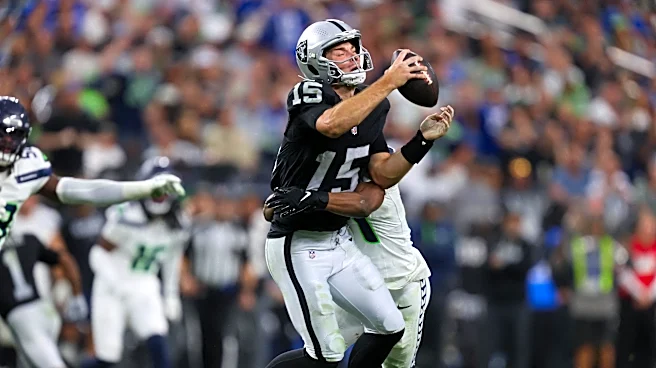
Fernando Mendoza completed his first seven passes. His first incompletion didn’t come until the second quarter. Seattle didn’t record its first sack until late in the first half, when Devon Witherspoon brought him down after Mendoza had already attempted 12 passes.
At halftime, the rookie was 11-of-13 for 90 passing yards, with 21 rushing yards and a rushing touchdown. He had no interceptions. To make matters worse, the Raiders converted seven of their ten third-down attempts, a 70% conversion rate.
One thing that helped Mendoza was Seattle’s tendency to overcommit to the run despite facing an offense with such poor rushing production. That opened the door for Klint Kubiak’s familiar play-action concepts, taking pressure off the quarterback and creating opportunities for the tight ends. On the play above, both tight ends end up wide open.
Fernando Mendoza pulled off one of the most memorable plays in College Football Playoff history with a quarterback draw in the national title game. Seattle wasn’t prepared for this look. The Raiders spread the defense out of an empty formation, forcing a man-coverage look. Murphy executes a stunt, but Reed is supposed to be the looper and fails to fulfill his assignment, making life easier for the offense as it attacks Ernest Jones. Okada also takes a poor angle and ends up getting screened by his own teammate.
One area I’ve found particularly concerning is Seattle’s intermediate coverage. The defense has repeatedly struggled against dig routes attacking the space behind the linebackers. Here, the Seahawks are bailed out by Derick Hall winning with pure power and getting to the quarterback.
The offensive line continues to have execution issues
If we assume Bradford has settled into a backup role, Seattle essentially played with three backup offensive linemen after Bobby Hart was forced into action. The offensive line continued to show recurring execution and communication problems.
Maxx Crosby adjusts his alignment before the snap, and the communication between Zabel and Jones breaks down. Crosby gets a free path into the backfield and makes the tackle. These issues with identifying pressure, adjusting protection, and coordinating assignments at the second level have become recurring problems.
Josh Jones doesn’t seem to recognize the play being called here. He initially blocks alongside Zabel before releasing to the second level as if this were a running play. That mistake wipes out what should have been a big reception for JSN.
Bobby Hart was thrown into a difficult situation, but considering his recent level of play, things could have been much worse. Once again, the Raiders use their pre-snap alignment changes to move Crosby around. Hart fails to adjust his angle and allows Crosby to penetrate the backfield.
As mentioned earlier, these aren’t just isolated individual mistakes. There are broader execution problems across the unit. Hart fails to create any movement and gets driven backward. Sundell climbs to the second level but gets caught between linebackers No. 7 and No. 17, ultimately blocking neither. Bradford also gets badly beaten, and the play ends in a tackle for loss. On the left side, Zabel and Jones don’t execute their assignments particularly well either.
It’s worth mentioning that there were some genuinely good run-blocking reps, even if they came against the Raiders. All three tight ends deliver excellent blocks, particularly Kallerup and Barner. Josh Jones seals the edge and even helps Zabel. Sundell delivers one of his best blocks of the season, climbing to the linebacker and taking him to the ground.
The Good
Brian Fleury: A mixed bag of results
This section is essentially a good-and-bad breakdown, because Fleury could easily appear in either category. The offensive coordinator was extremely conservative and methodical, failing to consistently challenge a bad defense in the first half. Seattle went into halftime with just seven points.
Route spacing continues to be a recurring issue. Watch where the receivers are positioned as Lock begins to leave the pocket. Kupp and Shaheed are occupying the middle of the field, while JSN and Barner are near the sideline. They’re effectively crowding the same areas and shrinking the quarterback’s options.
Here we get a look at a page from Klint Kubiak’s playbook: the Yankee concept. It’s a deep-shot play-action design featuring two vertical routes while the rest of the offense stays in protection. Kubiak used this concept frequently, but Fleury hasn’t shown the same willingness to call it.
JSN’s route is excellent, and the safety gets held in place by the threat of Shaheed. As for the alleged OPI: if this is offensive pass interference, Mike Evans, DeAndre Hopkins, and plenty of other receivers wouldn’t have the production they do.
Seattle has also been using JSN out of the backfield. The play design could be better, but aligning him there makes it harder for the defense to double-cover him and complicates the leverage and angles for defenders #3 and #31. The inside-breaking man-coverage routes should create space for JSN. And when he gets his one-on-one matchup, he does what he does best: wins and picks up the crucial first down.
This was easily one of the most encouraging plays of the game. Lock manipulates the Raiders’ defense, and Seattle clearly wants to run the ball in this situation. He keeps it, takes advantage of Crosby’s aggressive upfield rush, and finds a clear path to the first down. It’s reminiscent of Peyton Manning’s famous naked bootleg touchdown against the Cowboys.
Drew Lock had his own highs and lows
Lock may have made his first truly costly mistakes of the season, with two turnovers that had a direct impact on the game.
The defense doesn’t respect the play-action fake, and nobody bites. Instead, defenders immediately pursue the quarterback. Abe Lucas is slow to recognize the blitz, allowing a Raiders defender to pressure Lock. Shaheed is open on the dig route, with JSN creating space for his teammate.
Lock needs to climb the pocket, but it collapses around him. This is a situation where he simply needs to eat the sack and move on to the next play. It’s the opening drive; there’s no reason to force something. This was the most Sam Darnold-esque play possible.
Not long after his first turnover, Lock delivers a huge touchdown. The play design is questionable for a long third down, with the routes initially breaking well short of the sticks.
Lock buys time, and this is where you see the importance of Kupp’s mentality. He never gives up on the play, while No. 5 momentarily does. Lock keeps his eyes downfield, resists the temptation to scramble, and eventually delivers the long touchdown.
This appears to be the same concept Seattle used on the touchdown against the Chargers. It’s a heavy formation, and the quarterback should have the option to throw to Horton. The receiver is running an option route between a fade and a slant.
This should have been a touchdown, but Lock’s dropback is too far and Charbonnet’s action aren’t synchronized. Seattle misses the opportunity and ends up committing its second turnover.
This is a good play call on third-and-three. The Raiders appear to be playing a Tampa 2-Invert look, which they had shown several times earlier.
Lock has JSN available for the first down, with Shaheed sitting a little deeper. However, JSN slips, and Lock holds onto the ball. The receiver improvises and ends up isolated against a linebacker in space, an ideal matchup.
The QB delivers an excellent throw, understanding that the linebacker cannot afford to turn his back and look for the ball. Doing so would be fatal to the coverage.
The defense finally found its rhythm
Seattle’s defense responded much better after halftime. After allowing 136 net yards in the first half, the Seahawks limited the Raiders to just 27 net yards after the break. They recorded four sacks, forced five three-and-outs, and held Las Vegas to 0-for-7 on third down.
The pass rush finally started making Mendoza uncomfortable, taking away his ability to operate freely and making it much harder for the Raiders to sustain drives.
The one major blemish was a significant coverage bust. In the fourth quarter, Mendoza found Ashton Jeanty on a short pass over the middle, and the running back turned it into a 38-yard gain, all the way to Seattle’s 15-yard line. That single play accounted for more yardage than the Raiders’ entire net offensive production in the second half. Remove that gain, and Las Vegas finishes the half with negative 11 net yards.
Seattle’s run defense showed a very different level of discipline. Murphy wins his matchup quickly, and Nick Emmanwori, who had an outstanding game, isn’t displaced by the tight end. He disengages, adjusts his angle, and makes the immediate tackle without allowing extra yards, with Ernest Jones aggressively closing in as well.
Seven defenders show along the line of scrimmage. Seattle drops its defensive tackles into the middle of the field, a Mike Macdonald staple designed to take away the short passing windows while giving the free rusher—in this case, Fowler—time to get home.
Okada also works as a late blitzer after Michael Mayer stays in to block.
For me, this was Macdonald’s best defensive call of the game. Seattle showed this overload blitz to one side of the formation several times, including on the snap discussed above. The idea is to force the offensive line to slide toward the side showing the most threats.
But the pressure actually comes from the opposite side, with Spoon doing an excellent job disguising his intentions. Nobody picks up Witherspoon, while the five offensive linemen are left dealing with the two defensive tackles attacking the interior gaps and creating a free path for the blitz.
It’s not unusual to see Spoon used as a blitzer. What is unusual is seeing him come from an outside alignment rather than his usual nickel position. That catches the offensive line—and even the running back, who is supposed to provide additional protection—completely off guard.
Another excellent job disguising the pressure before the snap.
An unsung hero: Nick Kallerup’s impact goes beyond the box score
I wanted to use this section to highlight Kallerup’s work. He finished the game injured, and the snap above appears to show something around his ankle. According to Mike Macdonald, however, it wasn’t anything serious.
His impact doesn’t show up in the box score. This play would have been an opportunity for him to make a statistical contribution, but Lock went with his first and safer read, Barner.
He’s crucial in helping Barner initially handle Crosby (Barner executes the block very well). Kallerup then works outside, drives his defender backward, and creates space for the running back to gain yardage.
He does something similar to what he did on Emmanuel Wilson’s touchdown against the Chiefs. He helps take down the defensive tackle before continuing to look for work, climbing to linebacker Quay Walker and creating a running lane for a solid gain.
Final Thoughts
It wasn’t a pretty win, and it certainly wasn’t a mistake-free performance. The opponent was weak, so ultimately the most important thing was getting the victory and heading into the bye week with some breathing room to recover injured players and prepare for the final stretch.
The next game against the San Francisco 49ers is arguably the defining matchup of the season. A loss would essentially eliminate Seattle’s remaining hopes of winning the division and make the Wild Card race considerably more difficult.
The focus now has to be on using the bye week properly. We have the blueprint for making life miserable for a rookie quarterback, but the first-half issues we saw against the Raiders could become much more costly against better teams.
Go Hawks!