

It was the kind of win that proves your mettle as a San Francisco 49ers player. This is what an NFL game looks like. You can’t expect everything to go your way. You’re not going to score on every drive against a playoff-caliber team.
It took the offense a half to heat up, but once they started cooking, they scored three consecutive touchdowns. Conversely, the defense did its part for three and a half quarters.
The Niners never looked back after a Broncos special teams miscue, which is where we’ll start
this week’s Winners and Losers.
Winners
Siran Neal
The offense was stagnant. They looked lifeless. Neal had a fantastic individual effort on a punt to put himself in a position to make a tackle. The returner attempted to juke Neal, but couldn’t. Then, he went down and fumbled. That play was all Neal and flipped the game on its head.
Deebo Samuel
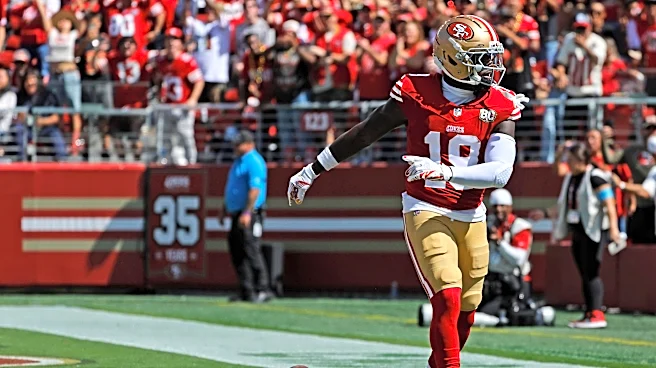
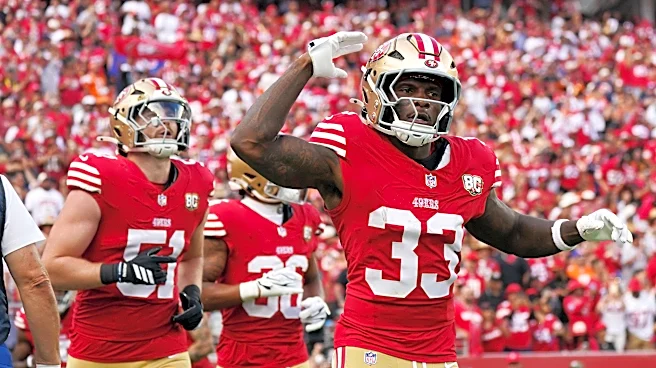
Deebo scored the first touchdown of the game. He had the longest carry of the game. Samuel’s first three attempts resulted in 44 yards, including 31 of those coming after contact. He is a tank, and somebody who defenses have no idea how difficult he is to tackle until it’s too late. That’s how you force four missed tackles.
Samuel’s receiving line won’t impress, with five receptions for 26 yards, but offense needed every one of those to stay on the field. He has the perfect skill set for the role the 49ers are asking of him, and Samuel capitalized on his opportunities against the Broncos.
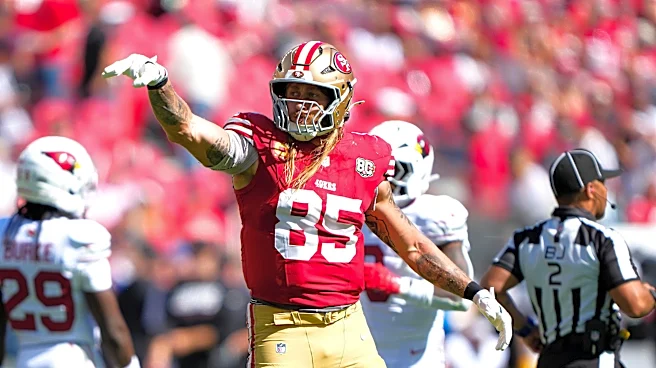
George Kittle
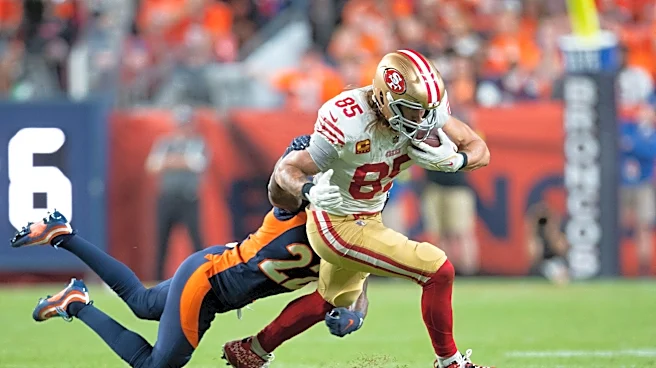
Kittle had the game-winning touchdown. He was less than two-hundredths of a mile per hour away from reaching 20 miles per hour. Kittle finished with four receptions for 70 yards, and a +1.41 receiving EPA. Kittle caught all three of his targets against man coverage.
Losers
Upton Stout
Stout was picked on in coverage. The first six times he was targeted, it was a completion. A few of those resulted in first downs, including the play that resulted in a 30-yard gain for the Broncos. Stout’s seventh target was also completed for a first down.
Stout left the game with a shoulder injury. Before he left, he occasionally got lost in coverage, especially when Bo Nix scrambled. Stout missed one tackle, which leads us to our next point.
Tackling
Stout’s injury paved the way for Jack Jones to see the field. Denver went at Jones, forcing him to tackle. Jones was 0-for-2, with one resulting in a touchdown and the other an 18-yarder that preceded the score.
Not all missed tackles are created equal. Sometimes, the defender slows the ball-carrier down while the rest of his teammates rally. Week 4 didn’t feel like one of those times.
The 49ers’ missed tackle rate of 16.18% offset an afternoon that was full of sound coverage on the back end. That number is a little more than four percent above league average, and not something you can expect to get away with next week if you want similar results.
Third downs
The 49ers defense looked fortunate early, as the Broncos committed penalties on seemingly every other third down to turn a 3rd and 1 into a 3rd and 5 or longer. Denver started the game 3-for-4 before they faced a 3rd and 17.
After getting off the field on the next two third downs, Nix scrambled for the next first down. That was the start of three of the next four conversions for Denver. They finished the game 8-for-17, but without self-inflicted wounds, the Niners would’ve faced more than one red zone trip.
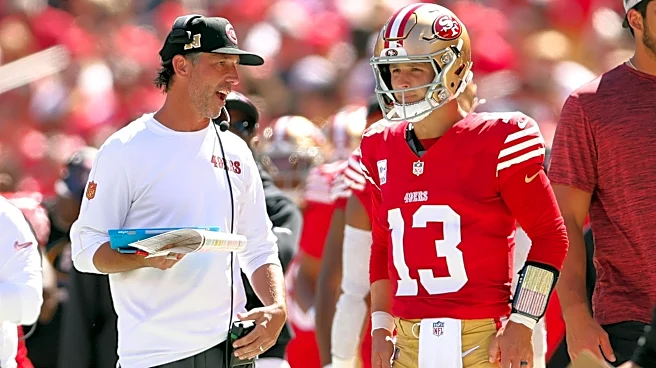
It was the opposite for the offense, who started slow before finishing 6-for-15 on late downs. It looks bad in hindsight, but the fourth-down sneak was the right call. Kyle Shanahan admitted they got the look that they wanted after the game, but it just didn’t work out.
The offense started the game 1-for-5 on late downs before they converted a 3rd and 1. They missed their next three before another 1-yard opportunity. Once Denver’s starting cornerbacks left, it flipped. But the offense has to be better on early and late downs in the first half.
IDKs
The pass rush
The 49ers got no sacks, and only Sebastian Valdez and Keion White hit Bo Nix on 42 attempts. It wasn’t for a lack of effort. Raheem Morris only blitzed Nix 13 times. Nix is the definition of a check-down merchant.
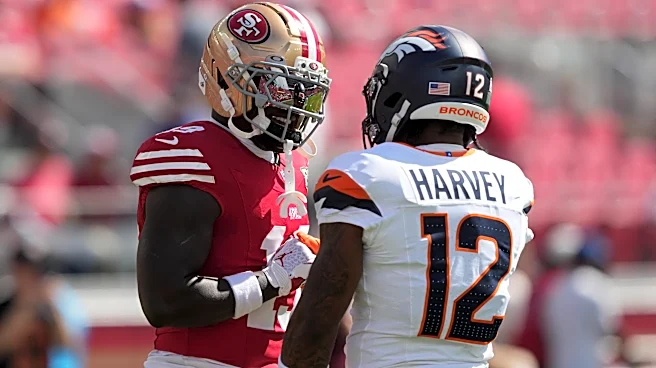
You won’t generate much pass rush when the quarterback is playing hot potato. Running back R.J. Harvey had 10 targets.
Sumer Sports has a “pressure to pocket attempt” stat, and the 49ers had 57.9%, 6.6% above league average. They moved Nix off his spot. Credit Nix for making plays off schedule, but the lack of sacks doesn’t mean the 49ers gave Nix all day to throw.
Nix’s 40.5% passing success rate (34.5% before the final drive) was 21st among all quarterbacks in Week 4. He was pressured 43.2% of the time, despite a 29.5% blitz rate. That pressure rate was the 11th-best this week.
My takeaway from this game was that Morris went out of his way to take away anything over 10 yards. He forced Nix to dink and dunk down the field, hoping the offense would either get impatient or Denver would shoot itself in the foot. The latter proved to be true multiple times.
Osa Odighizuwa had four pressures. Gracen Halton and Sebastian Valdez had one apiece. Keion White had four. Ogbo Okoronkwo and Romello Height also had two. In fact, Height had a team-high 22.2% pass-rush win rate. White was at 18.2%. They didn’t turn them into sacks, but it felt like Nix was flustered enough during the game that it impacted his decision-making to throw the ball downfield.
Winners
Raheem Morris
He’s awesome. I don’t know if the 49ers could have found a better fit for this team than Morris. Despite the injuries, he has a great grasp of the team’s strengths.
We’re seeing free runners when Morris dials up a blitz. This time last year, and up until he was benched, how many times did we see Marques Sigle or Jason Pinnock 1-on-1 in coverage? They were hung out to dry, and offenses made them pay.
Ji’Ayir Brown and Sigle were targeted a combined four times for 14 yards against Denver.
This passing defense does not give up the big play. They just don’t. That’s Morris’s scheme. You can’t blame the coach for missed tackles. But you can credit him with devising a plan that kept the Broncos in check on the ground and through the air.
Us getting through a game without mentioning the safeties is a testament to Morris.
The offensive line
Another above-average week for the offensive line in the yards-before-contact area. The running backs had 41 total yards before contact, good for the 10th-best mark of the week. Broncos defensive coordinator Vance Joseph blitzed Purdy 41% of the time, but the line yielded only a 35.3% pressure rate.
Shanahan doesn’t drop back to throw on four of the final five plays to end the game if he isn’t confident his line will hold up. When Purdy scanned the field on the final drive and came back to Christian McCaffrey, it was his third read.
Connor Colby allowed three pressures. Colton McKivitz and Jake Brendel had two. Dominick Puni had one, while Trent Williams had a clean sheet. There were zero false starts or holds. We know those penalties ended drives for the Broncos offense, as they committed three pre-snap penalties.
Fred Warner and Dre Greenlaw
Together, they missed four tackles, but they had nine impact plays and 19 tackles between them. Dre had a pair of run stops. They each stuffed a run.
The damage came in coverage. Greenlaw and Warner gave up 27 yards on seven targets. Warner broke up two passes, including one where the Broncos tight end was shell-shocked that Warner hit him as hard as he did.
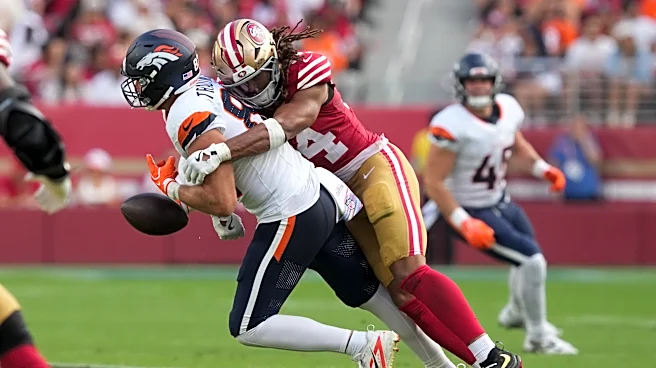
Greenlaw was close to a sack or a tackle for loss on multiple plays. He had three pressures and forced a fumble — Denver had a Johnny on the spot there to recover it. Morris put this game on his leaders and linebacker, and they couldn’t have performed better.
Mike Evans
The last time we saw Evans, he looked like he could hardly breathe. Seven days later, and he’s still Purdy’s most targeted wideout. Evans’ toughness should never be questioned after Sunday. He caught five of his eight targets, and one of those should’ve been a touchdown.
Evans was targeted 50% of the time on late downs and 50% of the time in the red zone. He’s Purdy’s go-to guy. Drops are easier to forgive when you know your WR1 will make up for it. Evans did just that.
Twenty percent of his receptions resulted in an explosive play. He had an EPA of 0.81 per touch. Evans has reminded 49ers fans what a WR1 looks like through the first month of the season.