



The 2026 WNBA offseason may have been much shorter than what fans were used to, thanks to a lengthy period of collective bargaining agreement (CBA) negotiations, but that had no impact on the overall amount of activity.
Many star players ended up switching teams, whether by trade or by free agent signing, and for the most part they’ve lived up to their billing. One month into the 2026 regular season, let’s check in on how some of the biggest acquisitions have been performing for their new teams.
Angel Reese (Atlanta Dream)

The
first offseason domino to fall wasn’t a free agent signing—it was a trade.
The Atlanta Dream shocked the basketball world when they acquired Angel Reese, the Chicago Sky’s franchise cornerstone, for just two draft picks, and it signaled their intent to upgrade a roster that had perhaps exceeded regular-season expectations in 2025 but fell short in the playoffs.
Reese’s strengths as a basketball player are obvious. She’s agile, athletic and hard-working, and she’s been the most prolific rebounder in the WNBA since her rookie season. She’s also an above-average passer for her position, which would theoretically diversify a Dream frontcourt that lost Brittney Griner to free agency and Brionna Jones to a knee injury.
Could Reese be used as an effective small-ball center while the Dream waited for Jones to return?
The answer has been yes, for the most part. Reese is once again averaging a double-double and leading the WNBA in rebounds per game (11.2), and she’s also chipping in 3.5 assists, which, for a team that features an abundance of talent on the perimeter, is a welcome complement. If the Dream are thinking about Reese in terms of what she accomplished in Chicago, then they’re getting exactly what they bargained for.
At the same time, there’s hope that the new environment will help Reese expand her game.
Her scoring around the rim remains inefficient, and she’s turning the ball over four times per game—a number that is simply too high considering she’s more of a tertiary playmaker for the Dream than their fulcrum. Ideally, Reese will improve in both of these areas as the season goes on, and with the amount of emphasis the Dream place on spacing the floor, she’ll have plenty of room to operate.
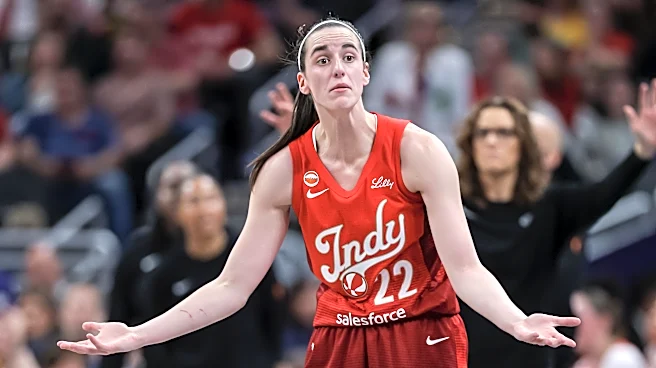
Skylar Diggins (Chicago Sky)

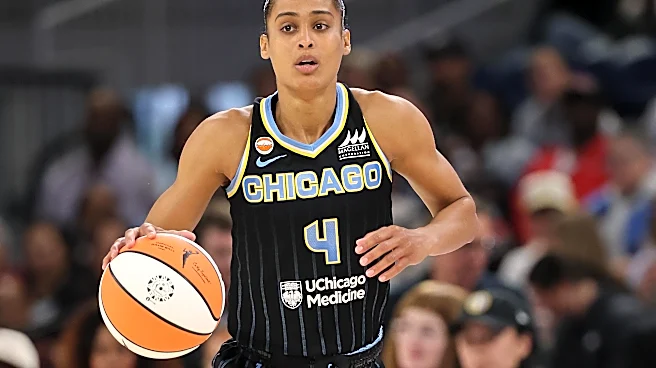
It’s not often that the Chicago Sky land a big-name free agent, so Skylar Diggins’ decision to sign in Chicago generated quite a bit of buzz in the city and around the league.
Widely regarded as a fierce competitor and fearless leader, the seven-time WNBA All-Star made it a personal goal to get the Sky back to where they want to be: playoff contention.
That may be a bigger challenge than Diggins or anyone else expected. After a hot start to the season, the Sky have lost five-straight games, a spiral that began with a season-ending ACL injury to Rickea Jackson. 2026 first-round pick Gabriela Jaquez and veteran forward Azurá Stevens have also missed significant time with injuries of their own, while guards Courtney Vandersloot and DiJonai Carrington still have yet to make their season debuts.
As for Diggins herself, she’s done her part in trying to keep the Sky afloat, averaging 14.1 points, 4.1 rebounds and 5.0 assists per game. As has been the case for most of her career, her 3-point shot has been inconsistent, but she remains one of the best lead guards in the WNBA at getting into the paint and drawing fouls. She’s also been her usual durable self, playing in all but one of Chicago’s games and averaging 29.6 minutes played.
The question going forward will be if Diggins can keep this up; she’s just a few weeks shy of her 36th birthday, and while her physical conditioning is certainly not in question, she shouldn’t be expected to carry the Sky to the degree she did the Dallas Wings and Phoenix Mercury earlier in her career. Diggins is still one of the WNBA’s top guards, but if the Sky are going to get the best out of her, they’re going to have to get healthy and give her a little more to work with.
Gabby Williams (Golden State Valkyries)

The Golden State Valkyries had a better-than-expected inaugural season, which set them up nicely for free agency. The selfless, hard-working culture established by head coach Natalie Nakase, along with significant investment from ownership and passionate fanbase, made Golden State an appealing free agent destination, and there was optimism at the time that the Valkyries were just one elite player away from being a serious championship contender.
Gabby Williams ended up being Golden State’s major free agent acquisition, and her talents have indeed taken the Valkyries to the next level.
Coming off a career year with the Seattle Storm in which she earned her first-ever All-Star appearance, Williams’ skillset has been a perfect fit with what the Valkyries already excel at as a team, particularly defensively. Arguably the best defensive playmaking wing in the WNBA, Williams has played to her usual high standard on that end of the floor, ranking No. 6 in the league in steals per game (1.8) and being a major factor in Golden State’s top-four ranking in opponent turnover rate (19 percent).
Offensively, Williams continues to improve, particularly as a 3-point shooter. What was once her biggest liability has become a strength: She’s knocking down 38.8 percent of 5.4 3-point attempts per game (both career-bests), and she’s leading the Valkyries in scoring at 14.2 points.
There’s room for her overall offensive numbers to get even better, too; Williams is shooting just 40 percent inside the arc, and if that number gets even slightly closer to her career norm (48.3 percent), she’ll be even more valuable to her new team as they continue their ascent.
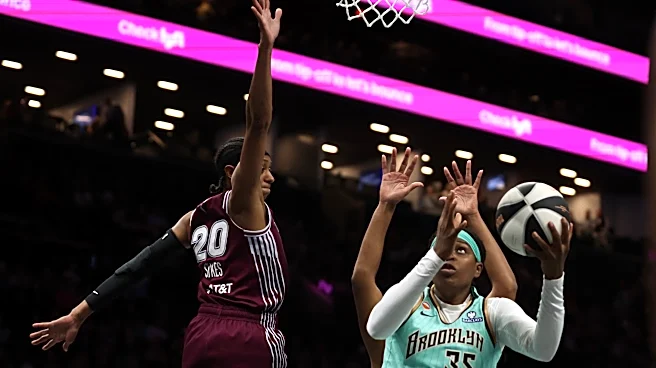
Brittney Sykes (Toronto Tempo)

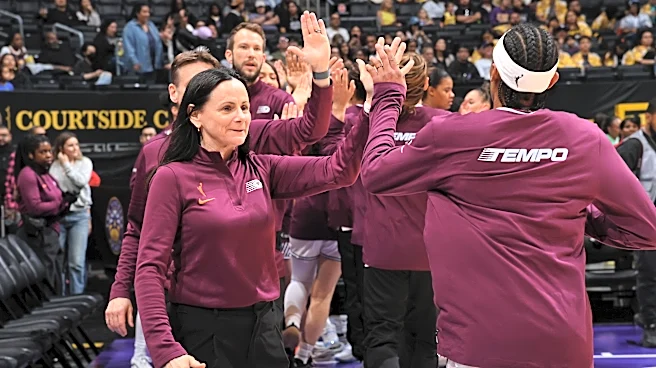
Speaking of expansion teams, the Toronto Tempo were quite active in their first-ever free agency period, handing out several seven-figure contracts and building a team of veterans in hopes of competing right away.
Brittney Sykes has been the most impactful of these acquisitions.
She has a well-earned reputation of being one of the best guard defenders in the league, but it’s her offense that has been a pleasant surprise. Sykes is averaging a career-high 19.6 points per game, buoyed by incredible free throw shooting: 91.8 percent shooting on 7.3 attempts.
As has been the case since her latter seasons in Los Angeles, Sykes has also been an effective playmaker, leading the Tempo in assists at 3.8 per game. She and Marina Mabrey combine to form one of the WNBA’s highest-usage backcourts, and while neither of them can be considered “true” point guards, there’s been enough playmaking between the two of them to get good results in more games than not. The Tempo currently rank No. 4 in the league in offensive rating, scoring 110.2 points per 100 possessions.
How much of this is sustainable? That remains to be seen.
The good news is that Sykes and the Tempo are doing this without much of a frontcourt presence; Nyara Sabally has been in and out of the lineup, and Temi Fagbenle hasn’t played since their first game of the season. Ideally, when Toronto’s offense gets a little more balanced, Sykes won’t be leaned upon as heavily, though she’s seemed perfectly capable of carrying the load when asked.
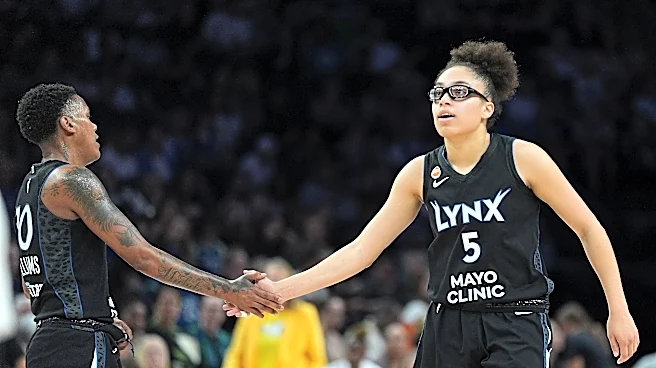
Natasha Howard (Minnesota Lynx)

Natasha Howard won a championship with the Lynx in 2017 as a young, up-and-coming WNBA player, so it makes sense that she’d return to Minnesota nearly a decade later as a grizzled veteran.
As per usual, the Lynx expect to compete for a championship in 2026, but with perennial MVP candidate Napheesa Collier still recovering from procedures on both of her ankles, they needed a forward to step in and replace at least some of Collier’s production.
It’s unrealistic to expect Howard to replicate everything that Collier does, but she’s nonetheless having one of her most productive seasons. She’s currently averaging 16.6 points, 7.7 rebounds and 1.4 steals per game, and she’s been tremendously efficient, too, posting a career-high true shooting percentage of 65.3 percent. Howard’s only statistical blemish is an uncharacteristically poor free throw percentage (53.1 percent), which should climb closer to her career norms as the season goes on.
In any case, Howard has been exactly what the Lynx were looking for in free agency.
They currently sit alone atop the WNBA standings at 8-2, and that’s without Collier playing a single minute of basketball. When she returns, Howard’s role may diminish somewhat, but she’ll still be a key factor, especially with the early-season chemistry she’s established with the team’s starting backcourt of Courtney Williams and Olivia Miles.