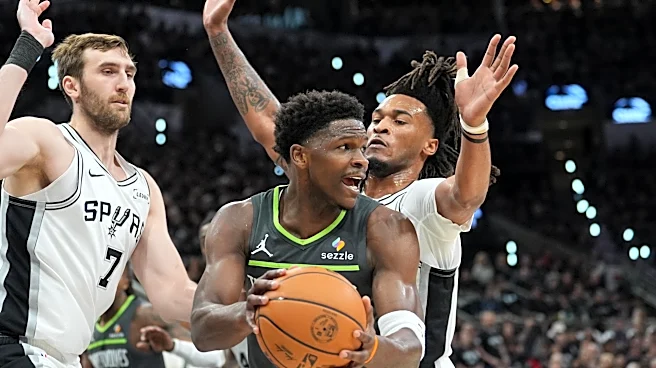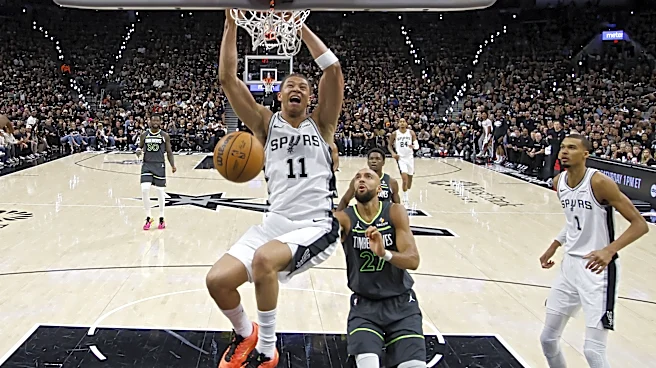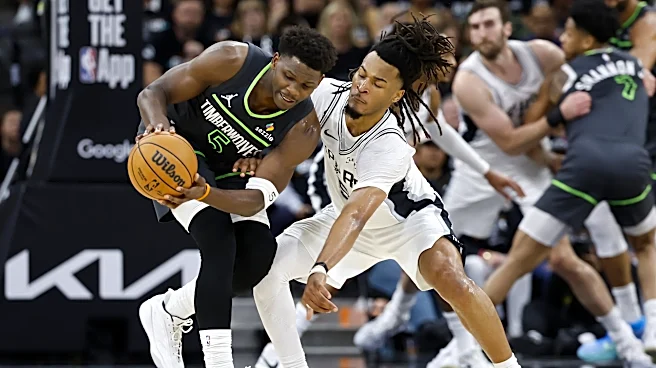







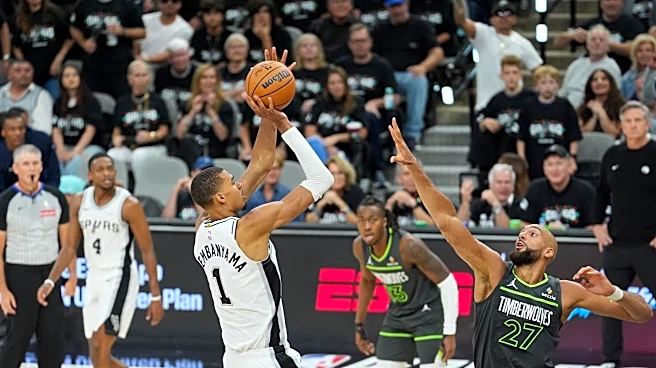
WOW. I must admit, I did my level-best to enter this game with muted expectations, as I was concerned that the Spurs could be feeling a bit overconfident after their dominant Game 2 win. Furthermore, I felt that Minnesota might be the more desperate and motivated team, as a Game 3 win for them would have put tremendous pressure on San Antonio in Game 4, and the Spurs may very well have lacked the experience to deal with that.
As it turns out, my concerns were partly justified. First, the Timberwolves
did play with incredible intensity. Second, many of San Antonio’s players did appear to wilt a bit under this pressure, at least in terms of shooting efficiency. In fact, outside of Wemby, the Spurs shot just 38.81% from the field. Fortunately, Victor logged a truly jaw-dropping performance for the ages, which contributed to a very interesting graded box score. Let’s review some of the highlights:
Note: Now that we’ve moved into the postseason, the reference period used for grading changes from the set of regular season games since 2012-2013 to the set of postseason games since 2012-2013. Unless otherwise noted below, this set DOES include play-in games. As of the end of May 9, 2026, this group include 1,179 games.

Factors that decided the game
- The Timberwolves held some key advantages in this game, including a +7 edge on the offensive glass. This advantage was one reason that they had significantly more offensive opportunities from the field, including 14 more field goal attempts and (because of their shot selection) 7 more threes.
- However, another reason that the Minnesota had more shot attempts is that they fouled San Antonio more and at worse times. Consequently, the Spurs attempted 12 more free throws and had a FTM margin of +7. Given how the rest of the game played out, this edge at the free throw line was absolutely decisive.
- The story with respect to shooting efficiency is mixed. On the one hand, San Antonio held a 7.5 percentage-point advantage in FG%, which allowed them to earn a FGM differential of +1 despite the aforementioned disparity in attempts. The Spurs also held a small edge in 3P% (+1.36 percentage points), but their FT% margin was a disappointing -9.96 percentage points. Having said this, it is critical to note that the Silver and Black were excellent from the free throw line to close out the game.
Rare Box Score Stats
- Wemby’s extraordinary night produced a lot of rare outcomes. First and foremost, his performance marked just the third time since the start of the 1996-1997 that any player has recorded 39+ points, 15+ rebounds, and 5+ blocks in a postseason game. The other two occasions were vintage Shaq performances during the 2000-2002 Lakers three-peat.
- Victor’s game was just the 12th time in the same 30-season period that a player has scored 39+ points on no more than 18 field goal attempts in a true playoff game. Important to point out: eight of those 12 games involved more free throw attempts, including a truly astonishing game in which Shaq attempted 39 shots from the charity stripe.
- I already mentioned that the Spurs had FGA and 3PA margins of -14 and -7, respectively. This is the 29th contest in which a postseason winner has had FGA and 3PA margins that bad or worse since the start of 2012-2013, so it is pretty rare (about once per 41 games in the reference period). Rare though it may be, we should pause and consider this kind of winner-loser field goal attempt disparity is often not bad from the winning team’s perspective. This is because – when a winning team takes significantly fewer shots than its opponent – it is generally because more of its possessions end with free throws, as was the case in this game.
- Last night’s game was just the 21st time in 1,179 postseason games since 2012-2013 (i.e., about 1-in-56 postseason games during the period) in which the winning team achieved a FTA margin of +12 or better while having a foul differential no better than – 2.
What are Team Graded Box Scores?
Very briefly, these box scores grade winner-loser differentials for basic box score statistics, with the grade being based on the winning team’s differential relative to other NBA winners during a defined reference period. Think of it like a report card for understanding how a given winner performed relative to other winners. The reference period used runs from the start of the 2012-2013 season to the latest date of play, including only games in the same season category (i.e., regular season and playoff games are not compared to each other).
Data Source: The underlying data used to create these box scores was collected from Basketball Reference. In all cases, the data are collected the morning after the game is played. Although rare, postgame statistical revisions after data collection do occur and may affect the results after the fact.