




Humans tend to hold on to the past. The good and the bad; we bundle it all up neatly and carry it with us into the untamed future, leaning on our memories to inform and guide us through uncharted waters as we navigate the churn of times that grow less and less precedented as we go. Like would-be survivors of a shipwreck, clinging like limpets to the flotsam of the accident, buoyed or doomed by that which we cling to.
There’s a reason the default icon for the ‘Save’ functionality in nearly every instance
of current software is still a floppy disc; a reason the international symbol for the idea of a telephone has a distinct curve not seen in the sleek glass rectangles we carry around in our pockets or purses. We build on our history, layer upon layer, sometimes to our own detriment.
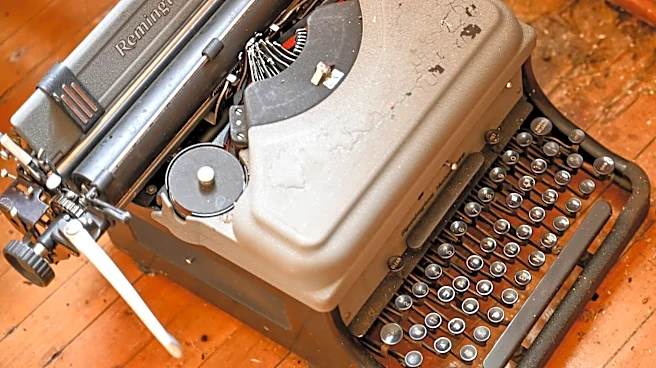
Yesterday, UNC announced that Bill Belichick’s hand-picked GM, Michael Lombardi, had been placed on paid administrative leave for reasons that were not made clear at time of writing. If this is the last we see of Lombardi in an official capacity at UNC, as has been widely speculated, the memories we shall take forward are slim pickings indeed; a proclivity for typewriters, a fondness for Martin Scorsese’s Goodfellas, and a seeming failure to perform the necessary duties of the role at all measurable levels. Not much to build on, then, but it’s hard to see what else could have been expected.
From the beginning, the Bill Belichick era of Tar Heel football has been rife with baggage from a bygone era. Whether it’s the obviously and egregiously misplaced confidence of a coaching staff touting success from the dim past of a different sport, or UNC’s administration looking at a lifelong professional coattail-rider and making him the highest-paid GM in college football, the past has weighed like an anchor on the program I have loved for as long as I can remember. For my part, those memories weigh me down as well. It’s why, for the life of me, I can’t just tune out. It’s why I bang the drum of mindless — brainless, perhaps, to some — hope each offseason. It’s a personality flaw that runs into the very foundation of my being.
On the keyboard in front of me, illuminated by the glow from the attached screen, there is a button on the rightmost edge labeled “return.” As I understand it, or as the highest-paid GM in college football would likely be able to explain to me, this is shorthand for a carriage return, a lever used on some typewriters to reset the machine to the beginning of a line of text. When used in conjunction with a line feed, the typewriter would behave much like the current “return” button on my laptop; the cursor moved to the beginning of the line of text, one line further down the page.
When used alone, however, the carriage return would simply position the machine back at the beginning of the existing line of text, allowing the operator to retype for emphasis or to make corrections. Either way, without a line feed to instruct the machine to start a new line, we end up rehashing the same old line of text. Without any followup, a carriage return is a meaningless gesture, useful only to reinforce ideas that have already been committed to the page.
A carriage return alone simply isn’t enough for the clean start that we’re looking for in this instance.