



The Dodgers payroll will likely set another MLB record this year, as they started on opening day with a payroll for competitive balance tax purposes just shy of $411 million. What they are actually paying this year is a bit different.
I’ve been tracking Dodgers payroll since 2010, and as I wrote during the offseason the purpose of this exercise has changed. It used to be a functional accounting for how much money the team might have to spend, but the current iteration of the franchise is stretching
those limits, such that this becomes more of an accounting exercise than anything meaningful.
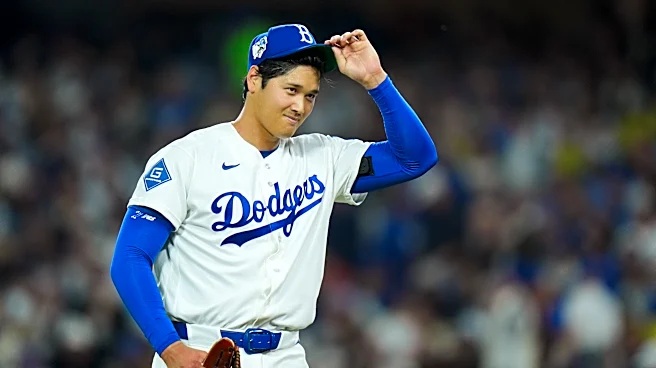
To that end, I’ve noted in these opening day payroll looks what salary and bonuses were paid in that actual year, in addition to the value for competitive balance tax purposes. There’s a wide chasm in the Dodgers’ 2026 payroll here of $261.7 million paid out this year and their $410.8 million CBT number. Shohei Ohtani is the largest reason, but he’s not alone, as 10 current players have parts of their salaries deferred.
The actual payroll numbers here do not account for the Dodgers funding of future deferrals, though that is a very real cost. Per the collective bargaining agreement:
Deferred compensation obligations incurred in a Contract executed on or after September 30, 2002 must be fully funded by the Club, in an amount equal to the present value of the total deferred compensation obligation, on or before the second July 1 following the championship season in which the deferred compensation is earned. For purposes of this Article XVI, full funding of the present value of deferred compensation obligations shall mean that the Club must have funded, for the duration of and without interruption in each year, the current present value of the then outstanding deferred payments, discounted by 5% annually.
In other words, the Dodgers by this July 1 have to set aside funds to cover his $68 million deferred payment from 2024. If they set aside nothing until July 1, they’d have to pony up about $50.7 million this year to fund that payment scheduled for 2034. In reality, the Dodgers likely already set aside money for this.
“It’s just how you account for it. You have to fund a lot of it right now, and having that money go to work for you,” Dodgers president of baseball operations Andrew Friedman said in December 2024. “A lot of our ownership group are from financial background, and can have that money going to work right now, and not something that sneaks up on us. We’re not going to wake up in 2035 and say, ‘Oh my God, that’s right. There’s this money due.’ We’ll plan for it along the way.”
But to keep this an apples-to-apples comparison to each of the previous 17 years, I’m not including any of the money set aside for deferred payments. The purposes of that accounting is fairly well captured by the competitive balance tax calculations anyway, and gives a picture of the expected punitive costs coming at the end of the year as well.
I did separate the opening day payroll into three categories — active roster, injured list, and other. Since this was about opening day three weeks ago, only 10 Dodgers were on the injured list then and two have since been added. Other is a catch-all, usually for dead money, paying players no longer around. Justin Turner counts here, as he got the final $2 million of his $8 million signing bonus on January 15, from his contract signed in 2021. Also in “other” here are Hyeseong Kim and Jack Suwinski, both of whom signed guaranteed contracts but each began the season in the minors.
The $37.25 million the Dodgers had on the injured list to open the season is their highest since starting 2019 with $51.7 million on the sideline.
As for the details of this year’s payroll, let’s look at the individual contracts. I’ve tracked all these contracts as they happen, and you can see many intricate details in our Dodgers payroll section on the site. For this year’s opening day payroll, some of the salaries of the players with between zero and three years of service time are courtesy of the Associated Press.
Some of the biggest differences between actual and competitive balance tax payroll have to do with the timing of signing bonus payments and deferred salaries.
Blake Snell, for instance, defers just over half ($13.2 million) of his salary ($26 million) each year, but also received all $52 million of his signing bonus in 2025. So this year he receives only $12.8 million while his CBT payroll number is about $31.357 million. Same for Teoscar Hernández, who got his $23 million signing bonus in 2025 and this year is deferring $8 million of his $12 million salary. So his actual payroll number here is $4 million, compared to about $19.96 million for CBT purposes.
Also included in competitive balance tax payrolls are minor league salaries for players on the 40-man roster, which are estimated here to be about $2.5 million (aside from Kim); each team’s share of funding the $50 million pre-arbitration bonus pool; and a summary of player benefits played by the team. Last year’s number here was $18,206,789, so we’ll assume $19 million here.
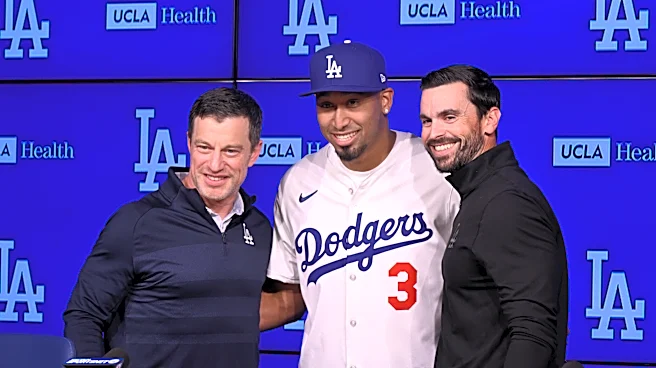
That puts the Dodgers’ payroll for competitive balance tax purposes at roughly $410.8 million to open the season, which is to be expected after signing Kyle Tucker and Edwin Díaz to record-setting contracts during the offseason.
Last year the Dodgers shattered MLB records with a $417.3 million payroll for CBT purposes and an actual competitive balance tax paid of $169.4 million. This year, the Dodgers were nearly at that number on opening day.