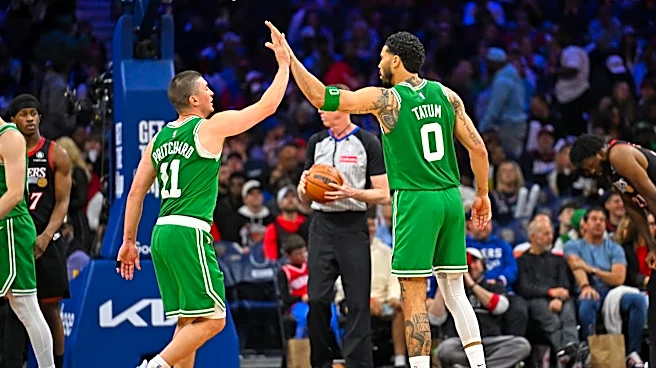

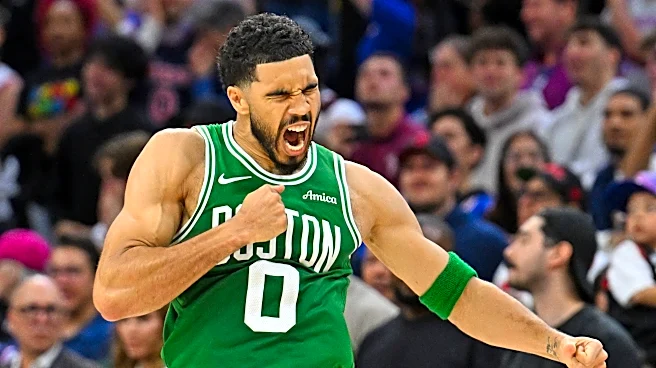
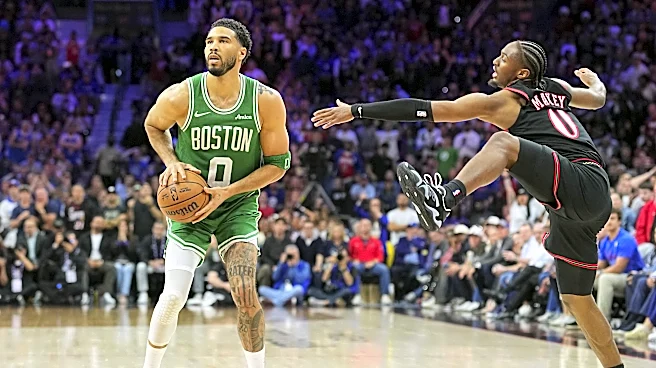
Attention to detail is one of Boston’s most overlooked strengths.
There are plenty to choose from — volume three-point shooting, defensive connectivity, late-game composure. But it’s the precision and thoroughness of the minutiae that often sets them apart.
Their preparation allows them to identify pressure points quickly, and then push on them until something breaks.
Their latest win over the Sixers was a clear example.
The Boston Celtics are no stranger to Joel Embiid. He’s been a recurring playoff
antagonist for roughly a decade. Despite his individual dominance, Embiid has been open about how lopsided this non-rivalry has been.
Historically, Boston has found ways to exploit the cracks in his Sixers teams. In Game 4 with Embiid returning to the floor, they made him the focal point of their offensive attack.
On the very first possession, Boston brings Embiid directly into the action.
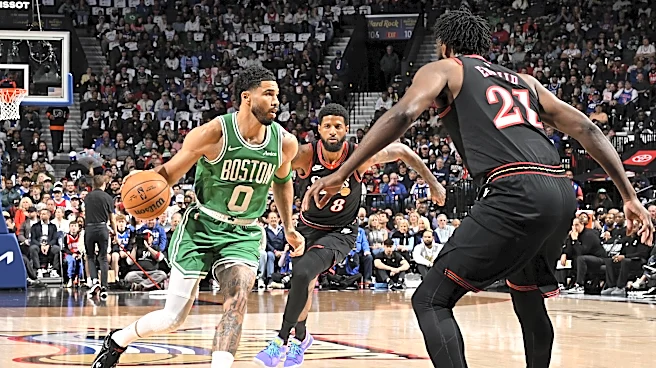
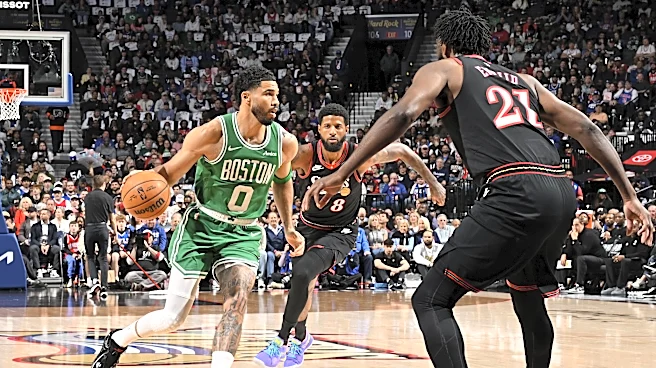
With Queta setting a high screen for Tatum, they force Embiid out beyond the three-point line, immediately testing his agility. Tatum causes confusion with his handle, and with both defenders drawn to him, he feeds Queta for a tone-setting slam.
Boston wants to make Embiid defend in space as much as possible. It pulls a dominant rim protector out of the paint and eliminates any chance for him to rest while trying to find an offensive rhythm.
A few possessions later, they put the pressure on him again.
Two minutes into his return from appendicitis, Embiid is responsible for defending both the ball and the roll man as Derrick White gets downhill off a pair of screens. To his credit, Embiid contains the ball fairly well, but Maxey gets lost in the play and White has too much room to find Queta again for the dunk.
Embiid had early success offensively, but it came with a growing workload on the defensive end.
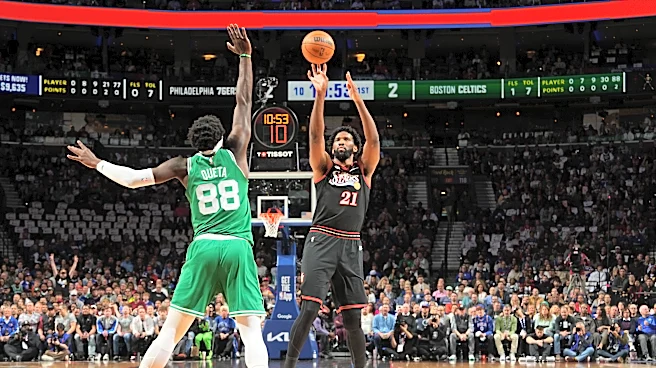
Here, Vucevic screens and then re-screens for Tatum. Embiid is dragged all the way out to the logo before having to recover back to the corner. This isn’t sustainable, and it may have been the moment Philly started to rethink its coverages.
From that point forward, the Sixers became more deliberate about keeping Embiid out of switches, or removing him from the action entirely.
Later in the game, a string of possessions defined this cat-and-mouse dynamic.
On this first play, the floor is cleared for a Pritchard-Queta pick-and-roll. To avoid getting stuck on Pritchard, Embiid hedges the screen, extending it long enough for Grimes to recover before returning to Queta.
In most cases, this is a win for Philly. The advantage is gone, matchups are intact, and the clock is winding down. The process (pun intended) is good.
Unfortunately, so is Scheierman.
On the following possession, Queta comes up to screen for Tatum.
The Celtics once again look to involve Embiid, but this time he works to avoid it. Instead of following Queta, he removes himself from the play by calling for a switch with Grimes.
This keeps Embiid protected, but now he’s guarding Pritchard. To fix that, he calls for Maxey to switch, allowing him to stay closer to the rim. Tatum may have missed a brief window to hit Queta, but Embiid’s presence likely plays a role in that hesitation. The possession ends with Oubre drawing an offensive foul.
Boston doesn’t miss what’s happening here. They see the Sixers finding opportunities to give Embiid a breather and keep him out of the hunt.
The killer whale offense isn’t going to let that slide.
Boston begins the action the same way, with Pritchard screening for Queta, who then flows into a screen for Tatum. Embiid handles it similarly, having Grimes take Queta before swapping again with Edgecombe.
The biggest key to understand here is the movement path of Pritchard.
On the previous possession, he spaces to the wing, staying close enough for Philly to manipulate the matchups. This time, he cuts across the floor. That leaves Embiid on White, with no switch available. Tatum calls White into the action, and they’re surgical with a behind-the-back pass into a step-back three.
This wasn’t an accident. Boston is essentially a living, breathing flow chart. They see the game in stages of “if this, then that.” Embiid is avoiding the pick-and-roll? Take away his ability to do that.
To Philly’s credit, they weren’t passive. They identified the problem early on, and made adjustments to protect Embiid the best they could. For stretches, it worked or at least stalled the attack briefly. But Boston noticed the change, and found the next weakness to exploit.
Winning in the playoffs requires knowing your opponent, understanding their tendencies, and having a counter for their counters. Knowing yourself is part of the challenge, too. Boston’s self-awareness allows them to put players in positions to succeed, and those players know where they’re supposed to be at all times. They can coordinate their attacks with ease, and have the shared intuition to cycle through options until they find the right answer.
It’s going to be very difficult to win four games against this team.