


The NFL trade deadline came and went, leaving most of the Detroit Lions faithful underwhelmed, disappointed, and frustrated with Brad Holmes for not matching the impact-level trades of the Chicago Bears or the Minnesota Vikings. Count me as one of them. I had my wish list of defensive backs I thought Holmes should target.
The good news, however, is that the Lions did not come away empty-handed. In fact, the trade for safety Andre Cisco stabilizes the safety room for Kelvin Sheppard’s defense for the cost
of just a 2029 sixth-round pick. At that price, Cisco is essentially a free acquisition with 59 career starts, 8 interceptions, and 4 forced fumbles.
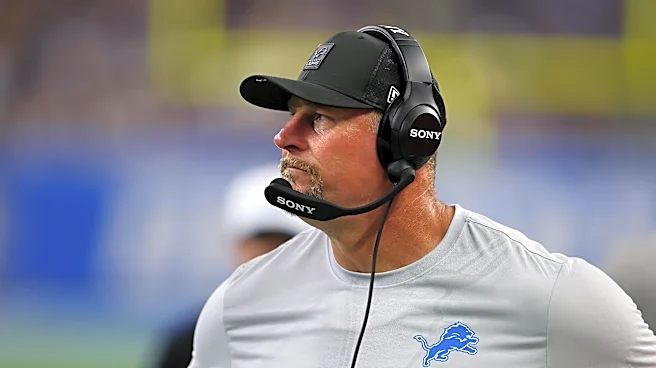
Shortly after the news of the Lions trade for Cisco, coach Dan Campbell shared his thoughts on the safety:
“We’ve liked Cisco from afar, having played against him and then even in free agency when he was with Jacksonville coming out. He’s athletic, he’s versatile, he knows our system, he knows our verbiage (via his time with Aaron Glenn and the Jets), so we feel like this is a guy that can help us here a little bit. We’re excited.”
The key takeaway is that Cisco knows the Lions’ system and verbiage, making him a plug-and-play contributor in the Lions’ rotating use of defensive backs. The defense spent the first half of the season working through a flood of missed assignments and trust issues. Cisco’s familiarity with the scheme should reduce the likelihood of those fatal errors from creeping back onto the tape.
For this film study, I set out to learn about Cisco and how he fits on this Lions. I also reviewed the film from the Week 9 game against the Miami Dolphins for anything noteworthy.
Cisco plays Dan Campbell’s brand of football
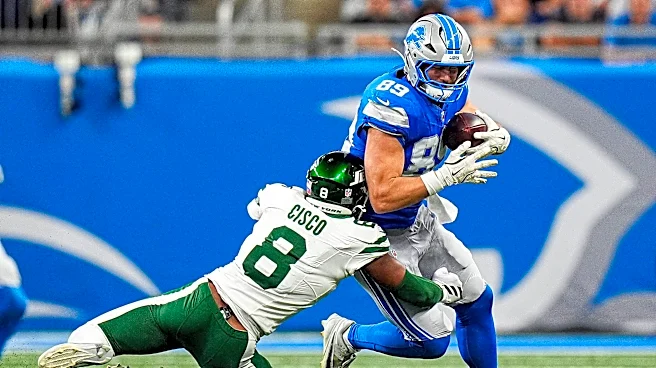
The first thing that stood out in Cisco’s film is that he plays safety as an aggressor, with violence and resilience. In the Lions’ Week 3 home game against the New York Jets, Cisco played 66 defensive snaps and played through the whistle on each one of them. Amon-Ra St. Brown, Jameson Williams, and Isaac TeSlaa are known for their physicality and effort as blockers, but Cisco was up for the challenge and battled the Lions wide receivers all game.
Below, on the Lions’ first run play of the game, Cisco (No. 8) shows on tape his desire to deliver the hit at the point of contact rather than finesse the block.

On the second play below, Cisco matches St. Brown’s physicality and sustains his effort in the tight red zone to get in on the tackle.

It cannot be emphasized enough how big of an impact this level of physicality and effort will matter down the stretch, especially against Ben Johnson and the Bears’ run game.
Cisco is versatile on defense and reliable on special teams
Beyond effort and physicality, Cisco has always been known for his versatility. Although used primarily as a high safety, Cisco showed he can blitz when he took down Jared Goff for a 10-yard loss.

With Brian Branch, Kerby Joseph (presumably), and likely Chuck Clark set to take on most snaps at safety, Cisco will have to contribute on special teams. For the Jets this season, Cisco has logged 130 special teams snaps. After reviewing a sample of these snaps, the common role he was tasked with on both punt and kickoff coverage units was as a contain/safety/trail player, a sign of his ability to instinctively read, react, and reliably tackle as a last line of defense.
For example, below is Cisco on kickoff coverage, lined up as the “L1” outside player on the left side of the formation. Instead of aggressively engaging with the return, Cisco’s role is to read and react with outside-contain leverage. Once the returner makes his vertical cut through an inside alley, Cisco closes down to make the play.

At the end of the day, Brad Holmes upgraded the Lions’ safety room with a clear play style and schematic fit, with a wealth of starting experience in Cisco at a negligible cost. By the end of the season, I expect this move to garner strong approval from even the most frustrated Holmes critics. Don’t be surprised if Cisco also earns himself a spot on the Lions 2027 roster.
Vaki the offensive chess piece
Without bypassing the Miami game entirely, one play Drew Petzing dialed up shows the continued evolution of both the offensive scheme and Sione Vaki’s role.
As shown below, Vaki is lined up as a fullback/h-back directly in front of Jahmyr Gibbs and used as a lead blocker on the crack-toss sweep.

Expanding Vaki’s role to include a pseudo-fullback option opens up many different options for the Lions offense. For example, the “sidecar” or “offset full house” formation the Lions used so effectively against Brian Flores and the Vikings’ defense could be adapted to use Vaki in one of the previously used tight end roles, opening up a host of different run and pass concepts from the same look.
When Ben Johnson ran the Lions offense, one noticeable feature was multiple layers, with formations and plays building off each other and setting up defenses weeks in advance. This is the art of play calling and offensive design. Petzing is starting to show that same talent and ability as an offensive coordinator.
If this trend continues, this offense could have another gear we haven’t seen yet.