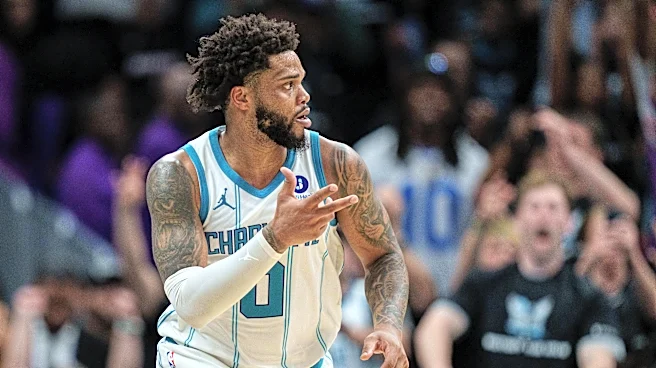







It has been one week since the Phoenix Suns acquired Miles Bridges. Ironically, it happened while I was trying to focus on anything other than basketball. I was chasing warm sand, cool ocean water, and time with my family. But on the drive home from California to Phoenix, I spent plenty of time thinking about the trade, both from a basketball perspective and a moral one.
I’ve already written about the basketball side of it, and I’ll continue to do so throughout the summer as I analyze how everything
fits together. Why? Because this is a basketball site. That’s what I do, and that’s what I love to do. I write about basketball. Not politics. Not religion. Not the internal struggle of morality. Basketball.
That being said, I do want to put my thoughts on the moral dilemma out there. Any time Miles Bridges is mentioned, someone is going to bring it up in the comments. Someone is going to have strong feelings about it. That’s understandable, and I know those conversations aren’t going away.
So, for posterity’s sake, I want to have my thoughts written down in one place. That way, whenever someone questions whether I should consider the moral ramifications of having a player like Miles Bridges on the Phoenix Suns, I can point them here rather than rehashing the same conversation every time.
The acquisition of Miles Bridges has become one of the defining and polarizing talking points of the Phoenix Suns’ offseason, for diehard fans and casual observers alike. The reason is simple: you can’t evaluate this move strictly through the lens of basketball. You have to acknowledge the weight that accompanies it.
Bridges isn’t just a talented player joining a new roster. He arrives carrying the baggage of pleading no contest to felony domestic violence charges, followed by violations of the probation that stemmed from that case. Those facts don’t disappear because he can score 20 points a night. They are part of the conversation, whether we want them to be or not. That reality creates a moral undertone around this acquisition that can’t be ignored. It also raises understandable questions about an organization that spent the better part of two years talking about identity, culture, and the character of the players it wanted to bring into its locker room. For many fans, those words now feel difficult to reconcile with this decision.
I wrote about this very subject a couple of seasons ago when rumors swirled that the Suns might pursue Bridges at the trade deadline. Since the trade became official, I’ve seen plenty of comments asking why we haven’t discussed it more directly from a writer’s perspective.
So here it is, not because I believe my opinion should shape yours. Quite the opposite. This isn’t a comfortable conversation, and it certainly isn’t one with a universally satisfying answer. But it’s one worth having.
For some, this move resonates differently because these aren’t abstract headlines. They’re lived experiences. Physical abuse. Emotional abuse. Trauma that lingers long after the bruises disappear. I can raise my hand on this one as I’ve unfortunately experienced it. That experience doesn’t make my opinion more important than anyone else’s. It doesn’t give me greater authority to decide whether a basketball transaction should or shouldn’t happen. It simply gives me my own perspective. And that’s all this is: my perspective.
I’ve said this before, and I still believe it today: being a sports fan is an intensely personal experience. It isn’t my place to dictate what fandom should look like for someone else. It isn’t my place to tell you whether you’re right or wrong for embracing this move, rejecting it, or feeling conflicted somewhere in between. Those are deeply personal moral calculations, and every fan has to reconcile them for themselves.
As for me, I’ve always believed in due process, both in the legal system and within the NBA’s disciplinary framework. Legally, Bridges served the sentence handed down by the court. He was convicted of one felony through a no-contest plea, received three years of probation instead of jail time, completed counseling, parenting classes, community service, drug testing, and complied with a long-term protective order. From the NBA’s standpoint, he also paid a significant professional price, missing the entire 2022–23 season because no team was willing to sign him before serving a 30-game suspension imposed by the league.
Do I think our legal system always delivers justice equally? No. We’ve all seen enough to know that fairness isn’t distributed evenly. Consequences have a way of finding some people while conveniently overlooking others. Whether it’s in sports, business, or everyday life, accountability often depends on who you are and what you can afford. That’s an unfortunate truth.
Within the league, however, Bridges served the suspension handed down by the NBA. He fulfilled the punishment the league determined was appropriate. Whether any of us believe that punishment should have been harsher is a separate conversation, but the league has reached its conclusion. That leaves us with a different question. Not a legal one, but a moral one. What does forgiveness look like?
I’ve always believed in forgiving without forgetting. Those two ideas aren’t mutually exclusive. I can condemn what Miles Bridges did. I can find his actions reprehensible. I can wish the legal consequences had been more severe. At the same time, I can acknowledge that society only functions if we allow the possibility that people can serve their punishment and be given another opportunity to move forward.
That doesn’t erase what happened. It doesn’t absolve him. And it certainly doesn’t require anyone else to feel the same way.
Personally, I won’t be buying a Miles Bridges jersey. I won’t celebrate him on an individual level. That’s a line I’ve drawn for myself. But I will continue rooting for the Phoenix Suns. If Bridges contributes to the team’s success, I’ll appreciate the basketball he provides without pretending his past doesn’t exist.
That’s where I’ve landed. You may land somewhere completely different. You may decide this is a bridge too far and that your relationship with the Suns has fundamentally changed. You may believe second chances should never extend to someone convicted of domestic violence. Or you may believe, as I do, that forgiveness is possible without requiring forgetfulness.
None of those perspectives makes someone a better or worse fan. They simply reflect the deeply personal ways we navigate our own values. That’s ultimately what makes this conversation so difficult. There isn’t a scoreboard for morality. There isn’t a consensus waiting at the end of the debate. There are only individual people, shaped by individual experiences, trying to reconcile what they believe with the team they’ve chosen to love.
And that’s not something any writer or any fan has the right to decide for someone else.