


After covering the top Denver Broncos offensive fits yesterday, we’re wrapping up with the big board for the defense. Again, this big board was created from some AI-assisted research into the draft tendencies of both George Paton and Sean Payton. It’s all a guessing game, but a fun one.
Let’s see who the best fits were on defense regardless of round. Tight End Eli Stowers was the top offensive fit and the only offensive player who scored above 90 on the PPFS methodology (see description of method at
end of post). However, there were three players who topped that 90 score on defense and one is definitely within Denver’s range in the second round.
Broncos Big Board: Top Defensive Fits
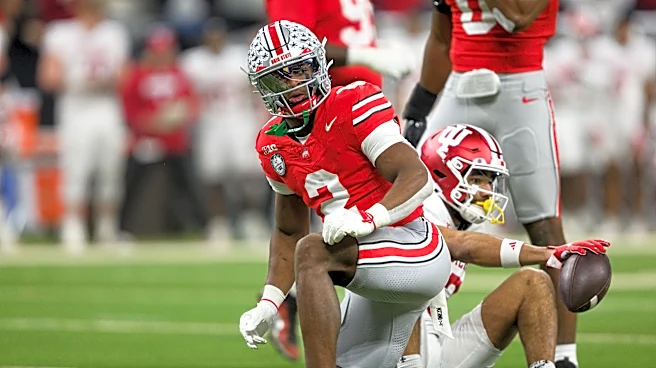
Caleb Downs, S, Ohio State, 1st, (Tier 1, PPFS ~96)
Ohio State’s 5’11″/206 unanimous All-American and Jim Thorpe winner carries the rarest combination in the class: 256 career tackles, six picks, zero touchdowns allowed on 874 coverage snaps, and a father who once wore orange-and-blue. The Broncos have no R1 pick to spend, but on pure talent he’s the clean top of the board — a true center-field eraser who solves the Brandon Jones walk-year problem before it starts.
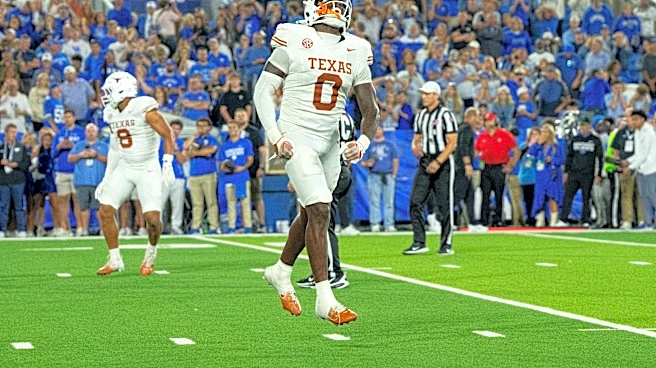
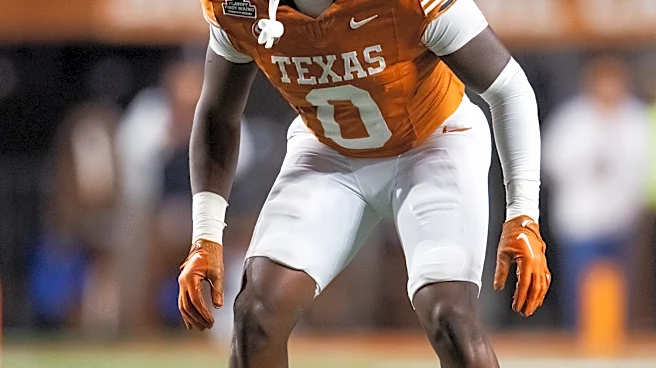
Anthony Hill Jr., LB, Texas, 2nd-3rd, (Tier 1, PPFS ~94)
A 6’2″/238 Texas three-down hammer with captain traits and genuine coverage range, Hill is the rare off-ball linebacker who can MIKE or WILL on Sunday. He simultaneously solves Denver’s Singleton-succession plan and the Greenlaw-replacement hole in one pick. Former five-star, 21 years old on draft day, sideline-to-sideline pursuit — exactly the crisis-fix profile the second round is built for.
Dillon Thieneman, S, Oregon, 1st-2nd, (Tier 1, PPFS ~92)
Oregon’s 6’0″/201 four-time captain posts a 4.35 forty, eight career interceptions, 306 tackles across 39 starts, and a Justin Reid comp. First-team Academic All-American with no medical flags and the exact single-high processor Denver’s defense is asking for behind Jones. The Oregon pipeline plus the free-safety gap makes Thieneman the highest-modifier stack on the defensive side of the class.
Sonny Styles, LB, Ohio State, 1st, (Tier 1, PPFS ~89)
Ohio State’s 6’5″/244 hybrid safety-to-linebacker convert is Brugler’s LB1 — a coverage-first nickel body with Paton’s favorite archetype (Kidsy, Strnad, Greenlaw lineage) and direct Greenlaw-replacement utility. He’s likely off the board before #62, but the defensive-investment pattern keeps him in play if he slips. Modern linebacker in every sense the Broncos scheme asks for.
A.J. Haulcy, S, LSU, 2nd-3rd, (Tier 1, PPFS ~88)
LSU’s 6’0″/215 ‘Mr. Give Me That’ turnover machine logged 10 career interceptions and 347 tackles across three schools with no medical history. Played one-high, two-high, and big nickel — scheme-versatile range the Broncos defense can deploy instantly. The LSU pipeline, the free-safety gap, and elite ball production stack cleanly into R2 #62 as a genuine second-round bullseye.
CJ Allen, LB, Georgia, 2nd, (Tier 1, PPFS ~88)
Georgia’s 6’1″/230 captain and three-down processor carries the strongest school pipeline on Paton’s defensive board. Clean reads, plus tackling form, coverage utility, and a legitimate green-dot candidacy to eventually succeed Alex Singleton at MIKE. SEC pedigree plus the captain signature slots him into Tier 1 as a ready-to-play second-round option.
Keldric Faulk, EDGE, Auburn, 1st-2nd, (Tier 1, PPFS ~88)
Auburn’s 6’6″/274 captain has 35″ arms and is the only true 270+ base-end in the class — the exact Franklin-Myers replacement profile for Denver’s run defense. Plays 4i/5-tech, stacks and sheds efficiently, rarely misses tackles. The character story (single-mother household, NIL donations to walk-ons) is the kind of intangibles spike this regime has historically paid up for. Mykel Williams comp.
Mansoor Delane, CB, LSU, 1st, (Tier 1, PPFS ~88)
LSU’s 6’0″/185 press-man alpha has eight career interceptions, zero medical history, and an R1 grade — the cleanest top-of-board cornerback in the class. The LSU pipeline runs deep with this front office, and Delane plays with the press strength, ball skills, and recovery speed the Broncos scheme demands. A true rookie-contributor boundary corner who stretches the depth chart multiple years past Moss and McMillian’s walks.
Kayden McDonald, DT, Ohio State, 1st-2nd, (Tier 1, PPFS ~87)
Ohio State’s 6’2″/326 nose at age 21, Unanimous All-American and Big Ten DL of the Year. Scouts call him the most dominant player on several OSU tapes — resets the line of scrimmage with initial burst and power, shuts down A-gap run lanes. Fills the D.J. Jones succession lane with rare youth at the position. Ohio State pipeline is among the strongest on the Broncos’ historical board.
Toriano Pride Jr., CB, Missouri, 6th-7th, (Tier 1, PPFS ~87)
Missouri’s 5’10″/185 boundary corner ran a 4.32 forty (second-fastest defender at the combine), has 31″ arms, five career picks including pick-sixes in consecutive seasons, and never missed a game across 52 appearances. Missouri pipeline plus Hula Bowl validation plus elite speed plus ball production at Day-3 capital is an archetype-perfect stack. If he’s on the board at R6, this is the pick.
Kyle Louis, LB, Pittsburgh, 3rd, (Tier 1, PPFS ~86)
A 6’0″/220 Pitt linebacker with legitimate blitz flex and range. Pass-rush value from the off-ball position is the exact modifier Payton-Paton have paid for (Strnad’s 4.5 sacks in 2025). The frame caps his ceiling, but the sub-package blitz-and-coverage skillset makes him a Day-2 bet on modern linebacker traits who complements Singleton rather than duplicates Strnad.
Darrell Jackson Jr., DT, Florida State, 4th, (Tier 1, PPFS ~85)
Florida State’s 6’6″/315 captain has 35 1/4″ arms, an 86.5″ wingspan, and a Super Bowl MVP uncle (Dexter Jackson). Didn’t play football until 16, bulked from 200 to 315, transferred to be near an ill mother. Plays with awesome straight-ahead power, walks centers backward, and does the dirty work at nose. Captain designation, dual all-star validation, rare size, Day-2/3 price — the cleanest DL fit for what Denver actually needs.
Malik Muhammad, CB, Texas, 3rd, (Tier 1, PPFS ~85)
Texas’s 6’0″/182 corner brings 32 3/8″ arms — the length profile this front office has consistently rewarded at the DB position. Texas pipeline connection, R3 grade that fits Denver’s Day-2 DB investment pattern, and the press-boundary archetype Vance Joseph’s scheme is built around. Pipeline plus length plus the right-round capital at exactly Denver’s second-pick window is a textbook PPFS stack.
Emmanuel McNeil-Warren, S, Toledo, 1st-2nd, (Tier 2, PPFS ~84)
Toledo’s 6’4″/201 safety brings 32 1/8″ arms, five career picks, nine forced fumbles, and 214 tackles, plus the first-generation-college intangibles profile Paton historically rewards. A rare 6’4″ rangy boundary body fills the free-safety gap and offers TE-matchup versatility against the AFC West passing attacks. Fully cleared 2024 shoulder. Confirmed Broncos combine meeting. The R1-R2 grade is expensive, but the gap-urgency plus archetype-rarity justifies it.
LT Overton, EDGE, Alabama, 4th, (Tier 2, PPFS ~84)
Alabama’s 6’3″/274 (287 at his pro day) EDGE has class-best 10 5/8″ hands, a Senior Bowl invite, and a Campbell Trophy semifinalist academic profile. Age 21, former five-star, SEC/Big 12 parent-athletic bloodlines. Gap-sound, unselfish run defender who sets firm edges — exactly the heavy base-end profile Denver lost when Franklin-Myers walked. The Alabama-to-Denver pipeline has shown up repeatedly on pre-draft boards.
Chris McClellan, DT, Missouri, 3rd-4th, (Tier 2, PPFS ~83)
Missouri’s 6’4″/313 DT has 34″ arms, 11″ hands, a Senior Bowl invite, and zero missed games across 51 career appearances — iron-man durability this front office has consistently rewarded. Scheme-flexible 0/1-tech who rotates between nose snaps and 3-tech reps. Missouri-to-Denver is a direct pipeline (Pride, Abrams-Draine), and this is the exact rotational interior body the room hasn’t drafted in three years.
Jacob Rodriguez, LB, Texas Tech, 2nd, (Tier 2, PPFS ~83)
Texas Tech’s 6’1″/231 linebacker at 23 on draft day is a three-down processor with starter-caliber reps and Brugler’s LB2 grade. Not flashy, but the ready-now profile fits a roster in genuine depth crisis. The kind of low-variance early-Day-2 plug-and-play option that minimizes risk at a position Denver cannot afford to miss on in 2026.
Chris Johnson, CB, San Diego State, 1st-2nd, (Tier 2, PPFS ~82)
San Diego State’s Senior Bowl invitee earned a ‘give-a-damn factor is to the moon’ scouting line and logged 687 career special-teams snaps — a maximum-density character and ST stack this coaching staff has rewarded repeatedly. No pipeline tie, but the intangibles and ST floor match the profile Paton targeted in Barron and Surtain pre-draft reports. A multi-phase boundary body with immediate four-phase ST contribution.
Jake Golday, LB, Cincinnati, 2nd-3rd, (Tier 2, PPFS ~82)
Cincinnati’s 6’5″/239 linebacker brings plus length and athletic traits in the rangy, tall-framed mold Paton prefers for coverage-capable off-ball bodies. Brugler’s LB4. Needs refinement, but the trait profile is there for a scheme that needs speed and length next to a veteran signal-caller. A genuine Day-2 developmental bet at a position in crisis.
Jalon Kilgore, S, South Carolina, 3rd, (Tier 2, PPFS ~82)
South Carolina’s 6’1″/210 captain ran 4.40 with 32 7/8″ arms, eight career picks, and 21 pass breakups at 21 years old — the youngest safety in the class. Senior Bowl validation plus an elite size-speed profile directly fills the free-safety gap behind Jones. Captain-plus-Senior Bowl-plus-age-premium stack reads as a Day-2 bullseye at Denver’s R3 capital window.
Lee Hunter, DT, Texas Tech, 2nd-3rd, (Tier 2, PPFS ~82)
Texas Tech’s 6’4″/318 DT ‘The Fridge’ carries a Senior Bowl invite and 2025 Second Team All-American honors. Five-year senior across Auburn, UCF, and Texas Tech with 173 tackles and 32.5 TFL in 52 games. Balanced blend of strength, length, and movement, with the ability to post up A-gaps on run downs — the true nose-guard mass Denver’s behind D.J. Jones depth chart is missing.
Gracen Halton, DT, Oklahoma, 4th, (Tier 2, PPFS ~81)
Oklahoma’s 6’3″/293 DT ran a 4.82 — the most athletic interior lineman in the class. Four-year starter who closes in a hurry when he gets a clear path. Projects as a rotational 1-tech/3-tech hybrid in the mold of how Roach and Allen already work on sub-package snaps for Denver. The Oklahoma pipeline is a Paton staple.
Arvell Reese, EDGE, Ohio State, 1st, (Tier 2, PPFS ~80)
Ohio State’s 6’4″/241 EDGE ran a 4.46 with elite bend — a pure speed-rusher who mirrors Bonitto’s archetype, a plus in Denver’s rotation-heavy usage model. Ohio State is one of the strongest historical pipelines on the Broncos’ board. If he slips into Day 2 he is a clean pass-rush addition behind the $156M co-alpha pair of Bonitto and Cooper.
Davison Igbinosun, CB, Ohio State, 2nd-3rd, (Tier 2, PPFS ~80)
Ohio State’s 6’2″ press-man boundary corner has Senior Bowl validation, a pipeline this front office has leaned into repeatedly, and the prototypical length-and-physicality profile Denver loves at the position. The 18 penalty flags the past two seasons (famously wore oven mitts in practice) are the one coaching concern, but that’s a correctable technique flaw at the NFL level. Pipeline plus Senior Bowl plus archetype fit is a strong Day-2 target.
Daylen Everette, CB, Georgia, 3rd-4th, (Tier 2, PPFS ~80)
Georgia’s 6’1″/196 former five-star has a Senior Bowl invite, five career picks, and a scouting line — ‘leader of the DB room, carries himself like a future coach’ — that reads like a Paton intangibles checklist. Resolved hernia and ankle histories are not structural. Size, pedigree, and character stack into a Day-2 profile with real developmental starter upside at boundary.
Josiah Trotter, LB, Missouri, 3rd, (Tier 2, PPFS ~80)
Missouri’s 6’2″/237 redshirt sophomore (age 21) brings NFL bloodlines — brother of Eagles LB Jeremiah Trotter Jr., son of Eagles legend Jeremiah Trotter. Bloodline plus youth plus P4 profile fits Paton’s pedigree preferences cleanly, and the MIKE-style downhill profile slots him as a Singleton-succession candidate on Day 2.
Michael Taaffe, S, Texas, 5th, (Tier 2, PPFS ~80)
Texas’s 6’0″/190 walk-on earned multi-year captain status, the Burlsworth and Wuerffel Trophies, a Senior Bowl invite, and 844 career ST snaps — the highest-density character stack in the safety class. Undersized at 190 with 29 1/4″ arms, and tools may not project as a defensive regular, but as an ST-first / emergency safety at R5 capital, this is the exact profile this regime has rewarded repeatedly.
Peter Woods, DT, Clemson, 1st-2nd, (Tier 2, PPFS ~80)
Clemson’s 6’2″/298 three-year junior profiles as a penetrating 3-tech with explosive first-step quickness and real interior disruption traits — the Roach/Uwazurike rotational archetype at a younger age and higher ceiling. A direct 3-tech rotation add at Day-2 capital, which is exactly where Denver’s second-round pick sits.
VJ Payne, S, Kansas State, 4th-5th, (Tier 2, PPFS ~80)
Kansas State’s 6’3″/206 captain has exceptional 33 3/4″ arms, an 80 3/4″ wingspan, a Senior Bowl invite, and 41 straight career starts with a direct JL Skinner comp. He projects as Skinner’s replacement on Skinner’s walk year. Not a pure single-high free safety, but with the room this thin a boundary / big-nickel body with TE-matchup length is a clean Day-2/3 target at R4-R5 capital.
Charles Demmings, CB, Stephen F. Austin, 5th, (Tier 2, PPFS ~79)
Stephen F. Austin’s 6’1″/193 Senior Bowl press-man boundary corner has 32″ arms, nine career picks, and 35 pass breakups in 46 games, plus a loyalty profile that reads well — spurned multiple FBS portal offers. The FCS background is the one drag, but Senior Bowl reps validated the production, and R5 capital is the exact lane Denver has used to find developmental boundary depth.
Christen Miller, DT, Georgia, 2nd, (Tier 2, PPFS ~79)
Georgia’s 6’3.6″/321 DT has 33″ arms and elite SEC pedigree against top competition. At 321 pounds on a 6’4 frame, he’s archetypal 1-tech mass, and the Georgia production floor is among the highest in the class. A straight best-player-available interior-mass play if the board falls right at R2 #62.
Collin Wright, CB, Stanford, 6th, (Tier 2, PPFS ~79)
Stanford’s 6’0″/188 captain has a Senior Bowl invite, five career picks, and true boundary/nickel versatility. Scouts praise the process — ‘loves the grind, leads with voice and example’ — and he models his game after Byron Murphy. Captain-plus-Senior Bowl-plus-versatile-boundary at R6 capital is exactly the developmental depth lane this regime has quietly built in recent classes.
Treydan Stukes, CB, Arizona, 2nd-3rd, (Tier 2, PPFS ~79)
An Arizona walk-on who earned a three-year captain designation — a maximum-density character profile with the kind of earned-every-rep background Paton has rewarded with Day-2 capital. A September 2024 ACL is a single-event resolved medical, and a 24.6-year-old rookie age is real but not disqualifying. The walk-on plus multi-year captain stack is the intangibles-first bet this front office has made before.
Zion Young, EDGE, Missouri, 1st-2nd, (Tier 2, PPFS ~79)
Missouri’s 6’5.6″/267 four-year starter plays with heavy hands and has room to carry 275+ in an NFL program. Power at the point of attack with clean projection to the 5-tech role Denver is trying to backfill. Missouri is a direct Broncos pipeline (Abrams-Draine, Pride Jr.), making this an archetype-plus-pipeline match at Day-2 cost.
Note: Prospects scored against the empirically-derived Payton/Paton Fit Score (PPFS) rubric. Tier 1 (A, Bullseye: 85-100) and Tier 2 (B, Strong Fit: 75-84) prospects shown in full. Tier 3-4 listed at end of each section. All descriptions of prospects are AI generated as part of its reasoning and ranking. Round projections based of Dane Brugler’s The Beast draft board.
PPFS (Payton/Paton Fit Score) Methodology
What it is: An empirically-derived scoring system that measures how well 2026 draft prospects align with the historical drafting patterns of Sean Payton and George Paton.
6-Step Process:
- Catalog historical drafts: 7 draft classes (2020-2025) analyzed. Joint Payton/Paton Broncos picks (2023-2025) weighted 3x; individual pre-partnership classes weighted 1x.
- Research player profiles: Pull pre-draft scouting reports for every historical pick to capture what scouts said at draft time.
- Extract tendencies across 8 dimensions:
- Physical thresholds (size per position)
- Athletic testing (40, 3-cone, broad jump, etc.)
- Production profile (starts, snaps, PFF grades, dominator rating)
- School/conference preferences
- Experience level (age, years starting)
- Injury history
- Character profile (captains, culture fit)
- Archetype tells (position-specific patterns)
- Derive the rubric from the data: Weights come from what Payton/Paton actually picked, not assumed importance.
- Score 2026 prospects against the position-specific rubric (0-100 scale).
- Group into tiers: Tier 1 through Tier 4 based on PPFS scores.
Two key refinements:
- Role-based assessment: Prospects scored by projected NFL role, not just raw position (e.g., situational pass-rusher vs. base-end)
- Medical sliding scale: Graduated injury severity rather than binary injured/healthy Important distinction: PPFS measures organizational fit, not absolute player quality. A great player can score low if they don’t match Payton/Paton’s documented patterns.
Roster Analysis in the PPFS Pipeline
The roster analysis sits between the historical tendency extraction (Steps 1-3) and the scoring rubric (Steps 4-5). It answers: “Given what Payton/Paton like, what does this team actually need right now?”
What it does:
- Breaks down each position group’s current players, ages, contracts, archetypes, and injury status
- Identifies complementary gaps (what’s missing) and duplication risks (what they already have)
- Assigns draft urgency per position (HIGH, MODERATE, LOW)
How it modifies scoring (two mechanisms):
- Roster Complementary Fit dimension: A 0-10 scoring dimension where:
- Prospect hits a proven archetype lane AND fills a roster gap = 10 pts
- Hits a proven lane but roster-neutral = 6 pts
- Off-type but fills a gap = 5 pts
- Off-type and roster-neutral = 3 pts
- Modifiers:
- +3 bonus for filling an explicit complementary gap (e.g., complementary power RB next to Harvey’s speed)
- Graduated duplicate penalties based on how entrenched the existing player is (e.g., drafting another speed scatback when you have three = penalty)