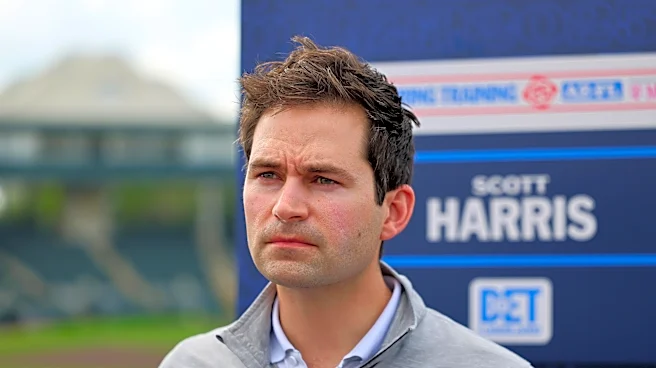



End of season press conferences are by definition lacking in substance. Nothing Scott Harris or AJ Hinch was going to say would change anything for the 2026 season now past, and they aren’t going to address the impending offseason with any specifics. Questions about extensions for Riley Greene and Max Clark were rebuffed, as it’s Harris’ policy not to talk about potential contract issues or talks. Like all front offices, their policy is to talk about what they want to talk about. Scott Harris probably
deserves a bit of credit for even doing one of these considering how many front offices around the league hide entirely and leave things up to the manager to explain. Watching the Seattle Mariners front office send manager Dan Wilson out for a press conference to announce his own firing was a good example of the shady conduct that goes on when the blame game begins.
Largely, these conferences are an exercise in trying to control the context of the questions, refusing specifics except where they favor the front office, and otherwise filling the air with a lot of general answers that muddy the water more than really clarifying anything. That’s not even a criticism. It’s just how these things go.
Harris spent a lot of the opening of the presser doing that annoying thing he does where he very pointedly lays out the obvious issues and mistakes during the season like he’s delivering a lecture. Of course, the point is to assert his own narratives, not to tell us anything we don’t already know. He said that the thing he’s struggling with the most is that the team was actually very good for much of the season, posting one of the best run differentials in the game. He pinned a lot of the season’s issues to the 6-22 record in May, which is certainly accurate. He blamed himself for not building enough depth into a roster whose flaws were laid bare entirely in that month-long collapse, saying repeatedly that he has to do better. And then he went on sounding like he wasn’t going to do much this offseason because there is so much young talent on this team and they need the opportunity to play.
There’s a middle ground there that does make sense, because having a lot more young, optionable players makes it a lot easier to shore up holes and swap in hotter hitters when one of the others is struggling. The lack of talented, optionable players on the pitching side has been a crucial problem we’ve highlighted the last two years as the Tigers have tried to patch the pen with guys like Tommy Kahnle, Kyle Finnegan, and Kenley Jansen. Unfortunately, unlike the positional side of things, the Tigers are still a year or two away from graduating a whole slew of pitching talent.
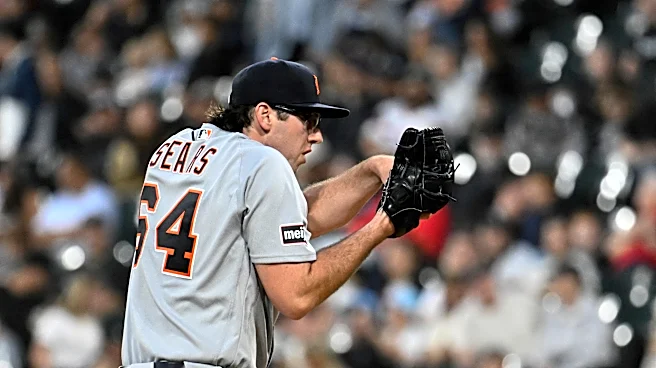
This is a problem that is really hard to resolve through free agency, but the best teams in the game consistently resolve it with trades for pitchers, and by converting starters to relief and otherwise developing internal options. Four years into Harris’ tenure they finally graduated their first Harris drafted arm in Andrew Sears in September. There remains little to nothing of note at the Triple-A and Double-A levels behind Sears other than an interesting starting pitching prospect in RHP Lucas Elissalt, and a few lively arms like Yilber Diaz, Moises Rodriguez, and Yoniel Curet, none of whom have refined their command enough yet to break out. The situation is infinitely brighter in the A-ball levels, it’s true, but those guys may still be 2-3 years away from really impacting the major league roster, especially if the Tigers continue to keep everyone as a starter as long as possible.
Harris repeatedly emphasized all the rookie talent the team added through the system this season, expressing optimism that there’s another strong wave of talent coming next year, and another big wave building beyond that group as well. On that point I don’t disagree on the position player side of things. The farm system is still in very good shape overall. Still, the lack of upper level pitching, which is what they need the most to build a homegrown bullpen, remains the glaring weakness. Harris obliquely addressed that in pointing out the pitching talent they were able to add at the trade deadline and in the draft. River Ryan, first rounder Cameron Flukey, Brady Smith, along with lefties Kash Mayfield and Jackson Wolf, was certainly a nice haul of pitching talent, while the emergence of A-ballers like Ben Jacobs, Cale Wetwiska, Charlie Christensen, Kelvis Salcedo, and others does lend hope a few years down the road.
Harris did circle back to say that none of that was meant to bury the lede, which is this failure of a season. He pointed out their lack of depth up the middle to start the year, and the lack of good high leverage relief options, particularly once Will Vest’s injury issues cropped up, as the major reasons behind their collapse in May. Still he remains optimistic that if they learn from some mistakes this year, they’ll ultimately get it right and achieve their goals of legitimately contending year in and year out. Hey, at least we have a dominant Drew Sommers to work with, I suppose. Here’s hoping Will Vest, drafted way back in 2019, can return healthy to save them next year.
A key point Harris made about the young talent emerging was that the way the Tigers play is going to change, with less pinch-hitting and matchups required, because they have a deeper group of good, two-way players who can affect the game with defense and speed as well as with their bats. The Tigers focus on up-the-middle athletic hitters in the draft over the last four years should play a big role in that change to the roster. This should allow them to be less reliant on very specific role players. Jahmai Jones was the unnamed subtext of most of this section of Harris’ comments.
In regard to their ever lengthening track record of bad, if small scale, signings, Harris argued that every offseason is “filled with land mines” and that every organization has a spotty track in free agency. He views that as the nature of the beast. In all senses, he refuted the idea that his front office has done poorly in free agency. He also reiterated that the organization is focused on building through development and always will be, arguing that free agency is just supplemental and largely guesswork. Ok then.
He pointed to Michael Lorenzen and Jack Flaherty as wins in free agency because of the prospects they acquired through trading them. He pointed to the fact that he wants to keep lanes open for young players and has largely looked for cheap, short-term help as the reason for their free agent track record, as opposed to pro scouting being poor. He later pointed out how many top 100 prospects they have already in the major leagues, and that they have more top 100 type players coming, saying that unless there’s a free agent that really stands out more than their internal options, they’re going to remain pretty low key in free agency.
On the topic of Framber Valdez’s first season in Detroit, Harris pointed to the huge volume of first inning runs, saying that they needed to get him off to better starts. He also pointed to defensive weaknesses earlier in the year hurting the extreme ground ball pitcher and extending innings. Hinch expounded on all this, talking about the adjustments Valdez made to get his curveball going and develop his slider, and some changes in approach they made to make him more unpredictable early in games. It’s pretty debatable whether Valdez actually pitched any better down the stretch, but certainly putting a better group of fielders behind him later in the year helped. At least Valdez’s stuff and durability are intact, and really he’s one of the least of the Tigers’ worries.
Rogelio Castillo of Tigers Minor League Report, and friend of the site, asked pointedly about the lack of obvious future Tigers relievers at the Double and Triple-A levels. Harris talked about the growing crop of starting pitchers in the minors, noting LHP Ben Jacobs and RHP Brady Smith as two pitchers with strikeout rates near the top of the entire minor leagues, name-checking RHP Lucas Elissalt and LHP Andrew Sears as starters who might start out helping out of the bullpen. saying that the plan is to continue to focus on acquiring as much starting pitching as possible over the next 3-5 years, and let that depth spill over into the bullpen to give them more high leverage relief options.
Everyone was no doubt thrilled to hear that four years in, we’re 3-5 years away from building a reliably excellent pitching pipeline. That’s not what he meant exactly, but it sure didn’t sound great, and he didn’t season it with thoughts on how the Tigers were going to build a much better bullpen immediately, as in next season, other than hoping to build up enough starting pitching to use the “overflow” in the bullpen. They still seem entirely obsessed with the starting rotation, with the bullpen an afterthought.
If you wondered if Harris or Hinch felt like they were on the hot seat next season, it absolutely did not feel like that at all. Instead, without going line by line through the entire hour-long press conference, we’ll just cut to the chase. This all sounded like staying the course.
Step A. Continue to draft and develop well.
Step B. Don’t worry about it.
Step C. Achieve those ALCS and World Series appearances we want to see.
As I have asserted since Al Avila first tore the team down in 2017, getting to the point the Tigers have reached the past few years is the easy part. A competent POBO or GM has all the advantages as a losing team to rebuild a farm system, acquire some filler talent around the margins of the roster, and become a respectable team again. The hard part is building a World Series contender from that point, and so far, my fears are all coming true. The Tigers got back to respectability, but failed to make the moves to get themselves to the next level. Now we’re spinning our wheels. A bad season in 2022 gave Harris and his staff the opportunity to land high end talent in the 2023 draft, and they did a great job on that front. But, even with an AL Rookie of the Year added, the team performed worse overall despite all the prospect talent that reached the major leagues this season. And the only answer from the front office remains building from within, refuting any criticism of their work in free agency or the trade market.
This just doesn’t add up. Without some great trades and signings, no one wins the World Series no matter how good a development pipeline they have going. Hopefully the Tarik Skubal trade turns out to be a great one, but Harris had a window to contend with Skubal, Riley Greene, and the rest, and failed to do much to build a winning roster out of the fairly stacked cupboard Al Avila left him.
Now his own draft picks are reaching the league, and on that side of things they’ve done a really good job. There’s plenty of talent on the Detroit Tigers, but unless they add to it through smart trades and opportunistic free agent signings, we’re probably going to see more of the same, with some postseason appearances and some down years, but never the kind of team that produces a dominant championship winning era.
The 2026 Detroit Tigers certainly had more than their share of bad luck. That must be acknowledged. Apart from May they were again a solid, wild card level team capable of getting really hot. Bullpens are fungible, and a similar group could return next season and do a lot better job holding leads. But no one wants to hear that we’re going to run it back and things will just work out differently. After the collapse down the stretch in 2025, Harris said that the team would remain much the same, but they would play better. Here we are again.
Fans would like to see some urgency, and to feel like team leadership is under pressure, but none of that comes across from Harris’ comments. He spent a lot of time talking about everything they’d added from the farm and in trade this year, but he didn’t really talk about what they’ve lost or squandered. Skubal is gone. Players like Dillon Dingler and Kerry Carpenter are closing in on 30 years old while Riley Greene closes in on free agency in two years. While you’re welcoming talented young players through the front door, talent is constantly leaving out the back door as well. Fresh waves of talent will keep the Tigers afloat for a long time to come, but four years in there’s nothing to suggest that Harris can build one of those waves up into the best team in baseball for a year or two, nor any sense that they really feel a need to adjust their thinking either.
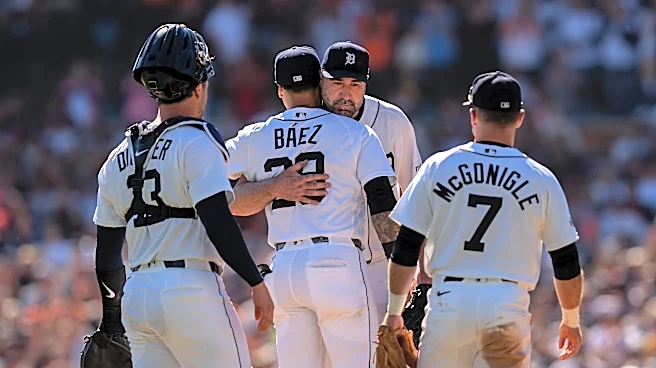
Maybe they’ll be proven right. Kevin McGonigle at least, and probably Max Clark as well, are a different breed of prospect than even highly ranked prior prospects like Greene, Spencer Torkelson, and Riley Greene. The Tigers are rapidly becoming a faster, younger, and more well rounded team. They do have a deep pool of athletic, versatile prospects with power all throughout the minor leagues, though there are no more top shelf, truly elite prospects to follow McGonigle and Clark right at the moment. They have the makings of a pretty good starting rotation heading into 2027. Just get the bullpen right and we’ll take our chances. But until that happens, skepticism of Harris and AJ Hinch’s leadership is only going to continue to grow.