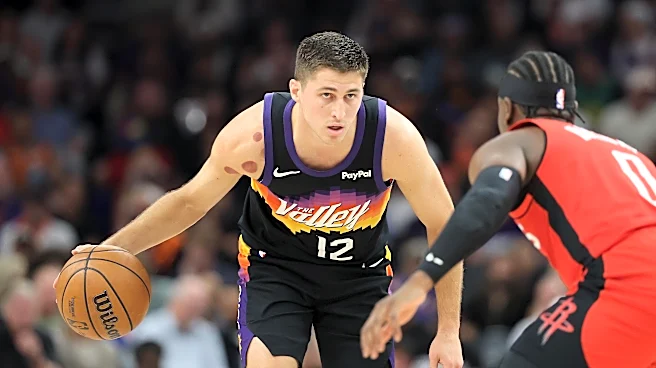




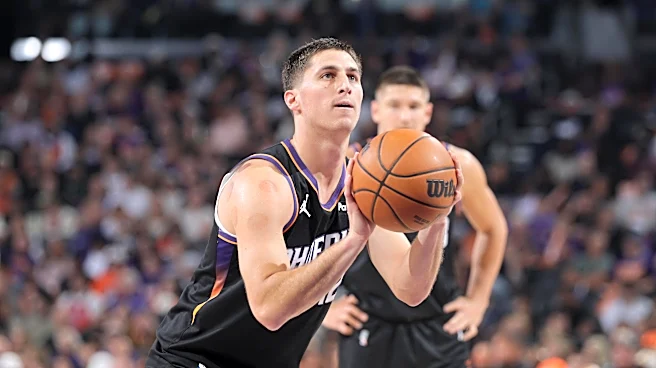
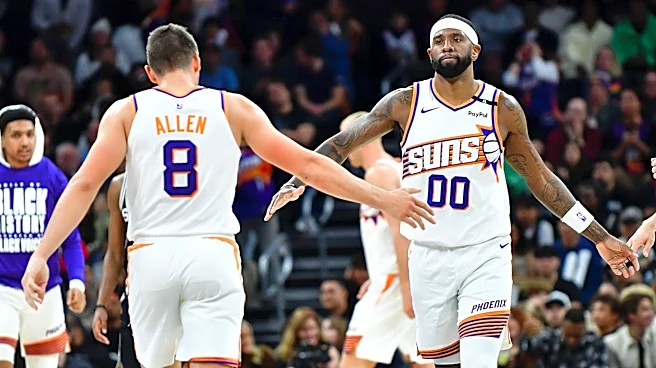



Thus far in free agency, I’m absolutely loving what the Phoenix Suns are doing. They entered the offseason prioritizing the returns of both Collin Gillespie and Jordan Goodwin, and they’ve successfully brought both players back on what I would consider franchise-friendly contracts. That is important on numerous levels. It sends a message to the rest of the league that if you come to Phoenix, put in the work, and develop within the organization, you’re going to be compensated for it. More importantly,
it shows that the Suns are beginning to create an environment where players want to stay.
Gillespie could have chased more money. Goodwin likely had other opportunities available to him as well. Yet both chose to remain in Phoenix. Part of that is financial security. Part of that is opportunity. But part of it is also being part of a franchise that values you and puts you in a position to succeed.
For a team that continues to talk about alignment, identity, and development, these signings reinforce that message. And that’s a very positive place for the Suns to be.
When you look at the Collin Gillespie contract, four years and $48 million, it’s exactly where I felt the contract would land. If you look at who the Phoenix Suns are today and who they might ultimately want to become, the Gillespie contract helps accomplish both the short-term and long-term goals of the franchise.
In the short term, the Suns are still trying to understand what it means to have Jalen Green on the roster. Yes, it’s not ideal to have someone who could be viewed as duplicative of Devin Booker, your highest-paid player. But in the same breath, he really isn’t. Green is less of a combo guard and more of a true two guard than Booker. He also attacks the rim with far more frequency and aggression than Booker does.
In the modern NBA, where many teams employ two combo guards in the backcourt, having Green isn’t the worst thing in the world. I’d argue Bradley Beal was a much worse fit. A big part of that was the size of his contract and the existence of the no-trade clause.
Jalen Green is owed $72.3 million over the next two seasons, but the unfortunate reality for the Suns is that they only got 32 games to evaluate him last year. That simply wasn’t enough time to fully understand how he fits in Phoenix and whether extending him down the road is the right decision.
Because of those injuries, the door opened for Collin Gillespie to earn more starting opportunities, and he took advantage of them. Make no mistake about it, he earned the contract he just signed with Phoenix. There are plenty of teams around the NBA that would love to have a player of his caliber. He’s a quality three-point shooter, an aggressive defender, and somebody who competes every possession.
Did he begin to fade at the end of the season? Absolutely. It looked like shoulder issues, fatigue, and the grind of a long NBA season finally caught up with him. That’s understandable given the role he was asked to assume. Even so, when you look at the numbers, lineups featuring Gillespie alongside Devin Booker and Jalen Green actually performed well. Three guard lineups featuring that trio posted a +6.7 net rating and were a +46 overall in plus-minus.
All that being said, I still believe the best path forward for Phoenix is utilizing Gillespie off the bench and fully leaning into the Booker and Green backcourt. The Suns need to find out exactly what that pairing can become. Doing so also allows Dillon Brooks to slide into his natural position at small forward, while giving the Suns flexibility at power forward. Whether that’s a sophomore version of Rasheer Fleming earning those minutes, or Royce O’Neale once again stepping into the role to provide additional shooting, Phoenix has options.
Perhaps most importantly, they’re all familiar faces. Yes, continuity is part of the short-term process, and bringing back both Collin Gillespie and Jordan Goodwin helps accomplish that. But that’s the beauty of the Gillespie contract.
Right now, he essentially serves in a T.J. McConnell-type role as a backup point guard, and he’s being paid similar money. If he continues to come off the bench, that’s stability for your second unit. It gives the Suns someone who can play aggressively on both sides of the ball, shoot from the perimeter, and help maintain the team’s identity when the starters sit. When you zoom out and look at the long-term landscape of the organization, that’s where the real value of the contract comes into focus.
Let’s play out a hypothetical. Let’s say next season the Suns determine that Jalen Green next to Devin Booker isn’t the right fit. That the overlap is real, and that moving Green with one year remaining on his contract becomes the best path forward. A player carrying a $36 million expiring contract should return assets, whether that’s players, draft picks, or some combination of the two. At that point, you can slide Gillespie into the starting lineup.
Now your starting point guard is making an average annual salary of roughly $12 million. That’s tremendous value. That’s why this deal works for both the short-term and the long-term viability of the Suns. In the present, Gillespie provides stability, depth, and continuity. In the future, he gives the organization optionality if circumstances change. Those are the kinds of contracts good organizations make.
That’s why I like this deal so much. The Suns didn’t simply retain a good player. They retained flexibility. They rewarded development. They reinforced continuity. And they did it without committing star-level money to a role player.
Maybe Gillespie spends the next four years coming off the bench as the steady hand running the second unit. If that’s the outcome, the contract still works. Every good team needs players who understand their role, embrace it, and consistently deliver value. But if circumstances change, and they always do in the NBA, Phoenix now has options. If Jalen Green proves to be a long-term fit, Gillespie remains one of the better backup point guards in basketball on a manageable contract. If Green ultimately isn’t the answer, the Suns already have a proven alternative in-house.
That’s what makes this deal feel different. It isn’t solely about what Collin Gillespie is today. It’s about what he allows the Suns to be tomorrow. Stability now. Optionality later. For a franchise trying to build something sustainable while navigating the realities of the second apron era, that’s exactly the kind of contract you want on your books.