




The Celtics’ defense is off to a very strong start this season, and they’re finding success from an unfamiliar place.
Against the Bulls, Boston forced 16 turnovers, 10 of which came directly from steals. They currently rank third in both opponent turnovers and deflections per game.
This is something that has hardly been in the team’s DNA in previous seasons. Last year, even with the fourth-best defensive rating in the league, they forced the second-fewest turnovers.
The bulk of their defensive identity
revolved around dictating who shot and where the looks came from. It’s a fine strategy, but it has limits. It’s more predictable, and offenses can adjust to a defense that sits back in ways they can’t against a frenetic one.
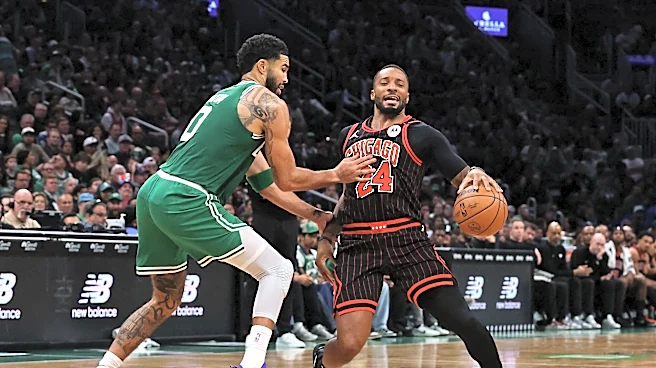
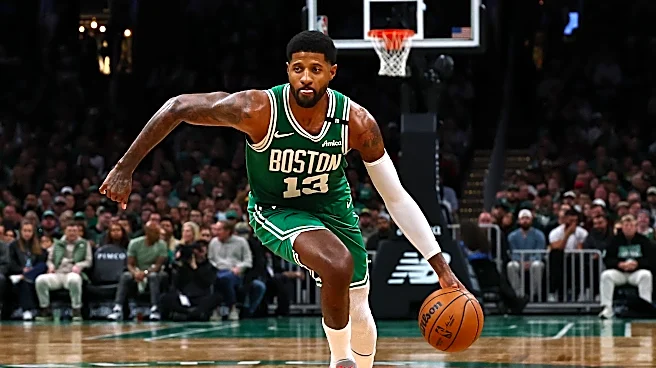
Against Chicago, they were swarming, scrambling and recovering. Moving on a string, they looked like one connected entity. Six different players registered a steal, with Payton Pritchard, Derrick White and Paul George each recording multiple.
The biggest crowd pop of the night came after back-to-back interceptions turned into scores.
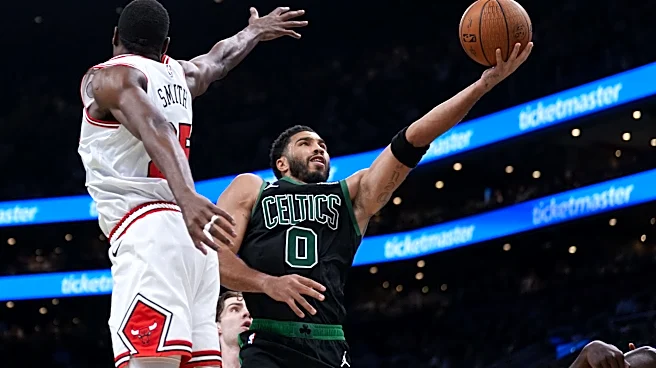
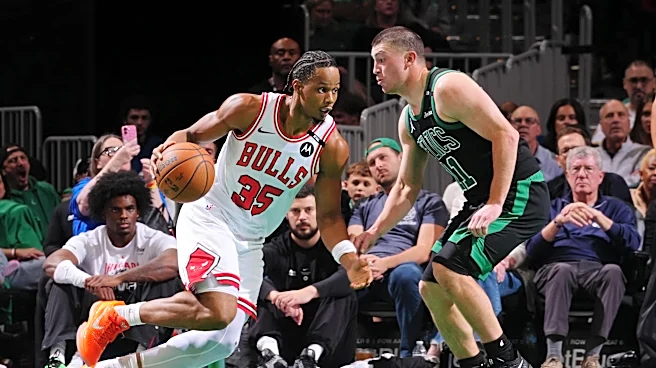
Aggressive nail help has been among the most noticeable playstyle shifts driving this. White, George, and Jayson Tatum were eating up space to lock down driving lanes. They made the Bulls uncomfortable getting downhill, and they weren’t successful capitalizing when the Celtics were in rotation.
The Bulls felt the squeeze from the start. When asked about Josh Giddey’s slow start, Tiago Splitter pointed right at Boston’s pressure.
“They do this trap when you go by the half court and they trap you,” Splitter said. “You just got to be ready. We talked about it before the game.”
Caleb Wilson was a bit more blunt about the first quarter. “I feel like we laid down,” he said. “I don’t know what else to say.”
It’s hard to argue against that. Boston had them in a 19-point hole heading into the second quarter. It was fueled by a deflection or steal on what felt like every other possession.
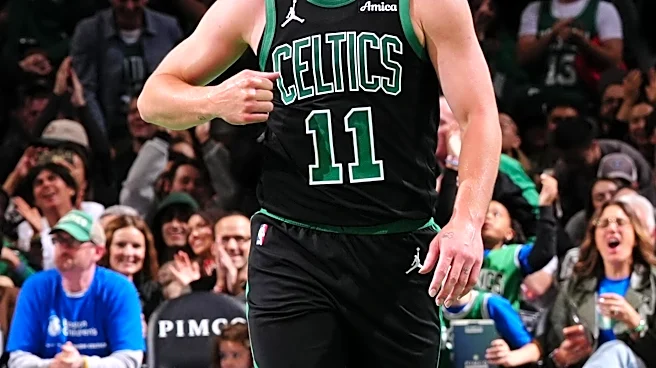
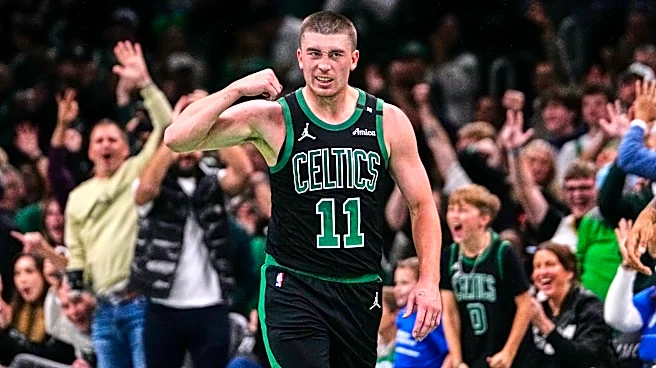
Pritchard helped set that tone. He came into the night unhappy with his defense through four games, and Joe Mazzulla had challenged him on it.
“I’ve been through some struggles early on this season, and honestly the defensive effort and rebounding has been poor,” Pritchard said. When asked what he had gotten away from, he said it was “being active and being back to being a pest, and creating opportunities for steals and ball pressure.”
He got back to it Friday. Neemias Queta noted that Pritchard “gets up full court defensively,” and Mazzulla said the Bulls game showed “the absolute best version of him.”
Boston has compiled a group of rangy athletes who can cover more ground and shrink the floor as a result. George is a big part of that. Mazzulla listed “his ball pressure, his activity, his deflections” among what George has brought, and Pritchard said George’s defense surprised him.
“I didn’t know how good it was until I’ve seen it up close,” Pritchard said. “He gets his hands on a lot of balls, is in passing lanes, and he wins at the margins.”
George’s ability to zone up between multiple players on the perimeter is giving Boston more variety in the types of coverages they can deploy. He’s helping them become a more versatile and forceful defensive team. One that causes offenses to adjust, settle, or break.
Mazzulla doesn’t view turnovers as something the defense can just take, considering them more as the result of executing the game plan.
“I think forcing a turnover is the same as making a shot,” Mazzulla said. “You can put yourself in a position to force one, but you can’t force the team into doing it if they handle it properly. So we just have to continue to impose our will, executing our defensive scheme, ball pressure.”
That’s also where Friday’s small warning sign came from. Boston forced just three turnovers in the second half, and Chicago chipped away at a big lead. The Bulls fired 53 threes and grabbed 20 offensive rebounds.
“We only forced three turnovers in the second half,” Mazzulla said. “So we’ve got to maintain that ball pressure.”
He also didn’t hide from the rebounding trouble. “We can’t give up 20 offensive rebounds,” he said.
Those two things are connected. With the way they’re pressuring the ball and often getting themselves in rotation, they can be susceptible to rebounding breakdowns if they’re not boxing out. That’s a cost worth paying when it’s producing turnovers. In the second half, Boston was still scrambling but no longer getting rewarded for it.
That’s the trade-off worth watching. The pressure has to be maintained. When it is, Boston can bury a team the way it did in the first quarter.
Five games in, the Celtics have found a new way to win on defense. Continuing to impose their will, as Mazzulla described it, will allow them to really dictate the terms of their matchups. The early signs are very promising.