

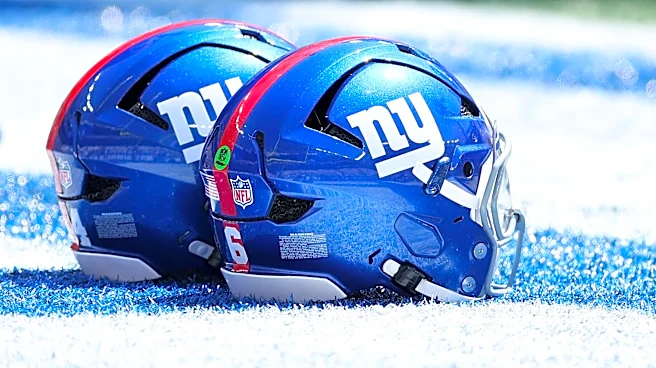
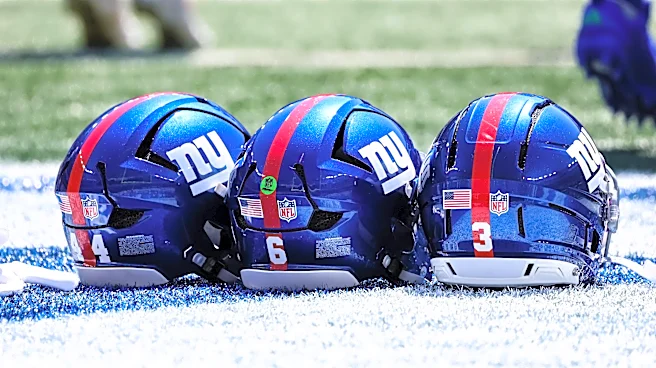
The New York Giants shook up their offensive line depth chart when they traded guard Daniel Faalele to the Jacksonville Jaguars after their preseason opener against the Minnesota Vikings.
It had been widely believed that Faalele was set to be one of the Giants’ primary interior depth pieces considering his familiarity with both John Harbaugh and Greg Roman. Suddenly, however, that piece is elsewhere and there’s a void on the Giants’ depth chart. That, in turn, creates an opportunity for young interior linemen
to step up and potentially put themselves in position to be a primary backup and perhaps establish themselves in the teams’ long-term plans on the offensive interior.
But how good is the Giants’ young depth at guard? The fact that they traded Faalele is encouraging, but it’s always best to go to the tape and see for yourself.
Joshua Ezeudu was the first player up at guard once Faalele was traded, however he played tackle against the Vikings. We’ll give him a close look if he plays guard against the Miami Dolphins this week — assuming he plays at all after reportedly being “banged up” at the end of Thursday’s joint practice.
So with that in mind we’ll take a look at 26-year-old Jake Kubas and 25-year-old Evan Neal.
Jake Kubas
Kubas was on the field for 21 snaps against the Minnesota Vikings, spending his first 10 snaps at center and the final 11 at left guard.
We’ll start with the later snaps and Kubas’ work at guard, as that’s where the trade of Faalele has created the opportunity for movement.
Kubas doesn’t have anywhere near the size of Faalele, or Neal. He’s listed at 6-foot-4, 308 pounds, but has a definite advantage over Faalele in terms of athleticism. Kubas has quick, smooth feet that allow him to easily mirror interior rushers, work up to the second level, execute zone blocks, or pull.
He isn’t the type to drive defenders off the ball, but understands angles and how to position himself to seal off defenders.
Here we see Kubas at left guard, executing the guard-center double team on the nose tackle. Kubas does a great job of playing with a wide base and good pad level, allowing him to anchor against the nose tackle. He’s able to run his feet just enough to turn the tackle out of the hole with half-man leverage.

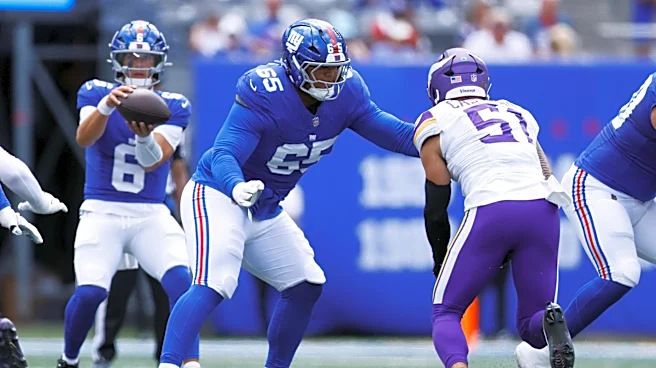
His mobility also makes him a capable pass protector. Here we see him in pass protection at left guard on a third-and-5. As we should expect, the Vikings are showing a heavy pressure look with seven defenders on the line of scrimmage, though they ultimately send just four rushers.
Kubas isn’t initially engaged and he does a good job of splitting his attention between helping rookie left tackle JC Davis with the defensive end before sliding back to his right to help Jaimes with the blitzing linebackers. The ball is out long before the rush would have been able to get home, however the two linebackers execute a well-schemed twist that would have gotten No. 48 free had Kubas not redirected to pick up the blitzers.

It’s a forgettable play on a quick-hitting third-down completion, but it shows solid awareness as well as lateral agility on the part of Kubas.
Moving to center, we see both the good and bad in Kubas’ game. He has the requisite athleticism to play the position and is able to get out of his stance and into position to make his block. Likewise, he understands how to execute the center part of a guard/center double-team, as well as work off the double team to the second level. But thanks to the athletic demands of the center position, we also see what happens when he isn’t quite able to establish leverage.

Kubas does a good job of getting the snap off and establishing the double-team withNeal before working to the second level. However, he isn’t quite able to establish the block on the linebacker. Kubas isn’t able to establish leverage, nor is he able to really disrupt the linebacker without good positioning, and the linebacker goes on to trip up Dante Miller as he runs through the gap.
Likewise, we also saw at center that Kubas can struggle to hold his ground if his stance narrows or hips rise. It typically wasn’t disastrous, but still more noticeable than when he was better able to establish a wide base and run his feet through half-man leverage at guard.

Overall, he did a good job playing center in his first 10 snaps against the Vikings. He wasn’t a revelation, but he also didn’t hold the offense back and he played like a viable reserve at both center and guard.
Kubas’ versatility has to be an asset when it comes to making the roster. Teams typically keep eight offensive linemen, and being able to back up three spots is a big advantage. In fact, my question is whether he can play well enough at center to unseat veteran Lucas Patrick as the backup center as well as guard depth.
Evan Neal
Neal came on the field with the third team, playing 20 snaps all at right guard.
Guard seems to agree with Neal when it comes to pass protection. His feet are much more controlled, which translates to improved hand usage. Neal tended to let his hands drift high and wide as he used them for balance while mirroring speed at tackle. He’s able to keep his punch loaded without as much ground to cover, which allows him to fire his punch into defenders’ chest plates and win inside leverage.
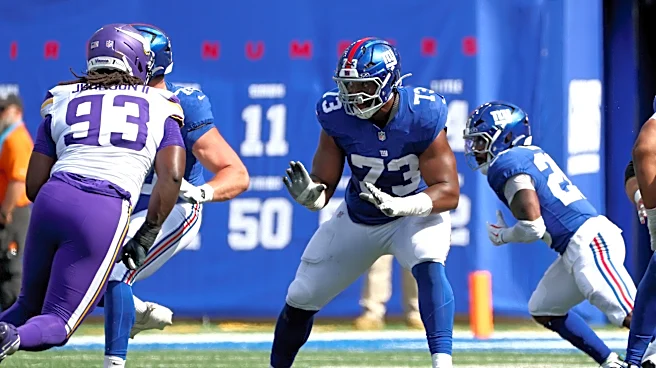
Here we see Neal handle a stunt on the right side extremely well. He engages the defensive tackle with good hand placement and leverage, passing him off to Josh Ezeudu at right tackle. Neal doesn’t stay stuck on the tackle after passing him off, smoothly anchoring to pick up the looping edge defender and bouncing him well around the pocket.

Neal’s power and play strength leap off the screen in both run blocking and pass protection. His height demands that he plays with good hip and pad level, but he’s the type of blocker who can take a defender out of the play once he latches on.
Here, Neal does a good job of picking up the 1-technique, engaging with great hand placement. He latches onto the defensive tackles’ chest plate with tight elbows and thumbs up, allowing him to control the defender. Neal gets great extension, using his length to keep the defender from accessing his chest, while using a wide base and good knee bend to maintain his leverage. He stays latched on and simply rides him around the pocket.

Despite concerns among fans regarding his pass protection, his worst plays came when run blocking. Neal missed a pair of blocks, both coming when he lunged at defenders.
Neal’s height will always mean that he needs to play with good hip and pad level. It’s a bit too easy for defenders to get around him when he gets out over his skis, letting his knees straighten and hips rise.
Neal has to make the reach block on the nose tackle with the center and left guard doubling the defensive end. Unfortunately, he gets his chest way out over his toes, and whiffs badly on the tackle. That allows the defender into the backfield to help make the tackle for a loss.

The good news is that this and another similar play later in the quarter were isolated incidents when Neal’s game is taken as a whole. Lunging seems less a consistent pattern and more something that can be worked on and cleaned up with continued reps.
We know he’s capable of driving defenders off the ball and distorting the line of scrimmage when he plays with good leverage. And while Neal might not have the feet to be a tackle at the NFL level, he does have good feet for a massive guard.

It remains to be seen how the Giants’ coaches view Neal. He’ll need to have another good game against the Miami Dolphins, with an emphasis on not allowing himself to lunge when trying to blow up blockers. If he does that, the absence of Faalele could provide an opportunity.