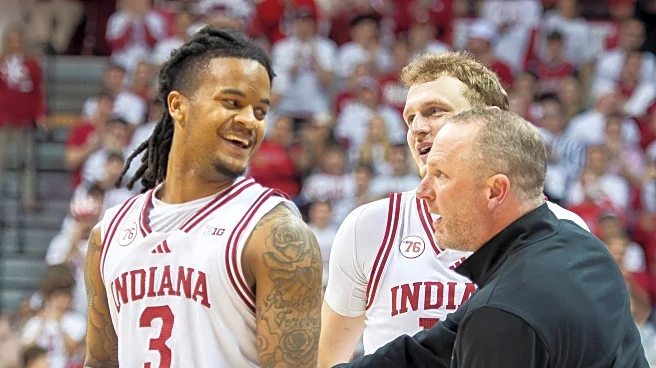

Indiana men’s basketball head coach Darian DeVries was asked about Sam Alexis’ recent leap in scoring production at center following the Hoosiers’ 92-74 win over Oregon on Monday night. It was Alexis’ second
consecutive game scoring ten or more points, a stretch made up of a single missed shot on 18 combined attempts.
DeVries’ answer was encouraging on Alexis’ production in the short-term. It was even more revealing about his own role in the long-term.
Coaching, particularly at the higher levels of any sport, is a glamorous profession by nature. That’s especially true in college sports, where coaching stars shine brighter than the players whose time in the sport is relatively limited.
Yes, there’s countless hours of film study, player development, recruiting, travel and all the hard work that isn’t seen. But the television presence and spotlight shine above that. Coaches are given a mystique as bastions of knowledge of the game. When they speak, others listen.
Like all glamor jobs, this mystique gives way to pride. This isn’t necessarily harmful, everyone’s a little prideful. If they’ve gotten that far in the profession, surely there’s a reason for it. This is especially true for coaches like Bill Self, Dawn Staley, Dan Hurley, Geno Auriemma, John Calipari, Matt Painter and others, who have the proof that their way works on display in the facilities they work out of every day.
For some coaches that’s extremely not true, again just like any other glamor job. Part of the reason coaches like those listed above have been so successful is they’ve recognized that sometimes you need to change something to improve.
In other words, admitting you were wrong.
Introspection and course correction is paramount to a successful coaching career and tenure just like any other job. It’s a huge part of why there’s a National Championship Trophy at Memorial Stadium alongside several individual awards with Curt Cignetti’s name on them.
Back to DeVries and Alexis. DeVries said Alexis was able to capitalize on mismatches in Indiana’s overtime win over Wisconsin before producing against fellow bigs against Oregon, getting to his spots and scoring or kicking the ball out when better looks were available.
Before that, DeVries said the following:
“I think it’s a little bit of us maybe figuring it out, too,” DeVries said. “He’s given us these last two games some low presence that maybe we haven’t utilized enough to be honest with you. Sometimes as coaches you got admit your mistakes.”
Sometimes as coaches you got admit your mistakes.
It was said so casually, without being fully prompted. It’s not DeVries’ first time expressing such sentiment, he’s previously noted that Indiana’s coaching staff leans more toward recruiting, an area he has less experience and proven proficiency in.
Indiana’s offense has been hurting for a scoring presence in the post, he’s right. The Hoosiers are built as a 3-point shooting team and games go one way or another depending on whether those shots or in or not. What’s been missing on those off shooting games is a reliable scoring presence to hold off an opposing scoring run or ignite one of Indiana’s one.
There’s two primary options in that scenario: lean all in on what the team was built to do or try and find ways to mitigate that deficiency. You’d rather that Indiana’s staff had recognized this and made the change earlier, but doing it now is far better than not doing it at all.
DeVries and his staff admitting fault and making a change midseason is a positive side for their collective tenures moving forward. They’re willing to do so, which can’t be said for all staffs.
Right now that change is Alexis’ usage at center. Maybe later it’s a change in how the program is built, an in-game move, a lineup swap or something else. As stated previously, being willing to make that change is key component to successful coaching tenures at all levels of all sports.
With Indiana looking for signs of the future in year one of DeVries’ tenure, he gave himself another good one on Monday night.