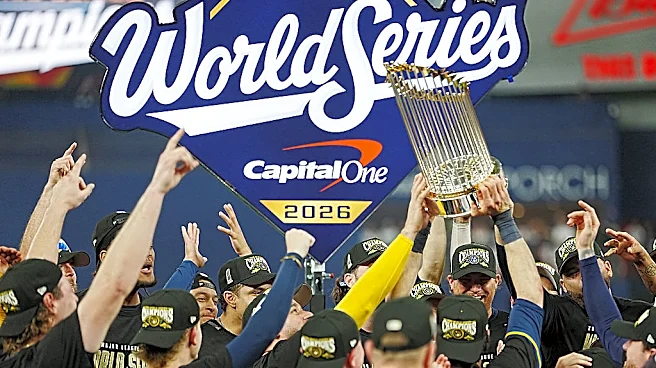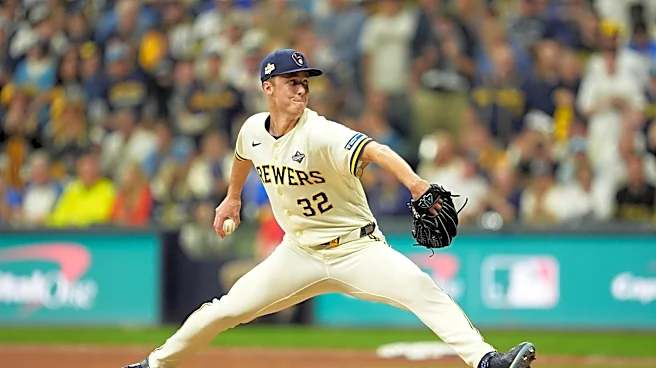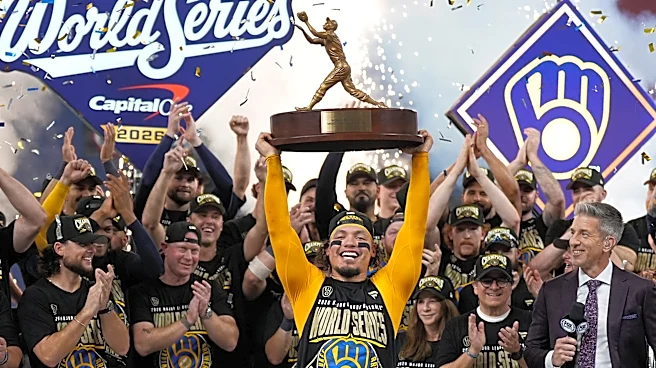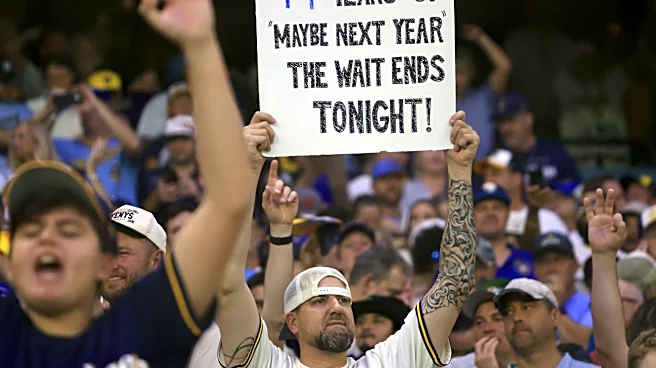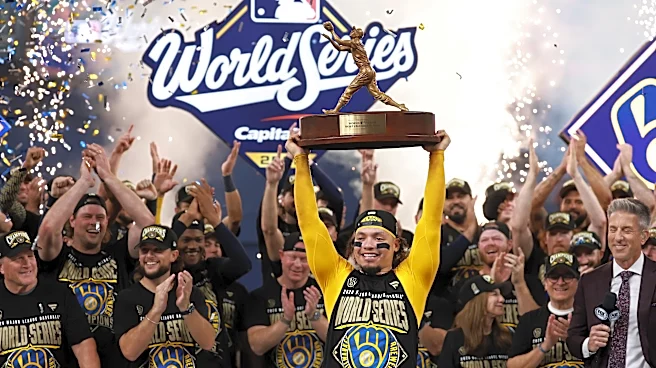


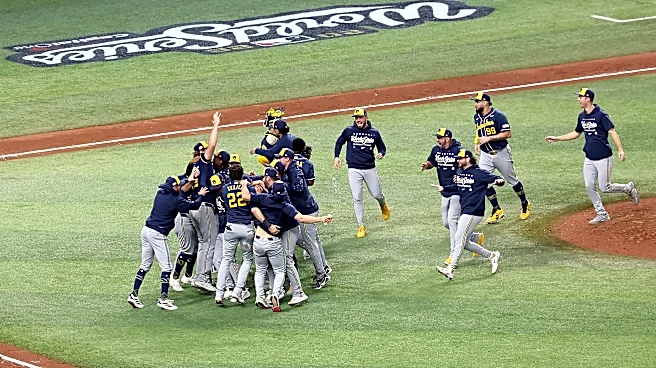

A lot of conclusions will likely be drawn from the Milwaukee Brewers’ romp to the 2026 World Series title. There will be a lot of talk about small market vs. big market teams and how the Brewers showed you don’t need a big payroll to win a championship.
That’s not the point of this article, but I will point out that money isn’t necessarily the end-all in terms of building a champion, but it will hinder the Brewers’ ability to sustain this success when some of their key players leave for big paydays
elsewhere.
Instead, I wanted to focus on the Brewers’ roster and how it was built and see if there is anything the Phillies can learn.
Similar to the Phillies, the Brewers have been regular postseason participants in recent years, making the playoff field in eight of the past nine seasons. And like the Phillies, they came up short of the World Series every year. This lends some credence to the belief that sometimes all it takes for a postseason loser to become a winner is just one more year.
But while the Phillies have been criticized for “running it back” in recent seasons, the Brewers have evolved greatly since their run of playoff seasons began in 2018. That season, their best players according to WAR were NL MVP Christian Yelich and Lorenzo Cain, and the pitching staff was topped by Jhoulys Chacin and Wade Miley.
Since the Phillies’ run of postseason appearances began in 2022, I’ll take a look at the Brewers of that year, who missed the playoffs by one game. Yelich was still around, but his numbers had greatly decreased. Instead, the middle infield combo of Willy Adames and Colton Wong led position players, while co-aces Corbin Burnes and Brandon Woodruff headed the rotation.
Fast forward to this year’s team, and the WAR leaders were Brice Turang, Jackson Chourio, Jacob Misiorowski, and Logan Henderson. What do all of those players have in common? All are products of the Brewers’ farm system who have been called up in recent seasons.
I don’t think I need to point out that the Phillies haven’t been turning out young players of that caliber in recent seasons. Instead of Chourio and Miz, we’ve gotten Johan Rojas and Orion Kerkering. (They desperately need Andrew Painter’s second half to be real and for Aidan Miller’s back to hold together.) The Phillies have been forced to compensate by heavily investing in free agents. Sometimes that works out well, but even in the best case scenarios, you get locked in to paying big money for a player’s decline phase. (Only seven more years of Trea Turner!)
As for the on-field product, the Phillies’ and Brewers’ lineups were quite different. The Brewers don’t rely on power hitting (31st in the league in homers) and don’t have any players who you’d consider lineup carrying superstars. But what they do have is a lot of very good hitters and few weak spots in the lineup.
Compare that to the Phillies who often struggled to score runs if either Bryce Harper or Kyle Schwarber weren’t on hot streaks. Bryson Stott is a fine enough player, but he should ideally be like the team’s sixth or seventh best hitter rather than having the third best OPS on the team.
Many people complain that the Phillies are loaded with players who just “swing for the fences” and don’t work walks, and they’re half right. The Phillies don’t walk all that much, but they don’t actually hit for power either. It’s not good when the two guys who walk at a high rate are also your only real consistent power threats. The Phillies have too many hitters who aren’t particularly good at any one aspect of hitting and seem to be guaranteed to go through horrific slumps for months at a time.
Perhaps the most frustrating aspect of the Phillies season was that in August, they actually seemed to figure it out. While they were helped by a series of lesser opponents, they led the majors in walk percentage that month, and not coincidentally, they scored the third most runs in baseball, despite ranking just 24th in home runs.
Around the time the calendar flipped to September, the Phillies’ offense collapsed. Maybe it was just because they faced better competition or maybe opposing pitchers adjusted, but part of it seemed to be an abandonment of the patient approach they utilized August. That isn’t entirely surprising, because the Phillies don’t have a lot of hitters with a history of taking walks, and often times when they hit adversity, players will fall back on what they think got them there in the first place.
They didn’t strike out all that much, but the balls they did contact were not finding grass, with a league-low .130 BABIP. Maybe the poor showing was mostly due to luck, but it also felt like the Phillies were boom or bust with runners on base. Their overall numbers look fine, but that’s because in some games, they’d seem to get ALL the runners home and then go 1-15 with RISP over the next three.
Pitching wise, the Phillies’ rotation matches up favorably with the Brewers, and I’d take Jhoan Duran over Brewers’ closer Trevor Megill. But the Brewers were able to capably hold leads in the innings in between, something the Phillies couldn’t seem to do with consistency. As with the hitting, it would have been nice if they had guys in the minor leagues they could have called up (Alex McFarlane was a rare success) and if one of their few young pitchers (Kerkering) didn’t completely melt down.
So then, is there anything the Phillies can actually learn from the Brewers?
The Phillies need to get more out of their development system, but that isn’t a revelation. Hitting development has been an issue for a long time now, and it seems like dramatic steps need to be taken to fix it. Will the Phillies accept this uncomfortable truth and make the necessary changes? Perhaps they should take a revolutionary step of hiring people from organizations that have been good at development?
As for the players they do have, it sounds like Don Mattingly recognizes the problem with the offense and seems to think that with a full year as manager, he can improve things.
Can Mattingly actually make that happen are we in for more talk about walking more and patient at bats, only to see them revert back as soon as that approach hits a bump in the road?
Unless the Phillies are willing to make these changes, it feels like they won’t be the team celebrating at the end of the season any time soon.