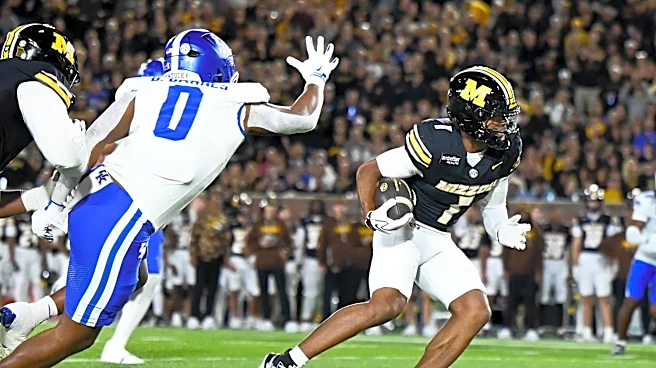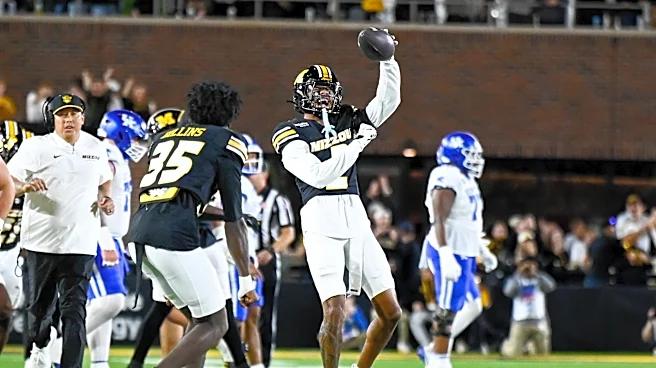


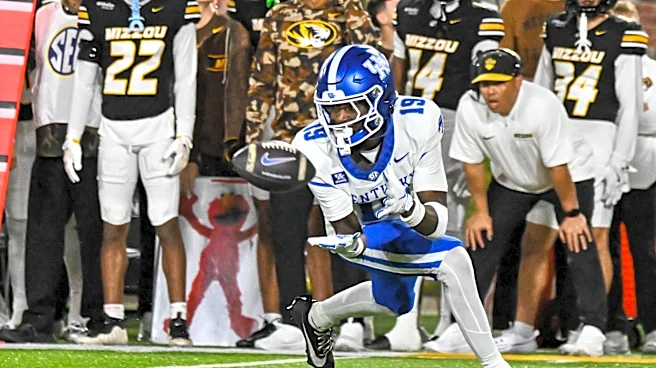
The game against Kentucky was a big opportunity for a clash of styles type of fight.
One one end, you had Missouri: the all-explosive-no-efficiency type of offense that is the proverbial rocket ship with a pull string start…if it’s on it’s ON but if you can’t get it to kick over it spins around doing nothing.
On the other side, you had Kentucky: the all-efficiency-no-explosive offense that is happy to plod through 12-14 plays per possession, make safe choices, and finish drives with points.
The defenses
exist to throw those offenses out of their comfort zone and force them play off-handed to make mistakes. And, reader, that simply did not happen!
Here’s the advanced box score:

Missouri had its second-lowest total plays run on the year (Troy game had 47) but had its second-highest yards per play on the year (Florida game was 8.8) and managed a decent 42% success rate, despite 16% of their plays making up 61% of their yards. Meanwhile, Kentucky lumbered along with 77 plays at 5.7 per play and a healthy 48% overall success rate.
So why did Missouri win by two scores?
Scoring defense, of course! Kentucky generated 7 scoring opportunities over the 9 drives when they were actively moving the ball but managed 2 points per trip thanks to a turnover on downs and three turnovers. Missouri knew that they stunk in scoring position and decided to score twice outside of the opponent’s 40-yard line, to buoy two actual touchdowns in scoring position.
Missouri’s scoring defense = good. Kentucky’s scoring defense = bad. That was the difference.
When Missouri Has the Ball

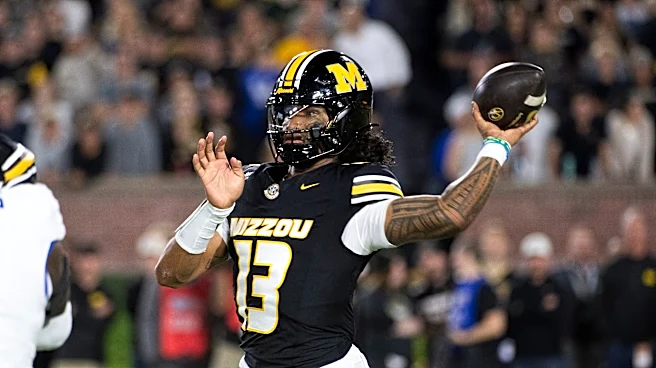
It’s not often you see a single offense in a single game manage a success rate over 80% in one form of moving the ball while dealing with a 20% success rate in the other, but that’s what happened to Mizzou on Saturday. Austin Simmons’ left arm was both efficient and explosive, racking up 314 yards on a tidy 22 passing attempts. It was a near flawless game if it wasn’t for that highly risky throw to Jude James (good!) and silly throw into double coverage for Cayden Lee (bad!).
As far as running the ball, Jamal Roberts rarely had space to run and the line didn’t do him any favors. And yet he would have eclipsed 100 yards on the day if not for that holding call that wiped out a 30-yard run. Roberts is great for the home run scampers but – either because of the line or because of his style – really struggles with the efficiency part.
Let’s not think too long about how the Missouri 2025 running offense and the Missouri 2026 passing offense would have easily been a Top 10 – and potentially a Top 5 – offense in the country.
Generate Explosives
Goal: 9 explosive plays created
Actual: 8 explosives plays created – eight passes, zero runs for a combined 237 yards
Winner: Kentucky (although that Roberts run that was called back for holding would have sealed the deal)
Convert Third Downs
Goal: 40% success rate on 3rd-down
Actual: 60% success rate on 3rd-down
Winner: Missouri
Finish Your Dang Drives
Goal: 4 points per scoring opportunity
Actual: 5.6 points per scoring opportunity
Winner: Missouri
When Kentucky Has the Ball

Santana Banner and Daedan Hopkins each produced 5 havoc plays on the day, which is the highest individual havoc total for any player this year. And it happened in the same game.
Kenny Minchey and the Kentucky offense weren’t renowned for their ability to create big chunk plays but they were way more explosive than they have been all year. Missouri’s secondary gave up four explosive passes while the Wildcat ground game added six explosive gains as well. The Tigers were extremely fortunate that C.J. Baxter (their running back) and Malachi Wood (their right tackle) were injured during the game because that duo was blasting holes for big gains in the first half. And while the other Wildcat running backs were just as efficient, Kentucky chose to throw to get their yards and saw slightly better success while doing so.
They also turned the ball over three times in the red zone while doing so. Alas.
HAVOC!
Goal: 23% havoc rate or better
Actual: 26.9% havoc rate
Winner: Missouri
Win on 3rd Down
Goal: 30% success rate on 3rd-down (or less)
Actual: 50% success rate on 3rd-down
Winner: Kentucky
The Little Things


Turnovers. That was the big disparity on your “Little Things” Report Card. Football teams can move the ball any way they want at any yard per play they prefer but if you’re ending drives with zero points because the defense took the ball away from you, none of that matters.
On the demerit front, HELLO AGAIN, MIZZOU PENALTY MACHINE! But instead of making a snarky comment and moving on, I want to point something out I’ve been think about for a while.
The college football zeitgeist has seen the pendulum of offense move from “hurry-up-no-huddle” speed-oriented offenses that maximize plays to take advantage of talent discrepancies, back towards more of a “go slow, shrink the game, win late with defense and special teams”. I think there are a couple of reasons for that: first, that’s how football works. A team does something unique and others copy it until, eventually, the blue bloods start doing it and that tactic ceases to be an underdog tactic, and so underdogs must zig away from that zag and do the opposite (in this case, going from pass whacky speedy offenses to grinding run-oriented offenses). Second, the clock not stopping on 1st-down conversions means that games go faster, and there are fewer opportunities to stretch a game out and lean on talent disparity advantages. Third, NIL and an open portal mean that teams can’t stack talented depth like they could in the 2000s which means any injury is going to be magnified exponentially. And, lastly, college football seasons are hella long if you expect to be in the Playoff; Missouri’s run at a national title in 2007 or 2013 meant that they had to play in 14 games; now, a title run involves 15-16 games. All with the aforementioned thinner depth charts.
That’s a long way to say this: explosive plays are at a premium in our current iteration of college football. If you can get one it’s going to hurt a defense so much more than, say, 10 or 15 years ago, because games are shorter, possessions are fewer, and you have to maximize every chance you get. SO IF YOU COMMIT A PASS INTERFERENCE PENALTY (my actual point here), I’m way less mad about it, especially if it’s because you got your ass torched. In this version of the game I would much, much, MUCH rather give up 15 yards than 7 points in a 9-10 possession game because that means the offense still has to try to score and the defense has another chance to stop it.
So, yes, the four pass interference calls were annoying – and not all four were because the corner screwed up – but I just don’t care nearly as much as I used to, given the current parameters of the game.
Extra Points

In light of everything I said above, there’s nothing Eli Drinkwitz loves more than throttling his offense back into first gear and just idling out a game if he has a lead in the 4th quarter. And, no, it’s not a pleasing aesthetic. But he’s trying to minimize wear and tear and potential screw ups so, you know what, I’m good with it.
As a Missouri fan whose formative viewings were Chase Daniel and friends pulling away by 17 or 28 against conference opponents, I (and those like me) need to get more comfortable with games that feel like you dominated but the scoreboard only shows a 10-14 point discrepancy. The modern game is hard. Just win, baby.

Mizzou knew that it struggled in 3rd downs so they basically didn’t have them. BUT IF THEY DID, they had a very healthy success rate, and had their highest yardage total of the night on 3rd-down. That’s a nice bounce back from prior weeks’ 3rd-down performance.
Also, Kentucky getting 58% of it’s total yardage on 1st down and then struggling in the other three downs feels right.

A slow start begat a strong middle performance which begat a sleepy-time approach in the 4th for Mizzou. Kentucky tripped and fell in the 2nd but furiously attempted to make it a game in the second half. Again, turnovers: they can undo everything very quickly.

Missouri won while only generating 12 1st-downs! I had to double check but, yes, that actually happened. It wasn’t Troy levels of frustration but it was Troy levels of offensive execution, and (of course) a Troy level outcome. Again, it doesn’t matter how, just move the ball and win the game.
Conclusion
It was nice to finally get a win, and at home to boot. Missouri has the opportunity to finish strong with a resurgent Oklahoma coming to town. Prepare yourself for a “first to 20 points wins” sort of game this week.