
When it came to writing this piece on Sunday night, I couldn’t really be arsed. I just thought “ah, I’ll just leave it until tomorrow…”
And how glad I am that I did.
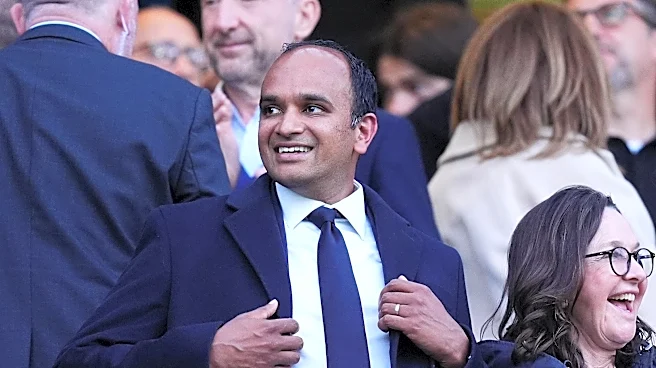
Because, as it turned out, some pretty huge news dropped on Monday morning, with Sunderland AFC announcing that ‘interim’ CEO Tom Burwell had left his position with immediate effect.
In a short statement on SAFC.com, the club announced:
Tom Burwell has left his position as Interim Chief Executive Officer of Sunderland AFC with immediate
effect.
The Club thanks Tom for his contribution over the past five months and wishes him well for the future.
Sunderland AFC owner Kyril Louis-Dreyfus will assume the role of Executive Chairman, working closely with the Club’s senior management team to lead the Club day-to-day.
The Club will make no further comment at this time.
So, that’s that, then.
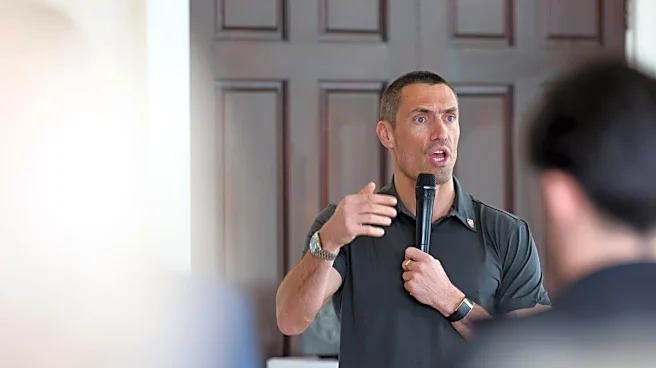
Burwell has been very much front and centre when it comes to the club’s off-field operations this season. He has represented Sunderland on television, chaired recent meetings with supporter groups and spoken at club events over the last couple of weeks. He also hasn’t exactly been the most popular figure among Sunderland supporters, although quite how fair that has been is another matter entirely.
Burwell introduced himself to the wider Sunderland fanbase as the club’s new off-field figurehead with an appearance on the Business of Sport Podcast back in April, where he outlined his strategy for taking the club forward. There was plenty of business speak, alongside a few unfortunate missteps that inevitably irritated supporters, such as referring to club legend Kevin Ball as Michael Ball. But, ultimately, it was a useful insight into the man who was now responsible for running Sunderland’s day-to-day operations.
The problem, perhaps, is that Burwell was replacing an incredibly popular figure in David Bruce – someone who had supporter experience at the heart of everything he did. And you’d expect that, given Bruce is a lifelong Sunderland fan himself. Since Bruce’s departure, it’s fair to say that there has been a noticeably more corporate approach from the upper echelons of the football club and, personally, I don’t think that has been a good thing. In fact, it feels as though things have regressed significantly off the pitch since Bruce left Sunderland.
The recent Supporters Collective meeting was a pretty stark example of that. The meeting began with Andrew Hird of the Red and White Army Supporters Trust reading a pre-prepared statement which outlined just how unacceptable some of the club’s recent off-field performance has been. Ticketing, communication with supporters, the handling of memberships and a whole host of other issues have generated entirely avoidable negative attention for Sunderland AFC – and, frankly, rightly so.
Then there is the rather significant matter of the club’s commercial operation.
We have failed to secure a front-of-shirt sponsor and, as things stand, are the only club in the Premier League without one. But the issue goes considerably deeper than simply having an empty space on the shirt.
It is genuinely incredible to think that Sunderland’s commercial income could now be lower than it was when we were a newly promoted Premier League club. We have already missed out on what could reasonably be £1-2 million of front-of-shirt sponsorship value given how far into the season we now are, and that is before you even start looking at the other gaps in the club’s commercial portfolio. There is no training-wear partner, there are gaps elsewhere in the partnership roster, and every one of those vacant spaces represents revenue that Sunderland could – and, frankly, should – be generating.

This matters because commercial revenue isn’t some abstract number sitting in a spreadsheet that supporters don’t need to worry about. Revenue ultimately gives a football club greater scope to invest, and with the Premier League’s spending rules and Strategic Cost and Revenue framework now forming such an important part of how clubs can operate, maximising every available revenue stream is absolutely critical.
Put simply, the more money Sunderland generate, the more capacity the club potentially has to invest in the football operation. So when we fail to secure a front-of-shirt sponsor, when we have no training-wear partner and when there are other commercial opportunities sitting unfilled, it isn’t simply a missed opportunity for the commercial department. It can have a direct impact on our competitiveness on the pitch.
That is what makes the current situation so frustrating. Sunderland have just returned to the Premier League, we have one of the biggest and most passionate supporter bases in the country, we are playing in the biggest domestic league in world football and we have a product that should be incredibly attractive to commercial partners. This should be a period when Sunderland are aggressively maximising the value of the football club. Instead, we appear to be leaving significant amounts of money on the table.
I know Burwell attempted to address the issue during the recent Supporters Collective meeting, saying that the club remained hopeful of securing a sponsor soon. But we are now in October. Every day that passes without that revenue coming through is another day in which Sunderland are potentially making themselves less competitive, and that is before we even consider the opportunity cost of all the other commercial deals that could have been secured.
The question, therefore, isn’t simply “Why don’t Sunderland have a shirt sponsor?” It is “Why is a Premier League football club with Sunderland’s reach and profile struggling to monetise its commercial operation properly?” That is a much bigger question – and one the club needs to answer.

Then there is the CEO position itself. Burwell admitted during that meeting that the club had failed to appoint a permanent Chief Executive Officer, and offered a number of reasons as to why that process had proved so difficult. But where does the responsibility ultimately lie? Whose fault is it that Sunderland still don’t have a permanent CEO, and, perhaps more importantly, what does that tell us about the way the club is currently being run?
Rumours that Sunderland have been up for sale for much of 2026 have never really gone away. I don’t know whether those rumours are true, but the continued difficulty in making key boardroom appointments is only going to fuel that speculation.
And now Paul Kingsmore, another important figure behind the scenes, is leaving too.
There must be a few empty offices at Sunderland’s HQ at the moment. Those offices need filling, and they need filling with people of genuine quality who understand what it takes to operate a Premier League football club and who can help Sunderland take the next step towards becoming the sort of established elite club we all believe this football club can be.
Which brings me back to Kyril Louis-Dreyfus.
I can’t help but wonder whether the Sunderland owner regrets allowing David Bruce – in my view, a once-in-a-generation executive appointment for this football club – to leave and join Sheffield Wednesday. We’ve never been given a full public explanation for why Bruce was asked to leave Sunderland. There may be perfectly valid reasons for it, and there may be things that supporters simply aren’t aware of, but judging things purely from my perspective as a supporter, everything seemed to run a hell of a lot more smoothly when Bruce was in place than it does now. And that’s the uncomfortable bit, because Burwell’s departure creates considerably more questions than it provides answers.
Football doesn’t wait for anybody. You cannot stand still in the Premier League and expect everyone else to politely wait for you to catch up. Sunderland now need to make some big decisions – and they need to make them quickly.
Louis-Dreyfus has stepped up to assume the role of Executive Chairman and will now be responsible for working closely with the senior management team to oversee the club’s day-to-day operation. Perhaps that could actually prove to be a positive. If he is prepared to get his hands dirty, become more involved in the running of the club and provide the leadership required during what is clearly a period of significant change, then there’s no reason why this cannot be the beginning of something better.
But he absolutely has to be hands-on.
Sunderland are in the Premier League for the first time in almost a decade and, after everything that has happened over the last couple of years, the club simply cannot afford to drift. There are too many important things to get right. The commercial operation needs fixing, the relationship with supporters needs repairing, the senior management structure needs stabilising and the club needs people in key positions who are capable of taking Sunderland forward.
Burwell’s departure may ultimately prove to be the right decision. It may prove to be the wrong one. Right now, we simply don’t know.
What we do know is that Sunderland have entered another period of uncertainty off the pitch at precisely the moment when there should be clarity, stability and a clear plan for what comes next.
These are certainly interesting times.
And, for the sake of Sunderland AFC, let’s hope the people making the decisions now get the next ones right.