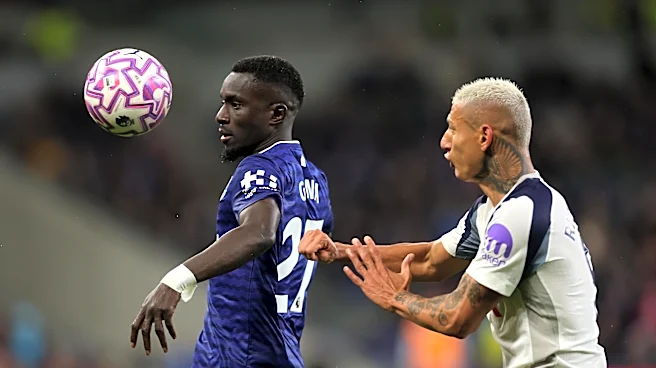



There are a lot of words you can use to describe this Tottenham Hotspur season. “Pleasant” is definitely not one of them. While the season ended on a high note with the 1-0 win over Everton on the last match of the season, it was still a win that, despite giving Spurs fans something to cheer about, still was required to avoid relegation — relegation for God’s sake! Who could imagine Tottenham Hotspur in a relegation fight? Honestly!
And while the football media could barely contain their gleeful anticipation
of Spurs literally playing rainy Tuesday nights at Stoke, Spurs fans had to grit their teeth and endure, because what else were we to do?
The litany of mistakes, errors, screw-ups, and misfortune are almost too lengthy to mention. But I’ll try anyway.
- Thomas Frank, hand-selected by Daniel Levy, Vinai Venkatesham, Johan Lange and Fabio Paratici, was an utter disaster of a managerial signing. His pragmatic approach to football was in stark contrast to the balls-out attacking of Ange Postecoglou, and while Ange’s Spurs also finished 17th they had the small consolation prize of a Europa League trophy. Frank managed to take all of the goodwill fostered by Postecoglou’s win and squander it with tactics that were an antithesis to the way Spurs supposedly want to play. In the process he took one of the better (if at times wildly open) defenses in the Premier League and made it significantly worse.
- The squad was appallingly constructed from the beginning of the season. Lange and Paratici, while landing a few young gems such as Lucas Bergvall and Archie Gray, focused mostly on players who were Skillcorner freaks — athletes with favorable physical metrics but who did not have the experience or the technical skills to actually succeed in… whatever it was Frank was trying to do. I’m loathe to give Frank much credit, but he was handed a midfield that apparently didn’t believe passing is real, with young, inexperienced (or in the case of Randal Kolo Muani, ineffective) attackers that were, frankly, poor at finishing. This was a team that had gigantic, gaping holes by Lange and Paratici. It was practically set up to fail.
- Daniel Levy, who had a successful (if controversial and at times tempestuous) tenure, was forced out by Joe Lewis’s kids in a palace coup that resulted in an ignominious end for Spurs’ 20-year chairman. Levy was not a perfect chairman, not by a long-shot, but he took a mid-table Tottenham team that was known for occasionally winning the odd cup, and turned them into legitimate title contenders and a football financial juggernaut. In the end, Levy lost his fastball, and he certainly had a big hand in creating the situation Spurs are now in, but I don’t feel good about the way he left the club. His departure was part of a shakeup, with the new owners wanting to create a more modern football structure. They did that, but it sure doesn’t feel like “modern” equates to “effective” at this point in time.
- The injury list the past two seasons is positively staggering. I can’t remember a club having this many significant injuries over a two year period as Spurs in 2024-25 and 2025-26. Significant ones too — Spurs are still without Dejan Kulusevski, more than a year after his knee injury. James Maddison missed almost the entire season after tearing his ACL in preseason. Dominic Solanke, Wilson Odobert, Rodrigo Bentancur, Guglielmo Vicario, Mohammed Kudus, Cuti Romero, and Xavi Simons all missed, and in some cases continue to miss, significant time this season, to the point where Spurs often had ten first team players unavailable. No other Premier League team came close. The result was frequently a vicious circle where the remaining players were forced to play more football, which inevitably led to both reduced efficacy and increased risk of getting injured themselves.
- Frank was finally let go far too late in the season and well past the point where it was clear he was not right for the job, but Spurs seemingly did not have an effective plan on what to do next, as evident by the disastrous temporary signing of Igor Tudor. Tudor, a “fix it now” specialist a la “Big Sam” Allardyce but without the affability, had a difficult job, but he did little to make it better, finishing his tenure 1-1-5 in all competitions. He mutually terminated his position after the death of his father, which felt like an unfortunate excuse to rectify what was clearly a huge mistake by the Tottenham brass.
- I don’t like being the guy to blame match officials for Tottenham’s woes, but it’s hard to look at Spurs’ matches this season and not come to the conclusion that Spurs were adjudicated differently to almost every other club in the league. The number of times Spurs had significant calls go against them — with similar calls for other clubs going another direction — was incredible. Cuti Romero had cards of both colors and fouls called against him that other players got away with. There were numerous examples of egregious bad calls, frequently upheld by VAR, to which the PGMOL later gave a tepid “oops, sorry” when it turned out they were incorrect. A lot of this could be explained by the overall poor state of match officials in the Premier League, but Spurs still went through a season in which they did not receive a single penalty.
- The appointment of Roberto De Zerbi could be considered one of the better decisions Spurs made — he certainly proved that competent management really does make a difference — but the appointment came with the shroud of De Zerbi’s fiery disposition, history of flame-outs with clubs and players, and his pursual and signing while at Marseille of credibly-accused rapist Mason Greenwood and his (and I’m speaking charitably) hand-waving away concerns about Greenwood’s sexual assault allegations. De Zerbi is a hell of a football manager, clearly, and he saved Tottenham from the drop, but I will never warm to his appointment, nor will a good chunk of other Spurs fans.
- And let’s just say it — Spurs played bad football this season. Yes, they were injured and yes, they had plenty of reasons why things went pear-shaped, but the end result was that this just was not a good team. Even under Roberto De Zerbi, who shored up the defense, put an arm around the squad, and marshaled them to 11 points from their final 18, it was barely enough. The football, while considered “good for this Tottenham team,” was I would argue barely mid-table caliber ball due to the extensive injury list and paper-thin depth.
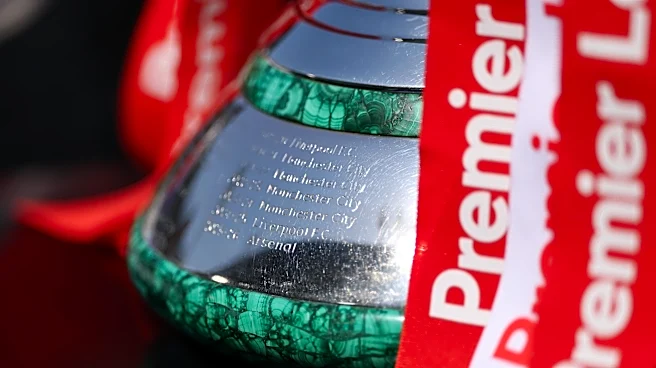
- Arsenal won the league by playing meatwall anti-football and it sucked.
I’ll stop there, but you get the idea — it was bad. Real, real, REAL bad, for much of the season. And even the bright spots — a trip to the Champions League R16 was one of them and there were others — were tempered by everything I just listed above, and more. But Spurs survived. Barely, by the skin of their teeth and the grace of Joao Palhinha’s scruffy 43rd minute goal, but they survived.
That said, we can now draw a line under the season and consign it to the dust bowl of history. It’s not one I’m likely to remember fondly, for sure, but it’s time to start looking forward and not backwards. What’s clear is that a lot needs to change for Spurs to recover from this season. Johan Lanage and Vinai Venkatsham should lose their jobs, though the briefing from the club seems to suggest that their approach going forward is to “trust the process.” The squad needs a major overhaul, with some potentially very difficult decisions ahead. Nobody likes it when the club sells players they enjoy watching (exhibit A: Johnson, Brennan) but the club needs an influx of new, and better, talent. It appears Spurs are already close to signing Liverpool fullback Andy Robertson on a free transfer, and Bournemouth central defender Marcos Senesi. That’s hopefully just the beginning. Players are going to leave, probably some you and I really like. That’s football. But holding steady just because we like certain players isn’t acceptable. Spurs need significant change, and they need it now.
I love the Premier League off season. Sure, it gives me a bit of a break from the weekly grind of covering matches, but it’s also a time of unbounded optimism. The future stretches before us like Mohammed Kudus’ hamstring. It’s full of infinite possibilities, stupid transfer rumors, and hope. That hope is what I look forward to the most. Sometimes you can’t effectively look up or ahead unless you’re flat on your back. This was a season of inexplicable horrors, but it’s also now a time of recognition, and of opportunity. It will take some time — Thomas Frank equated managing Spurs to moving an oil tanker, and for a while it sure looked like Spurs were the Ever Given wedged between the banks of the Suez Canal. This summer is a wonderful opportunity for Spurs to start to turn that boat around.
Let’s forget this season ever happened. It’s time to look ahead.