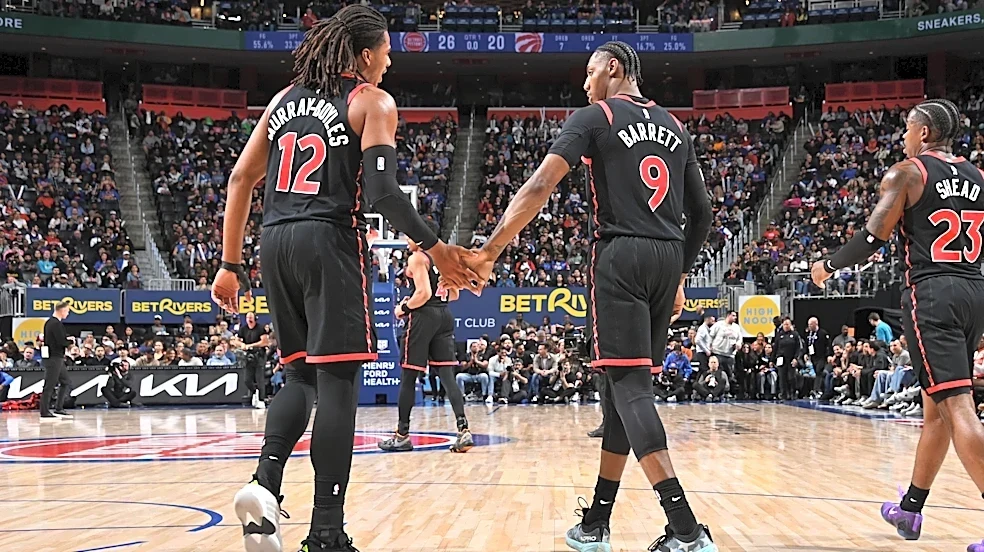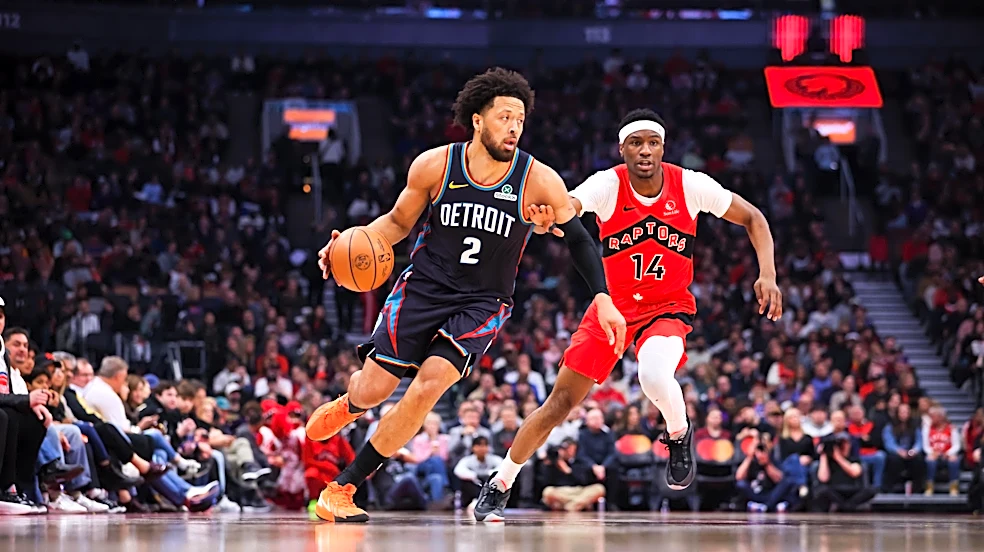




Last year’s Toronto Raptors were one of the most fun teams in the league, a whirling dervish on defence that could be absolutely devastating in transition. But, the team’s lack of shooting hamstrung its halfcourt offence, forcing athletic slashers like Scottie Barnes and RJ Barrett to operate in a phone booth, leading to some close losses at the end of fourth-quarter slogs. While swapping Brandon Ingram for Kawhi Leonard will undoubtedly give the offence a boost, the question remains: have the Raptors done
enough to address their shooting deficiency?
Outside shooting is a force multiplier in today’s NBA. Not only can a hot shooter flip a scoreline in an instant, but the threat of a marksman with a quick trigger pulls defenders away from the paint, giving his teammates more room to attack the paint, especially important for teams like Toronto who are built around a young star who lives at the rim.
Leonard, the headline-grabbing new addition, knocked down 38.7% of his outside shots last year and was above 41% the three seasons before that. He’s an excellent three-point shooter, but he really makes his money in the midrange, where he’s one of the game’s premier iso scorers. In some ways, he’s a more physically strong and deadlier version of Brandon Ingram. His shooting skill will be a boon and he shot more threes (6.8 per game) than ever last season, but, for the Raptors, whether or not his teammates can space the floor for him is just as vital as whether or not he can space the floor for others, since he’ll have plenty of the ball at the end of the shot clock.
If we assume that the Raptors’ last preseason starting lineup (Leonard, Barrett, Barnes, Immanuel Quickley, and Jakob Poeltl) will be their regular season starting unit, only two of those players (Leonard and Quickley) shot above league average from three last year. Barrett has had a 40% season in his past, but has only shot 36% or better one other time in his seven seasons in the league and, like Leonard, he doesn’t toss them up at particularly high volume. Barnes is a career 30.1% shooter from beyond the arc and will be treated as a non-shooter in the playoffs, and Poeltl’s range barely extends beyond the basket. Quickley has a fast release and is unafraid to pull up from well beyond the arc, but he’s more streaky than automatic. He’ll probably need to up his three-point volume even more (he was at 6.8 attempts per game last year, the same as Kawhi) to really move the needle for a team that was just 26th in three-point attempts and 21st in percentage last season.
In fact, of the top eight Raptors in minutes per game last season, only Ingram (gone, but accounted for by Kawhi’s arrival), Quickley, and Sandro Mamukelashvili (also gone) shot better than league average from deep and only one other regular (Ja’Kobe Walter, at a sizzling 40.9% on 3.7 attempts per game) did so. Even if the Raptors opt to finish games with Collin Murray-Boyles at centre instead of Poeltl, CMB is still an unproven shooter who hit 34% last year on less than one try per night. Even a super small-ball lineup with Barnes at the five might not have particularly great spacing, unless Walter has a breakout season or Barrett finds consistency from deep. Jamison Battle can really shoot, but it’s not clear he’ll have a big enough role to make a significant impact and their best defensive guard, Jamal Shead, has only made 32.2% of his threes in the NBA.
This year’s Raptors team will still be plenty dangerous and they’ll be an absolutely miserable team to have to play against, whether in the regular season or the playoffs, but it may take another roster move, or a breakout shooting performance from CMB, Walter, or Shead, for them to have enough offence juice to take down the league’s elites in a playoff series.