








We are roughly 3 weeks away from the 2026 MLB Draft, where, after being locked out of the top 9 picks of the draft like they were in 2024, the Nationals will be picking 11th overall, with picks 42nd, 78th, and 106th overall coming on the rest of day one as well. It will be the new front office’s first draft for the Nats organization, as great baseball minds from the Red Sox, Pirates, and other ballclubs come together to form the Nationals draft war room.
There haven’t been many rumors about the Nats’
preferences in this draft class, with the only prevalent player rumor being how they have been digging deeper than most clubs on two-way prepster Jared Grindlinger. What has also come out, and perhaps could be deduced from the front office’s draft history, is that there is a good chance the Nats will take a college hitter with their first-round pick if they do not select Grindlinger. It makes sense, as barring an unexpected slide from one of the top 3 prep bats, there aren’t really any prep hitters worthy of going borderline top 10, and grabbing college pitching in the first round has never been a focus of this front office with their former ballclubs.
There is a plethora of college bats in the range of the Nationals’ pick worth considering, all with their own strengths and weaknesses. Let’s analyze 8 of their most likely candidates and find out which one stands out above the rest for the Nationals.
OF Drew Burress Georgia Tech
2026 Stats: 61 Games, 143 wRC+, 16 HRs, 13.8 K%, 15.8 BB%, 10 SBs
MLB Pipeline Class Rank: 7th
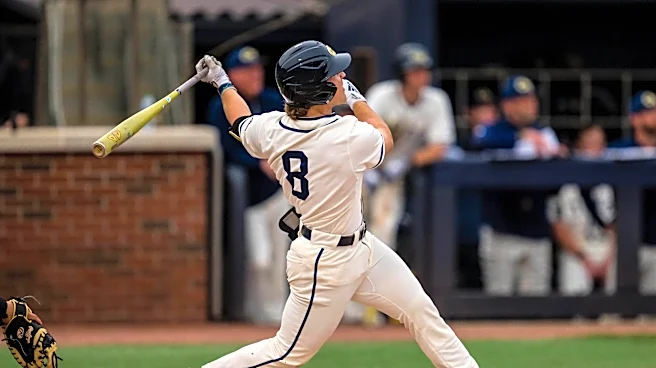
Burress is the least likely of this group to be available at the Nationals’ pick, but if he is, he would be a slam-dunk pick for the Nats. After being one of the best hitters in the country his first 2 years, Burress’ offensive numbers took a slight step back in 2026, but for him that still means a 1.130 OPS in one of the toughest conferences in college baseball. Despite his 5’9 stature, Burress contains easily plus raw power, with a 97th percentile average exit velocity, and he knows how to maximize it, with a 90th percentile barrel rate and 92nd percentile pulled flyball rate.
Burress has some swing and miss to his game, with a 53rd percentile whiff rate in 2026, but he doesn’t chase a lot and takes his walks, with a walk rate 2% higher than his strikeout rate. He has some speed to his game, which allowed him to swipe 10 bags this season, but it benefits him most in centerfield, where he is a solid defender with a plus arm. Burress knows how to hit, and grades out as at least a solid defender in centerfield at the next level, making him a home run pick for the Nationals if they get a chance at him.
SS Justin Lebron Alabama
2026 Stats: 61 Games, 105 wRC+, 16 HRs, 19.6 K%, 9.5 BB%, 42 SBs
MLB Pipeline Class Rank: 9th
Lebron is a very divisive player in this draft class, as while his tools are loud and the reward for fixing his issues is huge, those issues may also prevent him from ever being a plus big leaguer. In back-to-back seasons, Lebron dominated to begin the year, before seeing his numbers plummet in SEC play. His 19th percentile in-zone contact rate is terrifying when considering taking a prospect 11th overall, and his chase rate isn’t elite enough where you can see him working counts enough to minimize it, only 53rd percentile.
While the hit tool is very suspicious, Lebron has just about every other tool you could ask for. His raw power is plus, with a 94th percentile average exit velocity; his speed is elite, with 42 stolen bases in 61 games; and his defense was up and down in 2026, but projects to be above average long term. It’s easy to see how, even if Lebron is only an average big league hitter, he would be one of the most valuable big shortstops in baseball. If you can tolerate the risk of Lebron’s bat preventing him from reaching the bigs, he would be a solid pick for the Nationals.
2B/3B Chris Hacopian Texas A&M
2026 Stats: 42 Games, 116 wRC+, 11 HRs, 10.8% K%, 12.8 BB%, 3 SBs
MLB Pipeline Class Rank: 10th
Plain and simple, Hacopian can hit. In maybe the toughest conference in all of baseball, Hacopian posted a 92nd percentile whiff rate, 88th percentile chase rate, and 84th percentile average exit velocity, the best mix of those 3 numbers in all of college baseball. His surface-level numbers aren’t quite at the level of a few other hittersin the class, but if you are trying to project who will be a plus hitter at the professional level, Hacopian’s performance data is as good as anyone’s, and if he starts pulling the ball in the air a little more (40th percentile in 2026), he could take it to a whole other level.
Defensively, Hacopian bounced around the infield for the Aggies in 2026, but is probably a second or third baseman long-term, where he grades average to below average. He isn’t the speediest guy in the world either, with just 6 steals over 3 college seasons, but if you’re drafting Hacopian, it’s for his bat, and he could potentially find his way into the Nationals’ big league lineup as soon as 2028 if he were their pick.
OF Derek Curiel LSU
2026 Stats: 58 Games, 116 wRC+, 6 HRs, 15.7 K%, 12.4 BB%, 13 SBs
MLB Pipeline Class Rank: 12th
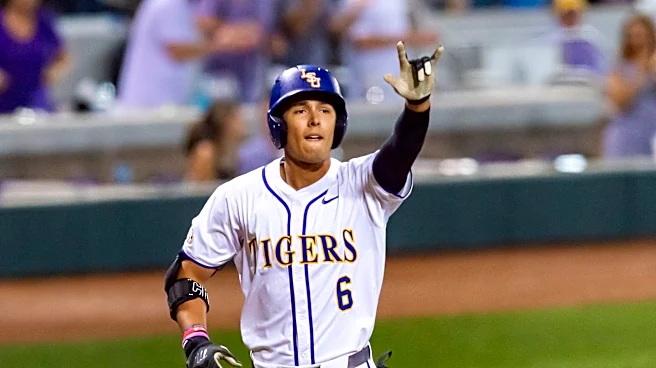
Curiel had a rough start to his 2026 season, which had me thinking of him more as a Nationals 2nd round option than a first-round one, but he rebounded excellently in SEC play and is certainly in the discussion to go 11th overall. Curiel may have the best bat-to-ball skills in the draft class, with a 95th percentile whiff rate in 2026, and a decent 68th percentile chase rate to go along with it. The in-game power has not quite arrived for Curiel yet, but there is some raw power in there, with an 86th percentile average exit velocity, and he knows how to lift the baseball, with an 87th percentile barrel rate. He will need to work on his 21st percentile pulled flyball rate if he wants to get into more home run power at the next level.
Curiel has a chance to stick in center field professionally, but if he does not, he should be a solid defender in left field. Curiel’s profile is very reminiscent of Daylen Lile, a left-handed outfielder with elite bat-to-ball skills and enough raw power to drive the ball out of the park consistently when he is hot, and he could be a strong pick for the Nationals in the first round.
C Ryder Helfrick Arkansas
2026 Stats: 62 Games, 116 wRC+, 18 HRs, 19.1 K%, 19.1 BB%, 8 SBs
MLB Pipeline Class Rank: 13th
Few hitters have progressed as much as Helfrick has in his time at Arkansas, and now the power-hitting catcher has a chance to become a top 10 pick in this year’s draft. Helfrick has plus raw power, with a 92nd percentile average exit velocity in 2026, and he knows how to use it, with a 93rd percentile barrel rate and 66th percentile pulled flyball rate this season. The hit tool was the primary concern entering the season, but it looked much improved this season, jumping from 11th percentile in-zone contact rate in 2025 to 52nd percentile in 2026. Helfrick also has great plate discipline, with his 79th percentile chase rate resulting in an excellent 19.1% walk rate.
Defensively, Helfrick is very well regarded behind the dish, with a strong arm and excellent framing ability. He even has some sneaky speed, stealing 8 bags and being caught just once in 2026. As long as the power and defense remain great, Helfrick should end up being at least an average big league catcher, and would be a great pick by the Nats 11th overall.
OF Sawyer Strosnider TCU
2026 Stats: 50 Games, 118 wRC+, 13 HRs, 18.4 K%, 18.4 BB%, 12 SBs
MLB Pipeline Class Rank: 16th
Strosnider has some of the best raw power in this draft class, but the hit tool could potentially limit how much he gets to it in pro ball. He posted an excellent 93rd percentile average exit velocity in 2026, and he excels at lifting the ball, with an 86th percentile barrel rate, but he’ll need to improve on an 18th percentile pulled flyball rate at the next level. Strosnider’s 35th percentile whiff rate is concerning, but the 26th percentile chase rate may be just as scary (and has me wondering how he was able to draw walks 18.4% of his plate appearances in 2026).
Strosnider has mainly played right field for the Horned Frogs because another draft prospect, Chase Brunson, has manned center field, but he is athletic enough to at least be given a shot out there full-time at the next level. There is some speed to his game as well, swiping over 10 bags in both his freshman and sophomore seasons. Strosnider would not be my preference with the Nationals’ first-round pick, as the hit tool has some glaring red flags, but if it’s for a solid discount, I could trust that the Nats front office has a plan for him.
OF AJ Gracia UVA
2026 Stats: 56 Games, 144 wRC+, 14 HRs, 14.0 K%, 17.3 BB%, 4 SBs
MLB Pipeline Class Rank: 17th
If you were to ask me which non-top 10 prospect in the class I thought was the most likely to be a productive big league hitter, there is a good chance my answer would be AJ Gracia, who lit up the ACC once again in 2026 after following his head coach from Duke to UVA. Gracia’s batted ball profile is remarkably clean, with a 79th percentile whiff rate, 68th percentile chase rate, and 79th percentile average exit velocity. Gracia doesn’t have the highest exit velocity numbers, but he makes as much consistently hard contact as anyone, and he knows how to work the count, with an excellent 18.4% walk rate.
Gracia is likely limited to a corner outfield in pro ball, where he is probably an average defender with a good, not great, arm. The bat is the calling card here, and it is very good, making Gracia one of my favorite options for the Nationals 11th overall.
SS Tyler Bell Kentucky
2026 Stats: 41 Games, 152 wRC+, 9 HRs, 18.6 K%, 15.5 BB%, 10 SBs
MLB Pipeline Class Rank: 20th
Bell missed a chunk of the 2026 season with a shoulder injury, but put up dominant numbers despite missing most of the non-conference portion of the season, where many guys can inflate their overall season numbers. Bell is a switch-hitter with excellent raw power, posting a 92nd percentile average exit velocity in 2026. There is some swing and miss to his game, with a 42nd percentile whiff rate, but he makes up for it with an elite eye, with a 98th percentile chase rate this season. Bell has struggled against sliders in his 2 years at Kentucky, and will need to improve against breaking balls as a whole in pro ball.
Defensively, Bell is still improving at Shortstop and projects as a strong defender there long-term. Bell has some speed to his game as well, swiping 10 or more bags in both of his seasons with the Wildcats. Bell is one of my favorite options for the Nationals 11th overall, as he mitigates swing and miss concerns with elite plate discipline and plus raw power from both sides of the plate.
My Rankings
- OF Drew Burress Georgia Tech (Tier One)
- C Ryder Helfrick Arkansas (Tier Two)
- SS Tyler Bell Kentucky (Tier Two)
- OF AJ Gracia UVA (Tier Two)
- OF Derek Curiel LSU (Tier Three)
- 2B/3B Chris Hacopian Texas A&M (Tier Three)
- SS Justin Lebron Alabama (Tier Three)
- OF Sawyer Strosnider TCU (Tier Four)
There is likely even more college hitters than this, such as catcher Daniel Jackson from Georgia, in play for the Nationals in the first round, but most likely, the discussion will come down to 5 or 6 hitters from this group if the preference is a college bat on draft day. Drew Burress would be an A+ pick by the Nats if he is available, which is unlikely, and any of Helfrick, Bell, or Gracia would make me a happy camper on draft day. The tier three names, Curiel, Hacopian, and Lebron, are all interesting options as well, and if they came at a discount, would be a solid choice by the Nats.
The Nationals are picking the farthest back in the draft they have been since 2021, when they selected Brady House with the 11th overall pick, and they have a plethora of interesting options, both on the prep and collegiate side, in front of them. I am excited to see how this Nationals front office approaches their first draft together as a group, and the types of prospects they will be targeting.