
It’s been three months since any action took place on the baseball field, and we’re still one month away from meaningful baseball (the world classic variety) kicking off. If you’re like me, you’ve had
enough of the contract talk, trade speculation, and the word “control” and want to get back to the on-field action.
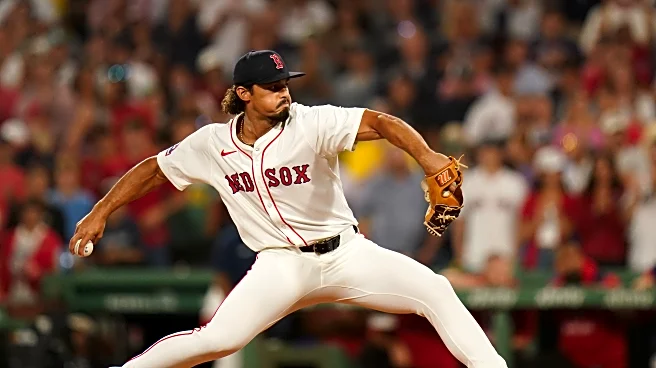
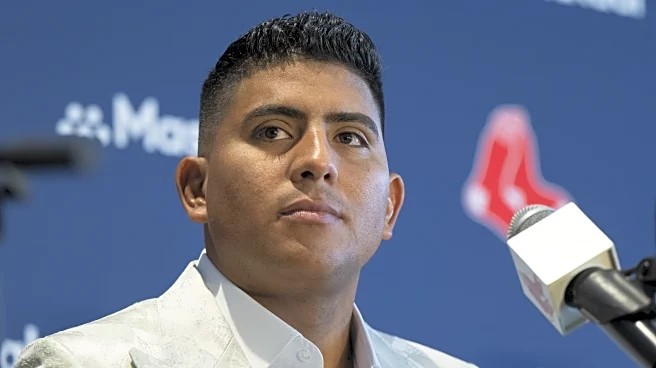
I got the itch and wanted to break down some tape, so here’s a look at the Red Sox’s newest starting pitcher, Ranger Suarez, attacking hitters from this past season.
We’ll start with Jose Altuve. He’s super aggressive at the plate, swinging at the first pitch about half the time. His power is to the pull side, with most of his damage coming against pitches up in the zone.
Suarez starts Altuve off with a curveball, and it’s a perfect one. Altuve was looking to ambush a first-pitch fastball, and winds up out in front as a result. If he were looking for a curveball, Suarez put it in a spot where it’s difficult to keep fair. Now at 0-1, Suarez can either work to the other side of the plate with a changeup or change speeds with one of his fastballs.
He goes to a cutter, and it’s in a good spot on the inside edge. It’s another pitch that’s difficult to keep fair if he does get a swing, but still gets a called strike if it doesn’t. Altuve is looking to bunt and gets a piece of it, but fouls it into the mitt. Now at 0-2, Suarez can throw whatever he wants, as long as it isn’t good to hit. Following two pitches to the inside part of the plate, I’d look for either a sinker that starts at the front hip to try to freeze Altuve, or a changeup low and away.
Before the pitch, Suarez was called for a pitch timer violation, making the count 1-2. I somehow managed to pick the at-bat with his only violation of the season, believe it or not. Anyways, it’s his first changeup of the game, and it’s non-competitive. At 2-2, he can still throw whatever he feels good about. Personally, I like doubling up on the changeup. With two outs and nobody on base, it’s a low-risk opportunity to make the adjustment and find the feel for an important pitch early in the game. Worst case, you spike another one and throw something else in a full count.
Beautiful. He goes back to the slow ball and hits his spot precisely. Altuve is looking for something hard and takes an ugly swing to end the inning. That’s a pretty low-stress at-bat for Suarez, and he didn’t throw anything harder than 87 mph. Let’s do another one.
Jumping ahead to the second inning, Cam Smith is up with one out and nobody on. Smith hit lefties well in his rookie season, but struggled with pitches inside. I’d expect Suarez to work the cutter up and in to prevent Smith from getting his arms extended and driving the baseball.

Suarez starts with a sinker on the outside edge. It’s not a great pitch to hit, but hitters often shoot the balls down the right field line. Smith fouls this one straight back, an indication that he just missed it. I’d shy away from throwing a sinker to this location again.
At 0-1, it’s a perfect cutter that starts over the middle and cuts to the inside edge. Smith gets jammed and bloops it foul to run the count to 0-2. At 0-2, a curveball down and in makes sense, as does a changeup away. Basically, anything but a fastball over the middle.
I believe David Cone calls this “X Games”. It’s a sinker that starts at the front hip and runs back to the inside edge for strike three. It looks like the cutter out of his hand — Smith likely thinks it’s running inside and is frozen for strike three. If you want to see more of how Suarez attacks righties, that game against the Astros (June 24) is a great start to watch. It’s a lineup entirely of righties, and Suarez is at his best.
What about lefties? Here’s Jackson Holliday on August 6th with one out and nobody on in the third inning.
Suarez starts the at-bat with a four-seam off the plate. Obviously, you want to start every matchup 0-1. For Suarez, this isn’t the end of the world, though. He throws both a four-seam and a sinker, and the four-seam just off the plate sets up the backdoor sinker later in the at-bat.
Suarez goes back to the fastball, this time hitting the outer edge to even the count. After two fastballs on the outer half, a sinker inside might get in on the hands, or a sinker away could freeze Holliday for a second called strike.
Perfect. It’s the sinker that looks just like the four-seam, but it runs inside and drops more. Holliday swings on top of it and grounds it to first base for an easy out. That’s basically the blueprint for Suarez against lefties, minus the breaking ball. Had Holliday fouled that one off, he’d likely have gone to his slider or curveball on the outer half. Here’s that sequence.
The sinker starts on the inner edge and fades off the plate, while the slider starts on the outer edge and runs away. It’s almost all East-West for Suarez against lefties as he tunnels his fastballs and uses the breaking pitches for whiffs.
So we saw a few examples of Suarez pitching well, but he’s not perfect, and it’s not hard to imagine how things go wrong. Here’s Logan O’Hoppe with one out in the second inning on July 20.
The first pitch is a sinker at the bottom of the zone for called strike one. Good start.
At 0-1, Suarez tries to go to the cutter that we saw him jam a few hitters with earlier. It’s in a decent location, but this one is 84 mph, as opposed to the ones we watched earlier at 87/88 mph. Lower velocity means it’s easier to get the bat around, and while O’Hoppe doesn’t kill it, he does drop it in for a base hit.
The next batter is Luis Rengifo.
It’s a four-seam fastball over the plate at 90 mph. Again, it’s a fine pitch if the hitter is taking, but this is roughly what most hitters are looking for to start an at-bat. Rengifo lines it up the middle, and there are two runners on.
We’ll fast forward a few hitters to Taylor Ward with the bases loaded and two runs already in. Suarez made a pitch to Mike Trout the previous at-bat that should have been called strike three, but went for ball four. With the ABS system, he’s out of the inning with one run allowed, but that didn’t exist yet, so he had to keep fighting.
The first-pitch sinker is fouled off for 0-1.
Here’s another cutter on the inside edge that’s grounded foul to make the count 0-2. At 87 mph, this one is tougher to get around and keep fair.
Suarez goes to the changeup, and it’s way off the plate for ball one. To that point, he had already missed badly with his changeup three times in the inning. While hitters are still aware of the pitch, his inability to locate it in the inning makes it less of a threat, and they can look for more pitches on the inner part of the plate as a result. A well-located changeup would work at 1-2, but Suarez doesn’t want to throw another non-competitive pitch and get closer to a full count with the bases loaded.
He tries to go inside with the fastball, but leaves it over the plate, and it’s in the gap to drive in three runs.
Suarez relies on finesse over power. His stuff is good, but he doesn’t have one pitch he can use to dominate a lineup. He needs to locate his pitches and sequence properly to get hitters out. Fortunately, he’s shown the ability to do that consistently over the past several seasons, and it’s an attack plan that should age well with his contract. If he can find some of the velocity he lost over the past two seasons, there’s that much more margin for error.