

The idea of having the best of both worlds sounds nice, right?
Unfortunately, in life, things typically don’t work that way. There are trade-offs in just about everything. The frustrating part is that either choice feels wrong, especially in the NBA. But neither choice is exactly right, either.
It’s an interesting conundrum, especially if you are the 2026-27 Brooklyn Nets.
Through 15 games, Brooklyn, sitting at 3-12, has somehow managed to lose five games by 15+ points. It’s the most in the league.
However, the squad has also dropped four games by five points or fewer.
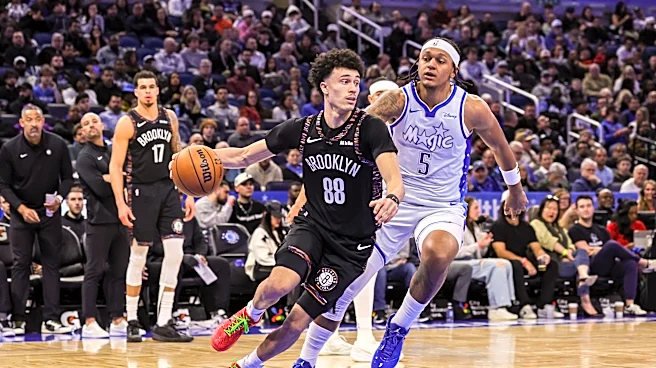
That’s what makes the Nets’ start to the season so interesting. There have certainly been several blowouts, and the squad has only three wins, but there is also a chunk of games where Brooklyn was in it until the final buzzer. That includes Friday’s tough 113-111 loss to the Orlando Magic.
According to Cleaning the Glass, Brooklyn has won 1.4 fewer games than their point differential would suggest, the fifth-worst mark in the league. Based on their -7.1 point differential, the Nets would be expected to have 4.4 wins through 15 games.
When those games get tight, the Nets just haven’t been able to pull away consistently. Despite having the NBA’s highest effective field goal percentage in the fourth quarter, their shooting drops off significantly in clutch situations — the final few minutes of games. The Nets are shooting just 37.2% from the field in those moments, ranking 23rd in the league. Their free-throw shooting has been even worse, sitting at 60%, the fourth-worst mark.
Subsequently, the Nets’ winning percentage in clutch situations is just 20.0%, the third-lowest clip in the NBA. The biggest problem comes with closing games, not necessarily being competitive or keeping it close entering the fourth.
Is it coaching? Is it execution? Is it the lack of a closer? The Nets seem to be searching for those same answers themselves.
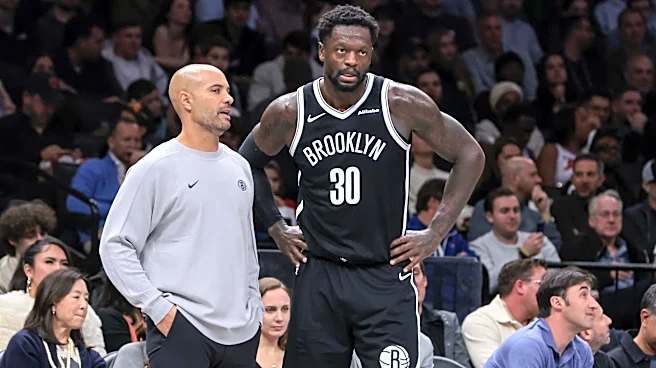
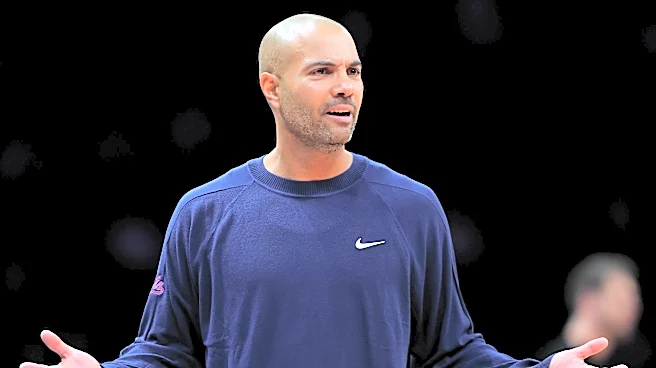
However, from afar, Jordi Fernández looks to be facing a deeper problem that could be out of control. There is only so much he can do with his rotations. Even on Friday night, he switched up a multitude of components in his minutes distribution, including starting Danny Wolf over Egor Dëmin, which ultimately panned out.
In large part, the overarching issue with Brooklyn comes back to the trade-off element. Want more scoring? There’s a good chance you’re sacrificing defense. Prioritize the other end? You probably have to sacrifice scoring.
Fernández isn’t entirely absolved of blame, but the Nets lack legitimate two-way players. And when you’re trying to win a game in the final minutes, particularly against more talented teams, that only makes it harder.
Compromise city
The Nets have been stuck in a tough predicament, trying to balance what matters most in late-game situations: offense or defense. That has cost them in multiple games.
At the end of the day, the Nets don’t have an established closing lineup. And that’s hard to overcome in today’s NBA, especially when games slow down in the final few minutes, and there’s little margin for error.
Think about some of the better teams in the league, some that Brooklyn has even played. When a game gets tight, there is a pretty solid understanding of who’s getting the basketball. Most solid squads have that guy they trust in crucial situations to turn to when things start to break down.
First off, who is that guy for the Nets? Michael Porter Jr. is probably the closest thing. He has been their most dependable offensive weapon, but is he really that high-end takeover guy?
That’s where the roster’s lack of two-way versatility becomes even more problematic. When Fernández needs offense, he has to consider which players give Brooklyn the best chance to score. However, in many cases, that comes at the expense of defense. That’s what’s so frustrating with the state of the roster.
Unfortunately for the Nets, it’s not as simple as just putting “the five best players” out on the court. It’s simply not how the roster is constructed: eight players are on rookie contracts, and the team is the second-youngest in the NBA over the past 25 years, older than only last year’s group.
The Nets lack a proven guy who can dominate games down the stretch. Obviously that comes over time, and for a rebuilding team like Brooklyn, a player like that doesn’t emerge overnight. The hope is that Mikel Brown Jr. can become that guy, and the early returns on the rookie are promising so far, but he is still just 12 games into his NBA career while also being on a minutes restriction.
Individually, Brooklyn has pieces that can be useful. It’s been promising to see growth from players like Nolan Traoré and Danny Wolf, looking to take legitimate second-year leaps. Julius Randle and MPJ add veteran experience and scoring punch. Then there is someone like Day’Ron Sharpe who has impressed while emerging as the team’s starting big.
Those players can be useful. Collectively, though, it’s tough to find a five-man combination that doesn’t leave something to be desired.
For a young team, there is some encouragement in being competitive. Hanging with high-level teams down the stretch like the Boston Celtics and the New York Knicks is encouraging, but when will those tight games actually translate into wins? There is also a distinction between being competitive but losing and losing games that are supposed to be wins, especially against strong competition. The latter can’t always be used as an excuse.
What about Jordi?
The head coach isn’t completely out of this conversation. A few of his rotational decisions, even with the newer changes, have been questionable. Look no further than Noah Clowney.
Clowney, 22, is in the final year of his rookie contract. While he’s still 22, he hasn’t produced much consistently. That’s been the biggest concern with the Alabama product since he entered the league.
Through 15 games, though, he hasn’t done much to change that narrative. In 21 minutes per game, he is averaging 6.5 points, 4.2 rebounds, and 1.1 assists on 41.3% from the field.
Furthermore, he owns a team-low -107 plus/minus. For context, that’s also a 17-percentage-point difference between him and the second-lowest-rated net: Mo Wagner at -90. Meanwhile, his 3-point percentage (27.7%) is also the lowest on the team among qualified shooters (minimum 3.0 attempts per game).
There have been some glimpses. He had back-to-back games against Memphis and New Orleans where he finished with at least 15 points and two 3s. Overall, though, not much has changed. The flashes are still there, but Clowney continues to struggle to find that level of consistency.
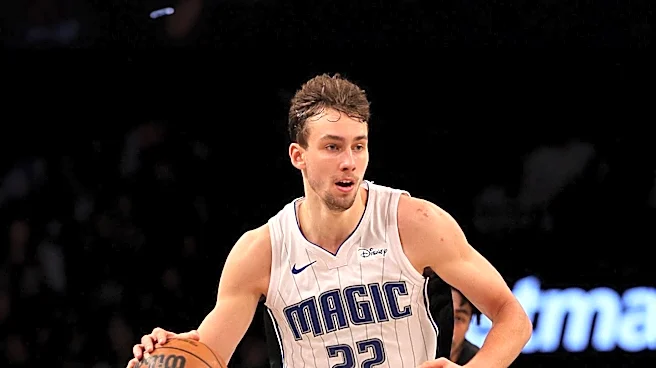
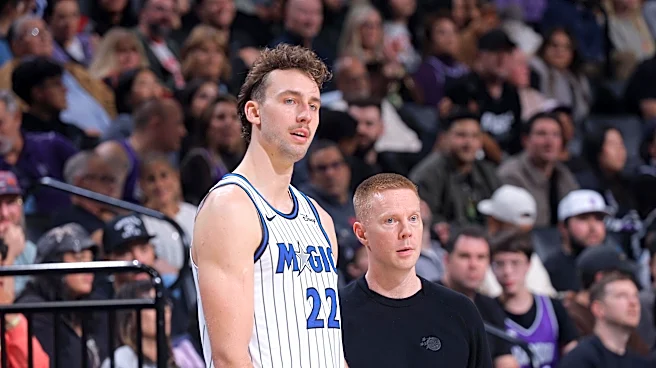
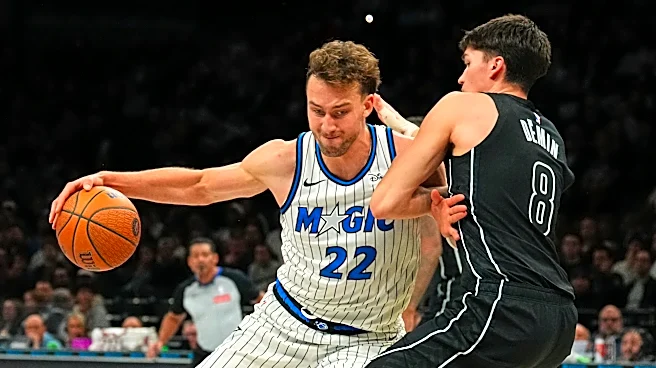
And that brings us back to Friday night, when he finished with zero points in 22 minutes, shooting 0-of-4 from the field, and recording a team-worst minus-12 rating. Yet, with the game on the line, he was still on the floor, defending Franz Wagner, who hit the game-winning shot over him.
Now Wagner had a tremendous game, finishing with 35 points, and his offensive ability is highly touted. However, putting Clowney out there in that situation was questionable to begin with.
If he isn’t providing offensively, what exactly is the team gaining by keeping him out there? While he came away with a block and a steal, he hasn’t been regarded as a plus defender, especially for his position and size, at 6’10” and 210 pounds. Most glaringly, his plus/minus rating was not only the lowest on Friday, but it’s also the lowest among the whole team this year, and by a pretty wide margin.
Despite that, though, he continues to earn consistent minutes. He ranks eighth on the team in minutes per game (21.0), behind Randle (33.1), Porter (32.9), Dëmin (24.0), Sharpe (23.9), Wolf (23.0), Brown (22.9), and Traoré (22.3). So esentially, he’s been the Nets’ third player off the bench this season. That’s a pretty important role.
Clearly, with him in that role and out on the court to close games, things haven’t been working too well. That’s where Fernández comes in. He needs to be willing to make more on-the-fly adjustments to the rotation, especially when things aren’t working.
How about looking at players like Josh Minott and Drake Powell? Neither has received notable minutes this season out of garbage time. Neither is a proven NBA defender, but is it time to give them minutes to see what happens? It’s worked with Danny Wolf.
After all, isn’t that supposed to be part of a rebuilding season? Minott, 23, shot 39.5% from deep wth Brooklyn last year after being acquired at the trade deadline, and the organization saw enough to award him a two-year, $9 million extension in the offseason. At 6’8” and 205 pounds, he also has the tools to be a disruptor on the defensive end.
Powell, meanwhile, has spent much of the season in the G League so far with Brooklyn’s affiliate, the Long Island Nets. He has played in five NBA games and was called up for Friday, although most of his minutes have come in garbage time. The North Carolina product boasts a 43-inch vertical and a 7-foot wingspan, giving him intriguing potential on offense and defense, notably at the point of attack. That was on display at points last year. In fact, his 91.9 defensive rating led the NBA last December, and the Nets actually went 7-4 that month.
Of course, the Nets have a free agency decision on Clowney coming up in the Summer. And of course, the Nets are bringing Powell along slowly. He was, after all, the biggest reach of the Flatbush 5. But, of course, the offense remains a work in progress. He shot just 28% from 3 during his rookie campaign and a painful 4-of-16 from that range in Summer League, including a 0-of-14 start.
There is also two-way forward Chaney Johnson, who played a firm role in the rotation at the start of the season, but his minutes have gradually disappeared. Johnson still lacks an established offensive game, but he can guard multiple positions on both ends of the floor.
Maybe Minott struggles. Maybe Powell shows that he isn’t ready. Maybe Johnson doesn’t improve much either. However, getting that understanding is important, especially when things aren’t working.
And if one of them does emerge as a useful piece, particularly defensively, that would be huge for the roster’s current outlook.
There may not be a perfect solution. At 3-12, though, the team needs to keep experimenting, especially off the bench. Fernández’ decision regarding Dëmin and Wolf on Friday paid off; now it’s important to see that same mindset carry over to bench minutes.
Given the organization’s overall situation, there’s much more to gain from trying something different than sticking with what hasn’t worked.