




12 years is a long time in the NBA.
You have to be doing something right to stay in the league this long, especially with career earnings of over $150 million.
But when you’re 11 years in with only four seasons in the playoffs, four total series victories, and just one run past the second round without a championship, all of the regular success you’ve had as a player starts to feel repetitive. You sink into a playstyle that works well for teams that aren’t competing, but kills your value for good teams.
As Jordan Clarkson entered Year 12 and joined the Knicks, the playstyle that he sank into for the last half-decade followed him. It played him off the court midway through the season. He looked like a square peg in a round hole as he neared his 34th birthday.
Then, he bought in, and his revelation resulted in him finally completing the championship run he had waited his whole career to be a part of.

Clarkson was born in Tampa, Florida, on June 7, 1992, but moved to San Antonio at age 6 after his parents divorced. He attended Karen J. Wagner High School and parlayed his high school success into a scholarship at the University of Tulsa. After making the All-CUSA Freshman Team in 2011, he took his game to another gear as a sophomore, averaging 16.5 points per game and making the All-CUSA First Team.
He transferred to Missouri to get on NBA radars, but had to sit out the 2012-13 season due to old NCAA transfer rules. As a senior, he finished third in the SEC in scoring and was named to Second-Team All-SEC, but despite he and Jabari Brown being two of the most prolific scorers in the conference, the Tigers were reduced to an NIT bid.
Clarkson declared for the 2014 NBA Draft, where he was selected by the Washington Wizards with the 46th pick before being traded to the Los Angeles Lakers for cash considerations. He started his career with their D-League affiliate, where he averaged 22.6/7.8/5.0 in five games. With the late Kobe-era Lakers in tank mode, he earned an everyday role towards the back end of the season, starting 38 games and making All-Rookie First Team, just the fifth second-round pick to ever do so.
He was a mainstay in the starting lineup over Kobe’s final season in 2015-16 before moving into a sixth man role as the Lakers added pieces like Brandon Ingram, Lonzo Ball, and D’Angelo Russell to their rebuild. He became one of the league’s top bench scorers and was rewarded handsomely with a four-year, $50 million extension, but he’d soon leave the bright lights of Hollywood for Cleveland, as the desperate Cavaliers acquired him and Larry Nance Jr. at the 2018 trade deadline to try and make one more run with LeBron James.
Down the stretch with the Cavs, he averaged 13 points a night on the best three-point shooting of his career, but he fell flat in the first playoff run of his career, and was soon doomed to more bad basketball after LeBron departed for the same Lakers team that just traded him.
Over the next 110 games over 1.5 seasons, Clarkson averaged 16 points a night as the Cavs’ sixth man, including a career-high 42 in January 2019. He was finally able to get another opportunity on a playoff team in December 2019, when the contending Utah Jazz acquired him for Dante Exum and two seconds. His scoring ticked up further, and he was able to produce two tremendous performances in Games 2 and 4 against Denver in the bubble before the Jazz lost in seven games.
2020-21 was his best season. He averaged 18.4 points and 4.0 rebounds on the most shots of his career, running away with Sixth Man of the Year over Joe Ingles and Derrick Rose (fun fact: Jalen Brunson came fourth!). He would be Donovan Mitchell’s top-producing teammate around him as they got to the second round, but the No. 1 seed fell on their faces.
After one more season of disappointment, Danny Ainge blew it up. Rudy Gobert and Spida were sold off, but Clarkson remained with the rubble of what was left. He averaged a career-high 20.8 points a night in 2022-23 as a full-time starter for the first time in seven years, but he was now a high-usage, low-value veteran on a team trying to lose games.
Sure, he was still making $15 million a year as he entered his 30s, but things were steadily declining to the point where he was withering away on a 65-loss team in 2024-25. He was mercifully waived before the final year of his contract, allowing him to search for a new home.
It just so happened that the years and years he spent on losing teams didn’t scare good teams away, as the Knicks jumped on him as soon as he cleared waivers in early July, signing him to a minimum contract to fill the role of a microwave scorer off the bench that the team had lacked since trading Immanuel Quickley in December 2023.
The fit was odd, though. You figured he probably wasn’t a fit next to Jalen Brunson, and he’s not the type to run a backup point guard role. His defensive limitations and permanent green light also didn’t fit a roster centered around its starters, and the weakness the team seemingly had with two of its stars on the defensive end. Still, they gave it a shot.
The early returns were mixed. He was playing as you’d expect offensively, averaging nine shots a game through 19 games on decent enough efficiency, mediocre three-point shooting, and rough defense. He at least showed a willingness to be more physical on that end, but often would get into foul trouble rather than get stops.
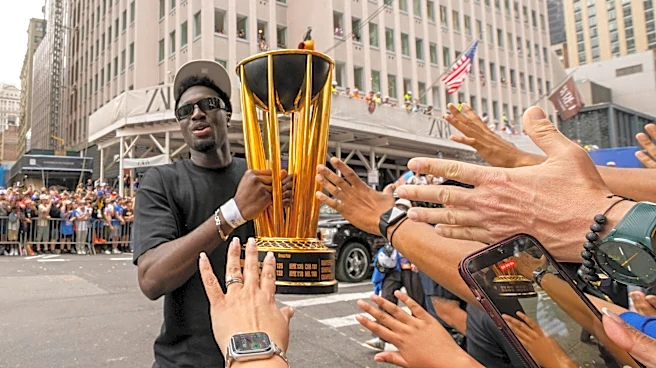
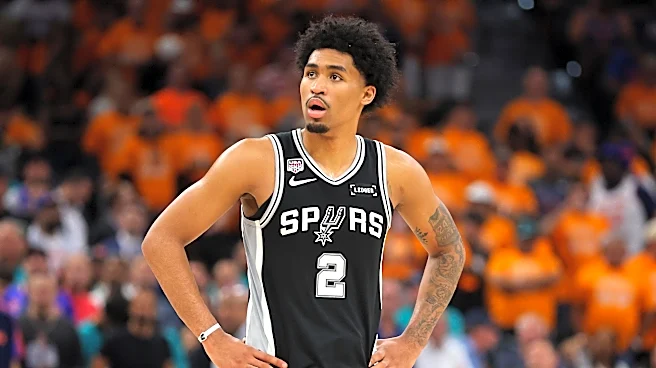
The first half of his season was defined by two performances a week apart. In the NBA Cup Final against San Antonio, he put up 15 points off the bench as he and Tyler Kolek stole the game from Victor Wembanyama and the Spurs. On Christmas, he revived a team that played like zombies in the first quarter with an electric 2Q, en route to a season-high 25 points.
20 more points in the New Year’s Eve loss to the Spurs would be the final game before the descent, for both he and the team. Over the next 10 games, he shot just 36.5% from the field, averaged more turnovers than assists, and was a minus-72 as the Knicks dealt with their three weeks from hell. I pondered after the disgusting MLK Day blowout against Dallas if Mike Brown would do what Tom Thibodeau did 4 years prior in a similar circumstance to spark the team.
He did. Clarkson was benched for the team’s blowout win over the Nets, reduced to garbage time. Over the next seven games, he didn’t play a spec of leveraged basketball. He had been turned into Evan Fournier, an offensively focused veteran who had played his way out of the rotation with ineffective basketball and a bad motor. Things felt bleak.
Then injuries allowed him to get his foot back in the door. Injuries to Josh Hart and Deuce McBride got Clarkson an impromptu start against the Nuggets on February 4, where he was mostly effective in 24 minutes. When Hart returned, Clarkson returned to the doghouse most games, only sparingly playing meaningful bench minutes for the next month.
Then the Knicks went on their biannual West Coast trip. In the third quarter of a lopsided loss to the Lakers, Brown inserted Clarkson, looking for an offensive spark that never came. Three days later, he was given the rope he needed to have a vintage Clarkson performance against his old team in Salt Lake City.
From there, he was back in the rotation. Suddenly, he had found the hunger of a young player on a rookie contract. His shot selection improved. His defensive intensity amped up. He started becoming a menace on the offensive glass. The player that we have known for the last half-decade was suddenly something completely different.
He was a team player now. He understood that the way he was playing before would not only result in his benching but could lead to him being out of the league. He was being given a second chance, and he wouldn’t let it pass.
His role in the postseason depended on the game. To start the postseason, he was firmly in the rotation, but he, Jose Alvarado, and Landry Shamet all traded places around the bench totem pole as the Knicks proceeded on their run to the NBA Finals. His best minutes came in Game 1 against Atlanta, Game 3 against Philly, and Game 3 against his hometown Spurs.
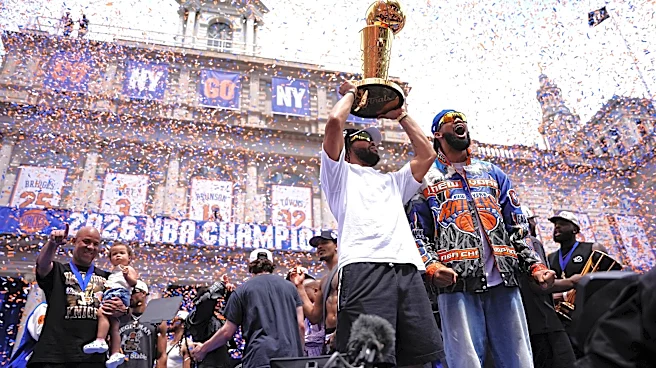
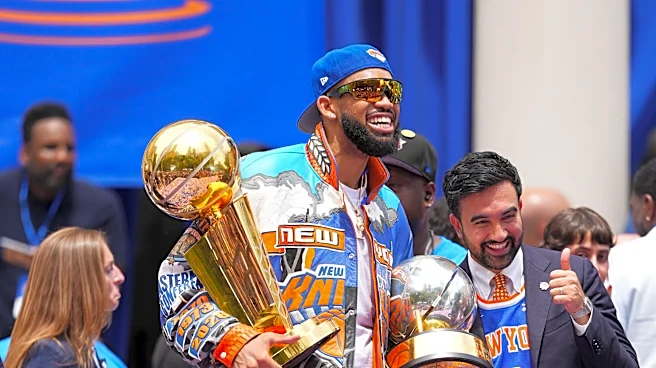
It probably wasn’t how Clarkson envisioned himself being a bench piece to a championship roster a few years ago, but he was finally able to lift a Larry O’Brien Trophy after 12 long years.
The oldest player on the 2025-26 Knicks. The most experienced player on the roster. Someone who sacrificed and changed his entire playstyle to fit into the mold that a contender needed.
And now, Jordan Clarkson will forever be known as an NBA champion.
–
(P&T will be doing player-by-player article tributes over the next few weeks to commemorate the special team that ended our long, half-century nightmare)