

Defensive Summary
Oregon’s defense has done an excellent job all season long of minimizing big plays. Extra yards, and especially explosive gains, on the ground have been particularly difficult for opponents to find. There has been an unfortunate tendency to give up a couple of super-explosive (30+ yards) plays through the air per game. This makes the explosive passing rate above average, while passing efficiency defense and yards per play both meet the championship threshold.
The one area where this defense is below
water is in efficiency rushing. While the mint-front defensive structure makes a conscious decision to sacrifice defensive rush efficiency to make gains against the pass, under 50% is still too low. A truly elite mint-front defense would still meet the 60% championship threshold, they would just be even better in other metrics. I would feel more confident about the team if rush efficiency were closer to 55%.
Defense by Down and Distance
It is also worth noting that the Ducks haven’t faced any playoff caliber offense’s this year except for Indiana (though between the 20s Rutgers is actually close to that level and Oregon completely shut them down). This means the rushing explosive rate and the passing numbers have to be taken in the context of their opponents. Even with such caveats in mind, the down and distance breakdown shows that Oregon’s mint front defense is accomplishing their goals against Big Ten offenses.
1st and medium means 1st and 10 (other distances are possible but rare so I don’t have good sample sizes). On 2nd and 3rd down “short” means 3 yards or less to go, “medium” is between 4 and 6 yards, and “long” is 7 to 15 yards (any longer is non-representative). Efficiency defense on 1st down as well as 2nd and long are both good (though a few more percentage points on 2nd and long would be nice…). Third and medium has been a problem, though not catastrophically so, while third and long defense is quite good. The third and short numbers aren’t bad, though 40% efficiency should be the goal. The 2nd and short numbers illustrate the priorities of the mint front scheme, and the irrational approach taken by most Big Ten offenses. Oregon doesn’t really care if opposing offense’s convert 2nd a short, they’ll accept that to prevent big passing gains down field. This entire season (outside of garbage time), the Ducks have only had to defend two throws on second and short.
Rush Defense by Down and Distance
Looking at rush defense specifically through the lens of the mint-front structure; 1st down, 2nd and long, as well as non-short third downs (I had to combine medium and long yardage for sample size reasons) are good but not great. The 2nd and short success rate is not a big concern, the defense is designed to give up 4-5 yard gains in this situation to prevent super-explosive plays. The 2nd and medium, 3rd and short, as well as 4th down numbers show a defensive vulnerability though. If an opposing offense can gain 7 yards between 1st and 2nd down, they have an excellent chance of converting on 3rd down. Opposing teams should also feel confident going for it on 4th and short, to the point it is probably advisable even in their own half of the field at less than 2 full yards.
Rush Defense Player Grades
For every rush play the defense faces I give positive grades for players who affect the offense’s ability to succeed. This could be defeating a block, getting backfield penetration, helping out on the tackle, forcing the runner to redirect into other defenders, etc. Negative grades are assigned if a defender does not complete their assignment and that failure helps the play succeed. This includes getting moved by a double team, getting stuck on a block, playing the wrong gap assignment, missing a tackle, etc. The ratio shown in the chart above is the % of all grades that are negative, computed as: negatives/(positives + negatives).
On the interior the starting duo of Washington and Alexander are extremely disruptive. Green is a serviceable backup to keep the starters fresh. Gray has performed a bit behind Green and I don’t expect that to change much in the post season. He has the potential to make a big jump in 2026 as he is a year younger than Green and still getting used to playing with a lot of added muscle since the Spring Game. We’ve also seen increasing use of DT #77 Jericho Johnson the last few weeks. I don’t have a large enough sample size to include him in the above numbers, but his limited tape has looked good as a run stopper and he is the heftiest defender listed on the roster at 342 lb.
The two “all-purpose” edge defenders are Tuioti and Uiangelelei. Tuioti has been stronger against the rush while Uiagalelei has more havoc plays in the pass rush on my tally sheet. This has as much to do with their alignment and role as their innate talents. Purchase has been a bit of hybrid this season. While he will relieve Tuioti when the latter needs a break, he is also often used in as an extra off-ball linebacker against heavy personnel. Porter has only seen action when Uiagelelei needs to leave the field or goal line packages. I’ve only seen DT #42 Aydin Breland and EDGE #32 Nasir Wyatt in obvious passing situations. They have the best per-play havoc rates on the team in this limited role.
Boettcher (the “green dot” defender) and Mixon continue to see the vast majority of snaps at linebacker. Both have been above average FBS starters, though neither has flashed the potential to be a high NFL draft pick. I’ve said my piece about Jackson’s backslide this season and I don’t want to harp on a hard working player. His situation will need to wait until the off season to be addressed. For the time being both Purchase and even Tuioti have been deployed off ball in various alignments rather than brining in Jackson as a third ILB. While both LB #20 Dylan Williams and LB #23 Brayden Platt finally saw a few meaningful snaps in the last four games after recovering from injury, it was only when Jackson was out with injury and the starters needed a break. I’m skeptical they can work their way into more playing time before the end of December, but wouldn’t rule out the possibility entirely.
Pass Defense by Down and Distance
On 1st down as well as in the obvious passing situation of 3rd and long, the Ducks perform at championship caliber or very near so. That the second and medium efficiency drops a touch after first down is understandable, though the increase in explosive rate is concerning. The the efficiency and yards per play also get even worse in both 2nd and long as well as 3rd and medium. Based on my observations, I suspect the explanation is twofold. First, teams are targeting deeper routes that the safeties are responsible for in these situations where the defense has been less successful. Unlike on third and long though, the defensive front cannot sell out to pressure the passer on 2nd and long or 3rd and medium as a run is a legitimate option. The 3rd and short numbers are quite good given the down and distance. That is unsurprising as this very situation is what the mint-front is designed around. Smart offenses will run on 3rd or 4th and short in this situation rather than risk a pass, so I don’t have enough pass attempts on 4th down to include above. Big Ten offenses aren’t smart enough to throw on second and short with the requisite frequency to give a decent sample size.
Pass Defender Performance Statistics
Finney continues to be the best overall pass defender, though his explosive numbers have increased dramatically since the last check in. Both USC and Washington were willing and able to challenge him downfield, and Oregon’s staff trusts him to hold his own without safety help. More often than not, he has done just that, but against elite wideouts (like the Trojans’) some deep completions are inevitable. Theron Johnson has been solid if unspectacular, while R-Fr. Obidegwu has had some struggles, but frankly he’s played far more “normally” given his experience than Finney has. We have also occasionally seen true freshman CB #14 Na’eem Offord at times but I only have one target for him on my tally sheet. Former JUCO CB #3 Sione Laulea had been used as depth earlier this season, but has been injured for the last few games.
The linebackers have significant responsibilities in coverage, with Boettcher often assigned as a “robber” in the middle of the field or even in a pseudo-safety position only 10-yards off the line of scrimmage. Mixon is usually assigned simpler respnsibilies guarding the flat, but has been extremely proficient in his role. Jackson has also been the weakest of the three rotational starting linebackers in coverage, but the deficit isn’t nearly as large as in run defense and he has done very well limiting gains after the catch.
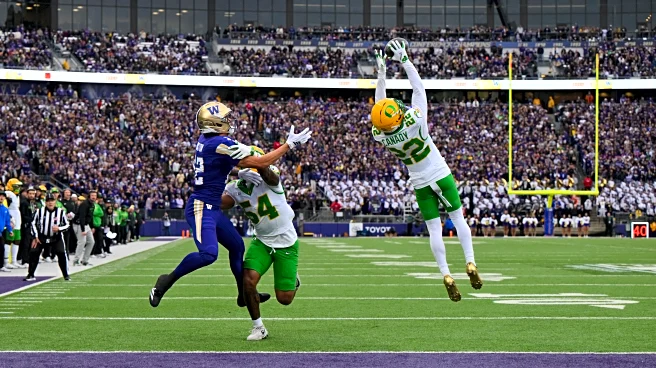
The nickel position has evolved this season to a hybrid of nickel corner who plays over slot receivers (with roles in various blitzes and sim pressures) that will also rotate as a deep safety to the wide side of the field. Veteran transfer Canady’s experience across a diverse array of positions has been invaluable here. He doesn’t have the best success rate in coverage, but has rarely allowed big plays against him and has had key interceptions both manned up over the slot and from the deep safety spot. Austin surprised me with his improved tackling earlier this season and has started to see more snaps later in the season against more athletic receiving corps.
The boundary safety position has been held down almost exclusively by Flowers, replaced by DB #2 Lopa in the rare instances when he has to leave the field. I’ve liked his athleticism but as a R.-Fr and first time starter he has been inconsistent in coverage. Both deep safeties have comparable numbers in run support (though neither near as good as Canady), but the biggest issue in deep coverage has been the play of Thieneman. Normally at the deep field safety spot, he also rotates to a central position only 10 yards deep as a pseudo middle linebacker depending on the offense’s alignment. Just as hythloday’s off season film review showed, Thieneman has NFL upside in terms of foot speed and physicality, and has held up very well in man to man assignments. He also shows maddening inconsistency in tackling technique and field awareness. The current depth situation at safety means he rarely leaves the field (we did see a few snaps from #12 Peyton Woodyard against the Huskies). As of now, the best chance to make a big play against Oregon in the pass game is to run route concepts that challenge the deep safeties to keep proper position.