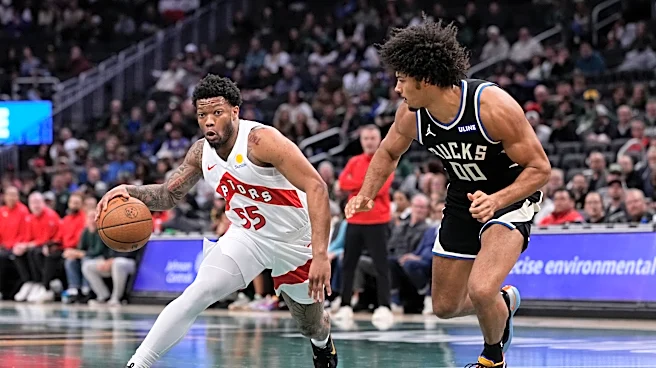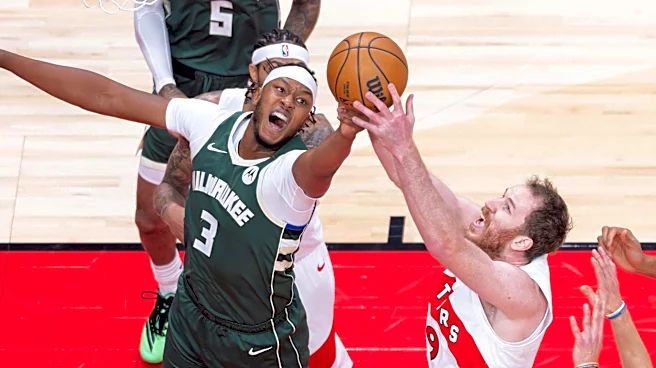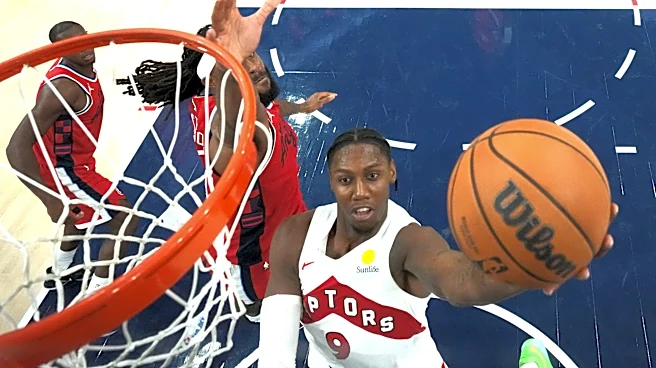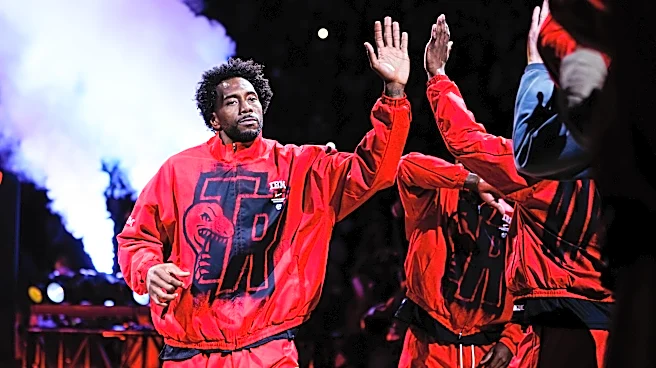


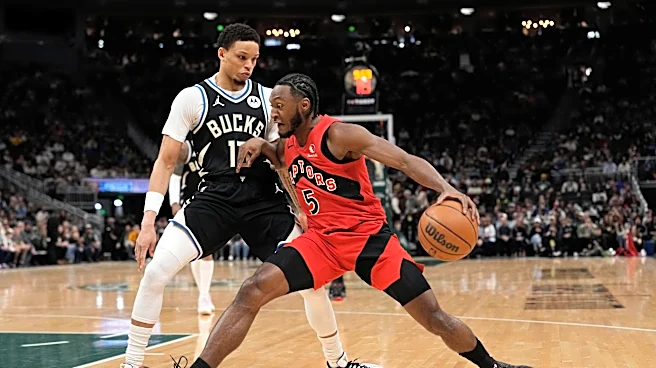
When the Toronto Raptors take the court at Scotiabank Arena to play the Memphis Grizzlies on Monday, it’ll be a matchup between two teams that, for better or worse, have been subverting expectations.
Here are three storylines to consider ahead of the 7:30 p.m. EST tip-off on Sportsnet.
Travelling down a similar path
For the most part, when the Raptors square up against teams they should beat, results typically go in their favour. Toronto is 5-1 against teams under .500. Unfortunately, when the competition level shifts into a higher
gear, that’s when things begin to unravel for the Raptors. Toronto is a lowly 0-4 against teams above .500.
That specific trend will have to change when the Raptors defend home court against the Grizzlies. The silver lining is that the Raptors are 2-1 at home, albeit during a stretch when teams are still shaking off their pre-season rust.
There’s noticeable discourse surrounding the Raptors’ current record against better competition, but looking back at their 2019 championship season, it wasn’t that different of an experience.
While Toronto was 17-5 in games without Kawhi Leonard, ten of those wins came against non-playoff teams. The quality of their wins obviously didn’t matter at the finish line in 2019, and by default, this year’s team shouldn’t be criticized for it either.
As long as the Raptors continue to take care of business and Leonard is healthy during the post-season, they’ll have a chance. Once Leonard returns, that’s when the bar should be raised.
Life without Kawhi
The Raptors and Leonard experience has always meant that there are two iterations of the team. In 2019, it was a multi-pronged attack fuelled by one of the deepest rosters in league history.
But what does that mean for the 2026-27 Raptors?
While it’s an unreliable two-game sample size with Leonard, the results in shot distribution is a bit surprising.
Field goal attempts per game with Leonard and without
- Scottie Barnes: 22.5 / 18.8
- Jakob Poeltl: 2.0 / 4.5
- Immanuel Quickley: 14.0 / 13.7
- RJ Barrett: 15.0 / 17.2
- Ja’Kobe Walter: 8.0 / 8.7
- Allen Graves: 3.0 / 3.7
- Collin Murray-Boyles: 6.5 / 8.0
- Jamal Shead: 2.5 / 5.7
- Jamison Battle: 0.5 / 2.2
It turns out that Barnes is more aggressive when Leonard is on the court. This revelation might lean into the theory that a superstar raises everyone’s game. Ideally, Barnes is at least being just as involved in the offence, regardless of whether Leonard is playing.
Using this smaller sample size, Quickley, Walter and Graves are involved in the same way with or without Leonard. The most shocking player is Walter, who is universally accepted as visually looking more involved, especially as the default starter when Leonard is missing.
The largest uptick in usage applies to Poeltl, Barrett, Murray-Boyles, Battle and Shead. Poeltl’s involvement can be somewhat attributed to health. It makes sense that Barrett is taking advantage of the opportunities and his aggressive approach leans into a Leonard-less environment.
Murray-Boyles should always see more attempts, as should Battle. While Shead’s added usage can sometimes work against the Raptors, it’s great seeing him be more aggressive.
Grit and Cold Grizzlies
After reeling off six consecutive victories to begin the season, the Grizzlies have come back to Earth. Memphis is 0-3 in November, with losses against the New Orleans Pelicans, Indiana Pacers and the Oklahoma City Thunder.
The Grizzlies boast a fun team capable of unexpected performances. Ty Jerome might be a household name by the end of the year and is an early fantasy basketball league winner. Meanwhile, Cameron Boozer is authoring one of the most impressive starts to a rookie campaign.
It’s the exact kind of team capable of catching the Raptors by surprise.