




With a couple weeks until All-Star break, we’ll soon find out who the WNBA believes are the league’s best shooters, as they’ll be pitted against each other in the 3-Point Contest.
While popularity plays a role in choosing the competitors, let’s look at who the league’s best shooters have been so far this season.
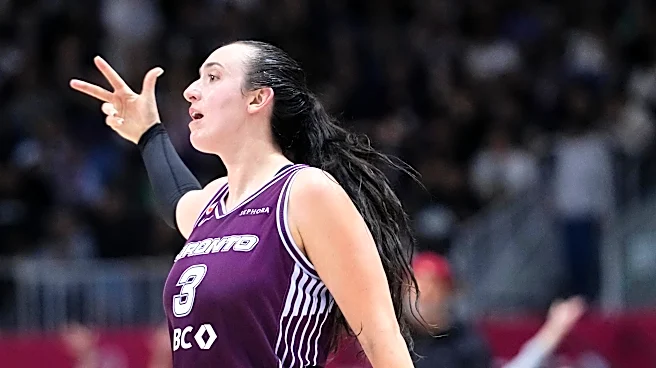
Marina Mabrey(Toronto Tempo): 3.5 makes, 8.8 attempts, 40.3 percent per game

Marina Mabrey was hands down the easiest name to put on this list.
The Toronto Tempo star is one of two players shooting more than eight and making more than three 3-pointers per night. Rhyne
Howard is the other player in both categories, but Howard is only shooting 36.7 percent—dwarfed by Mabrey’s unreal 40.3.
Mabrey has tied the WNBA record for 3-pointers in a game (9) twice this year, most recently as part of her record-tying 53-point outing against the Los Angeles Sparks. After making nine 3s twice within seven days, it feels like it’s just a matter of time before she becomes the first WNBA player to connect on double-digit 3-pointers in one game.
Mabrey’s audacity has completely carried over from her Unrivaled breakout season, where she was attempting over 11 per night and averaging over 25 points per game. The Tempo are dealing with a handful of injury issues and inconsistent performances, but Mabrey just keeps going.
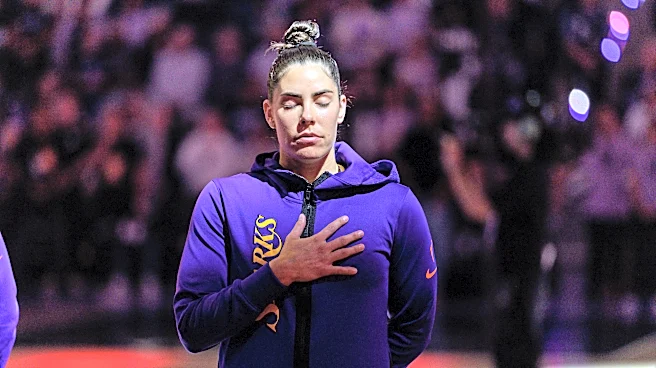
Kelsey Plum (Los Angeles Sparks): 2.6 makes, 6.8 attempts, 38.3 percent per game

Kelsey Plum is the most familiar face on this list, for good reason.
While the four-time All-Star is currently injured and expected to miss three more weeks at least, she was second in the WNBA in points per game, with a solid chunk of her scoring coming from distance. This season, 3s have made up the least amount of her overall shots since the 2021 season, but she’s still shooting almost seven per game and encroaching upon a 40 percent clip, which is impressive for her volume and the attention she gets on defense.
The Sparks have left a lot to be desired from their experienced core, but Plum had been pulling her weight while healthy. Los Angeles is 6-1 when Plum attempts seven or more 3s in a game, and 1-4 when she doesn’t meet that mark. Even as she averages a hair under 25 points per game, there have been times this season where it felt like Plum wasn’t getting enough shots from distance. When she comes back, expect her shooting to come back in an instant.
Kelsey Mitchell (Indiana Fever): 2.5 makes, 6.2 attempts, 40.2 percent per game

Kelsey Mitchell may not be the Fever guard who comes to mind when you think of volume 3-pointers. But, she’s been the definition of consistent from the 3-point line since 2022.
She’s attempted more than six 3s per game in all but one of her seasons in the W, and this is her fifth-straight season shooting above 39 percent from three. Mitchell may be known most for her shiftiness and quick handle, but her shooting has separated her from the pack of on-ball guards for quite some time now.
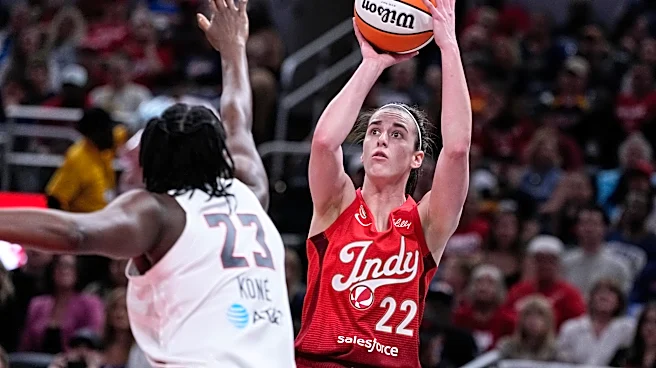
While Caitlin Clark is notorious for her tough-shot making and her ability to create space for deep 3s off the dribble, her 34.4 percent clip isn’t enough, even when attached to her high volume, for me to argue that she’s one of the five best shooters in the league. She has the ability to put her name among that elite group, but ability doesn’t mean too much when it isn’t manifesting at the level of these other shooters.
Mitchell is the biggest 3-point threat on the Fever right now regardless of the degree of difficulty of her shot. The ability to have either guard erupt from distance, however, is one of the Fever’s biggest win conditions as we get deep into the season.
Nia Coffey (Minnesota Lynx): 1.7 makes, 4.0 attempts, 43.4 percent per game

Nia Coffey, while lacking the volume or on-ball shooting ability of the other names on this list, has earned her spot with a league-leading 43.4 percent clip from behind the arc.
Just like her career playing time, Coffey’s 3-point volume and percentage has fluctuated on a yearly basis. Some years, she’s shooting 1.7 per game on less than 30 percent. This year, she’s looking like one of the best shooting specialists in the W. She shot less than 30 percent in three of her four seasons as a member of the Atlanta Dream, including a poor 29.3 percent on 1.9 attempts per game last season. Now on the first-place Minnesota Lynx, she’s doubled her volume and bumped her percentage up almost 15 points. That’s unheard of when it comes to year over year improvements!
Coffey’s oscillation as a shooter raises some concerns about whether she can maintain her 43.4 mark for the remainder of the season. Her shot quality has gone way up behind the passing greatness of the Lynx star rookie Olivia Miles, so it’s very possible that she’ll continue to be fed clean looks for another 20+ games.
If her form is as pure as it looks, Coffey is in a position to rewrite the narrative about herself as a shooter.
Marine Johannès (New York Liberty): 2.4 makes, 6.2 attempts, 39.0 percent per game

There are a handful of players who have solid arguments for taking this last spot, but I’m giving it to Marine Johannès over the likes of Chelsea Gray, Rhyne Howard, Bridget Carleton, and Natisha Heideman.
Johannès historically has some of the highest degree-of-difficulty on her 3-pointers, much to her own doing. While her average shot isn’t one of the famous one-legged fadeaway triples, she has always been willing to shoot on the move, over contests or in whatever situation she catches a glimpse of the rim in. Behind her on-ball shooting ability and steady percentage with top-10 volume, Johannès deserves to be on this list.
Johannes only shot 34.4 percent last year after choosing to stay in Europe for the 2024 season. In 2022, she was second in the league in 3-point percentage, finishing the year at 43.7 percent (only trailing Moriah Jefferson’s unreal but low-volume 47.4 percent).
Johannès’ shot creation ability has always felt like the source of her shooting value, more than her pure shooting percentage, but her role on the Liberty will continue to increase if she’s able to manage both.