

In just over a week, the Detroit Lions will have to reduce their roster total from 90 players to 53. It’s a devastating day for players, and a tough one for front offices who often agonize over the final few roster spots.
Through training camp practices and preseason performances, we do our best to try and predict what that roster may end up looking like, but there’s one more piece to that puzzle. Sometimes the coaching staff lays out the picture right there in front of you.
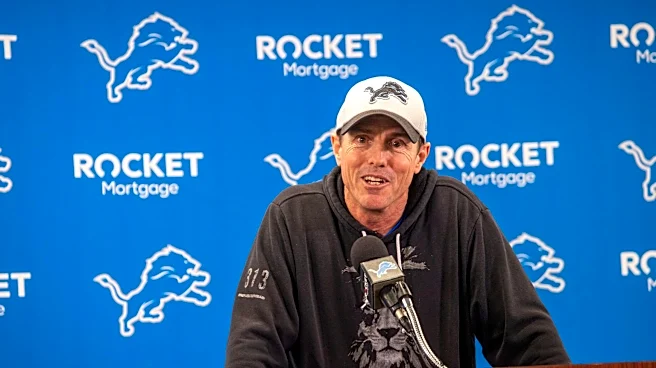
Special teams coordinator
Dave Fipp doesn’t have the power to cut players. Those decisions are above his pay grade. But he holds a pretty important part to the evaluation process. For the last few spots on the 53-man roster, it’s often special teams skills that will tip the scales in one direction or another. So Fipp’s evaluation in that phase is critical during the cut-down phase.
On Wednesday, Fipp talked to the media to offer his thoughts on training camp. Here are four hints he may have dropped about how the team will trim their roster on Aug. 30.
You can’t just be a good special teamer
One of Fipp’s first comments that turned my head was his thoughts on the evolution on the league. No longer can players just win a role by being a decent special teamer. Teams need to be able to trust you on offense or defense.
“We’ve had more injuries collectively, probably as a league. You’re playing more players throughout the course of a year. I tell the players now, ‘You’re going to make the team probably in two phases. You’re going to have to play on offense and special teams or defense and special teams.’ And I know this, the more that you can do, the better in modern football,” Fipp said.
What does it mean for the roster?
This is likely why we’ve seen someone like wide receiver Tay Martin starting to get first-team reps on offense. The Lions have seen him thrive on special teams. But could he hold up if Detroit needed him in a pinch as a receiver?
You may think this quote could put someone like Sione Vaki or Khalil Dorsey in danger—two players who are considered elite special teamers, but haven’t shown much on their respective side of the ball yet. However, Fipp did offer a caveat.
“If all you can do is play on special teams, you’re going to have to be really, really special to make it just on that,” Fipp said.
I would consider both Vaki and Dorsey pretty special on special teams—not to mention that both Vaki and Dorsey have sprinkled in with the first teamers here and there.
Linebackers are valued highly on special teams
Fipp was asked about Ahmed Hassanein’s value on special teams, and he gave an interesting answer. Basically, he said that defensive linemen—while used a little on kickoffs—are put in a tough spot on special teams. They’re so used to playing in tight areas on defense that the openness of special teams can prove difficult.
Linebackers, however, are quite used to playing in space, playing fast, and playing physical, and Fipp pointed to that group specifically as one that has to contribute on special teams significantly. And per Fipp, that group has stood out:
“Like linebacker, there’s four guys probably. You’ve got Erick Hunter, you’ve got (Joe) Bachie, you’ve got (Troy) Reeder and you’ve got (Amen) Ogbongbemiga. These four players, they can all play. You’ve got Erick) Hunter, the young guy, the other guys have all played in the league and it’s very, very competitive,” Fipp said.
What it means for the roster:
I think your roster predictions should have at least six linebackers, maybe seven. Beyond Fipp talking about how important and competitive the room is, consider this: on Thursday Dan Campbell said they want to pull back Jack Campbell’s special teams snaps because of how valuable he is on defense. Now look at this punt coverage team from last year:

That’s four linebackers just on one punt team.
And with Jimmy Rolder potentially coming back instead of getting placed on injured reserve, it could force the Lions to go heavy on linebacker early.
No rookies on punt teams?
Lions undrafted rookie Erick Hunter is one of the most intriguing depth players on the roster. By Fipp’s own admission, he’s been making plays daily on special teams. But Fipp was also quick to point out the mistakes he’s making.
“He’s definitely done something probably every practice where you’re like, ‘Wow, he did a great job there.’ Or he stood out, and that’s really what you’re looking for. Now that being said, he’s also made some big mistakes too. And it’s like, ‘Man, how much of that can you weather?’” Fipp said.
That prompted Fipp to tell a story about his favorite coach of all time: Bill Belichick. Apparently the former Patriots coach had a policy where he wouldn’t play rookies on punt team because the cost of a mental error in that phase could have a devastating impact on the game.
“He just didn’t want that to happen because he knew a mistake in that phase is devastating,” Fipp said. “So anytime you have to put a young player out there like that, you have got to be careful. And that’s [Hunter’s] challenge that he’s fighting the other guys have experience, but they haven’t in some ways flashed as much as he has at certain things too. So, it’ll be interesting.”
What it means for the roster:
It certainly seems like the Lions may play things a bit safe when it comes to their linebacker depth. Someone like Hunter undoubtedly provides some upside and promise, but if he can’t clean up some of the mental errors, it sounds like Fipp wouldn’t risk putting him out there. Maybe they’d be more comfortable letting him develop on the practice squad first, but there’s never a guarantee he makes it there.
Return man candidates
First of all, Fipp was very direct in talking about the punt return competition, basically calling it a two-man race.
“You have the returner position with (Tom) Kennedy and (Greg) Dortch really at punt returner,” Fipp said. “(Dominic) Lovett fitting into that a little bit, but really probably Kennedy and Dortch right now in my opinion.”
What it means for the roster: Well, that’s certainly a strike against Lovett, who is very much on the roster bubble. He’ll have to find an impact on special teams elsewhere. He was a good gunner at Georgia, but he hasn’t been getting many top-team reps there in camp.
Additionally, Fipp talked about what he prefers in that kick returner role.
“I would like a bigger, stronger guy on kickoff return. And most of that’s just durability,” Fipp said. “I mean, those guys take some shots and I would say there’s a little bit more contact with those guys. It’s a little bit more like a run play than it is ball out in space, that’s a little bit more like a punt return.”
That explains why Detroit has tried to use bigger running backs and linebackers at the position over speedy, smaller receivers.
What it means for the roster: Players like Isiah Pacheco (210 pounds) and Jabari Small (208) fit the description pretty well, while it may be tougher for someone like Jacob Saylors (195) to fit the bill. That said, Saylors has gotten a lot of work there, and Fipp specifically praised the job he did on special teams last year, which included 33 kick returns.
“I love Saylors. I loved him a year ago. He came in and really helped us out on special teams,” Fipp said. “And I thought he played very, very well for us on teams a year ago.”