





The United States Men’s National Team began the long, four-year journey toward the 2030 World Cup with a victory against Peru (4-1), opening the cycle on a solid foot. The super-sized international window continues as Mauricio Pochettino now leads his charges against Chile, hoping to keep the optimism growing. The two-time Copa América champions are far removed from the glory years and have failed to qualify for the past three World Cups, but this could also be a fresh start for the South American
program. EnergizerPark in St. Louis, Missouri – a 22,423-seat soccer-specific stadiumwith a Northbridge Bermudagrass surface – hosts the fixture.
This is the 12th all-time meeting between the two programs, with the USMNT on the wrong side of a 3-5-3 record and playing to a draw in the most recent match, a 2019 friendly (1-1). Ranked 49th internationallyby FIFA, Chile finished last in CONMEBOL’s 2026 World Cup qualifying table with 11 points from 18 matches. This year, La Roja (The Red One) have played a slate that includes a victory over Cape Verde (4-2), defeats to New Zealand (4-1) and Portugal (2-1), and a win against DR Congo (2-1). The current window opened with a loss against Canada (0-1).
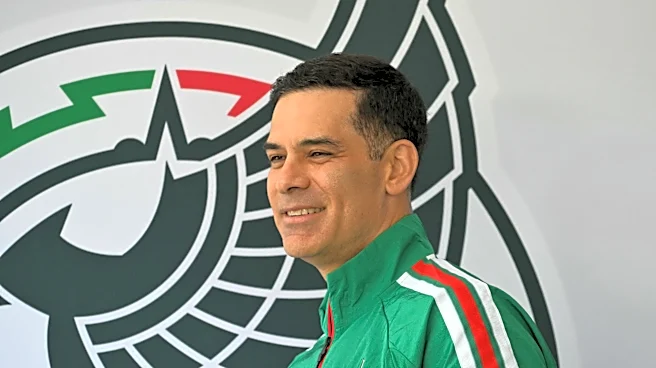
Nicolás Córdova has enjoyedmultiple stints with Chile’s youth international set-up and taken the interim reins at the senior level twice, being taskedwith “mapping out an ambitious long-term development plan.” The 47-year-old retired midfielder also enjoyed stretches leading Palestino, Santiago Wanderers, Universitario, and Al-Rayyan, claiming the Copa Chile in 2017. He has acknowledgeddomestic criticism from media and fans but admits that “a change is necessary,” one that “doesn’t happen overnight.”
Córdova initially nameda 27-player roster (with the addition of three invited talents) for the international window. The domestic Liga de Primera is home to 10 of the call-ups, while nine compete in Europe and four are on the books of Argentine clubs. Notable absences include Guillermo Maripán, Francisco Sierralta, Alexander Aravena, Fabián Hormazábal, Javier Altamirano, Iván Morales, and Ignacio Saavedra. Benjamin Kuscevic left camp“after suffering a muscle injury in training.” Lucas Cepeda and Gabriel Suazo picked up red cards against Canada.
***
GOALKEEPERS (3): Brayan Cortés (Argentinos Juniors), Lawrence Vigouroux (Swansea City), Christian Bravo (Huachipato)
DEFENDERS (9): Paulo Díaz (Atlanta United), Gabriel Suazo (Sevilla), Iván Román (Colo-Colo), Felipe Faúndez (O’Higgins), Marcelo Morales (Universidad de Chile), Francisco Salinas (Coquimbo Unido), Diego Ulloa (Colo-Colo), Jonathan Villagra (Colo-Colo), Thomas Coulombe (Espanyol B)*
MIDFIELDERS (11): Marcelino Núñez (Ipswich Town), Rodrigo Echeverría (León), Felipe Loyola (Pisa), Vicente Pizarro (Rosario Central), Felipe Méndez (Colo-Colo), César Pérez (Defensa y Justicia), Matías Sepúlveda (Lanús), Agustín Arce (Universidad de Chile), Nils Reichmuth (Thun), Leandro Hernández (Colo-Colo), Jetzen Lopez (Braga U23)*
FORWARDS (6): Ben Brereton Díaz (Sheffield United), Darío Osorio (Crystal Palace), Lucas Cepeda (Elche), Gonzalo Tapia (Columbus Crew), Maximiliano Gutiérrez (Dynamo Moscow), Zidane Yañez (Huntsville City)*
***
Córdova has utilized the 4-3-3 and 4-4-2 formations, having a preference for “tactical flexibility,” whether sending his team out in transition or holding possession for longer periods of time. He viewshis players as being “aggressive and dynamic” but needingto maintain more control and circulate the ball. Organization and discipline at the back are currently lacking, evidenced by the spate of recentgoals being surrendered on set pieces and the inability to prevent the counter, which can be an issue when attempting the offside trap.

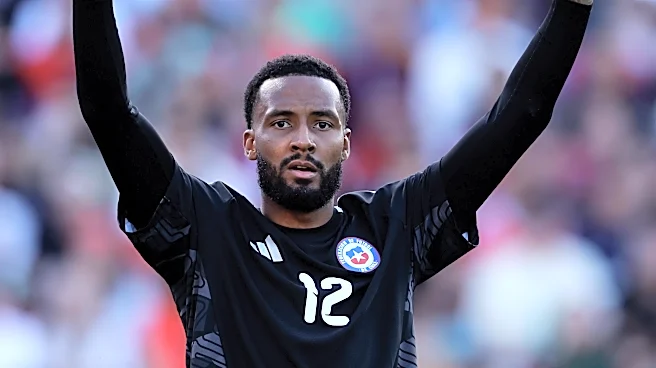
England-born Lawrence Vigouroux madehis Chile debut in 2025 and has quickly moved to the number-one role, a sharp rise that has mirrored his elevation up the professional pyramid. The 32-year-old Swansea City goalkeeper is dedicated and sedulous, unbelievably useful during the build-up phasewith a significant number of passes played at high accuracy and sent long distance. He is quick to leave his line in order to act as a sweeper and haul crosses, utilizing his six-four frame to control the box and cut down the angle on looming attackers. Observers note his “calmness,” remainingunflappable and maintaining his form and footwork when dealing with short-range opportunities, even if forced to splay out a leg for a stop.
Relative newcomer Iván Román of Colo-Colo is praisedfor his “fantastic tactical reading and understanding” alongside regular “contribution to attacking set-pieces,” utilizing his “height and velocity to attack defensive lines.” He sidesteps potential challenges with ease and doles out a few of his own, immediately looking up the field to play a vertical pass that can spring the transition game. Atlanta United’s Paulo Díaz is constantlythrowing himself around the field and relishes a challenge, sliding into danger and displaying a delicate touch when getting rid of crosses. His pace enableshim to show up in crucial moments, whether covering ground quickly to claim possession or sprinting back to chase down an onrushing attacker. Jonathan Villagra picked up the start in the loss to Canada and is always looking to press forward into the final third while also sticking to his primary responsibilities. His lateral movement enables him to cover large swaths of the pitch for surgical interventions, and his short-range distribution helps his team to work out pressure.
Pisa’s Felipe Loyola controls the engine room and the sideline with a series of deft touches to avoid pressure while waiting for the right play to a teammate, serving as a metronome and also the occasional creative force. His two-way performance includes dispensing stern tackles in front of the back line and swarming lanes while also crisscrossing from one end to the next in order to form fibrous connections. Felipe Faúndez of O’Higgins is one of the newermembers of the squad, adding a “steady” presence on the outsideand netting his fair share of goals, including a rocket of a volley. He takes an active role during the build-up phase and is fond of the long ball while also being an absolute shutdown artist and sacrificing his body for crucial blocks.
Vicente Pizarro is adept at winning the ball or receiving the pass and making a quick turn or pirouette into open space, making a quick burst of speed, and playing to an advancing teammate. The 23-year-old Rosario Central midfielder can also hold his own in the final third with late runs into the box, powerful shots from distance, or well-placed headers. Darío Osorio carriesthe Midtjylland imprimatur that typically indicates a talented player with the potential to be sold at a handsome profit, with “dribbling as a major strength” alongside “agility, balance, excellent ball control, and athleticism.” Total Football Analysis praises his technique, looming as a constant threat due to “fantastic striking,” the potential to operate in the wide zones as an accurate crosser, and the “ability to penetrate through the inner channels.” Rodrigo Echeverría brings crowd-pleasing electricity for León with his pulse-pounding excursions to progress proceedings through the middle and impactful intercessions that can be both physical and agile. There is also the ability to slow things down and methodically lead the build-up with shrewd decision-making and a willingness to make the safe decision by resetting or swinging to the wing. Felipe Méndez is equally comfortable in various roles, making smart forays into space and having the eye to thread through a crowd to start the transition or break down a parked bus. Córdova brought him back into the fold after his last cap in 2023, adding another versatile and high-energy option with the potential to lower the temperature and push the tempo.
Maximiliano “Maxi” Gutiérrez tries to turn the game into a showcase of his individual talents, spinning and rolling past defenders in the one-on-one and employing all manner of flicks to break down the block. The Chiguayantino is always looking to push the tempo and take the game to the opponent, which includes a willingness to take shots as soon as the opportunity opens. Switzerland-born Nils Reichmuth has a proactive style and will go up and down the touchline in order to get involved, regaining possession and progressing from one box to the other. The 24-year-old Thun winger will drop back in order to receive, wins headers, works his way through blocks, and registers low, driven attempts that skip past the goalkeeper. Matías Sepúlveda of Lanús has enjoyed a late start to his international career but scored the eventual match-winner in the 2-1 victory over the Democratic Republic of the Congo with a laser of a free kick. He deploys his stepover or clean cutback when charging past challenges and exhibits a high level of situational awareness with shrewd decision-making and close control in tight situations.
Ben Brereton Díaz has provided a few highlight-reel finishes for Chile, using his agility to convert crosses and his speed to get behind the back line for a composed conversion. The former England youth international has the fox-in-the-box instincts to interpret the space and pounce on any available opportunities while also occasionally drawing attention and dishing to the open teammate. Gonzalo Tapia is equally comfortable leading the line to provide the right final touch and dropping back as a distributor who allows midfielders and wingers to overlap. The 24-year-old Columbus Crew forward has a powerful strike, climbs far higher than his five-ten height suggests, and will take his time in the final third to wait for the right moment. Agustín Arce of Universidad de Chile is expected to developinto a more impactful player, endeavoring to “let his game flow on the field” and play with the freedom to make ambitious choices. Observers describe his intelligentstyle as “characterized by a serenity uncommon for his age, combined with a vision that seems to see invisible lines on the field” while “taking the ball where no one expects.”
With the need to actually earn a place in the tournament, the 2030 World Cup cycle will be more difficult than the previous period. A challenging friendly schedule will pay dividends come qualifying and perhaps even help build chemistry while ramping up to the CONCACAF Nations League. Chile has struggled to regain prominence but has the individual talent to provide a stern test.
The match is scheduledfor Tuesday, September 29th at 8:00 p.m. Eastern, 5:00 p.m. Pacific. Viewing options include TNT, HBO Max, Telemundo, Universo, Peacock, and FuboTV (free trial).