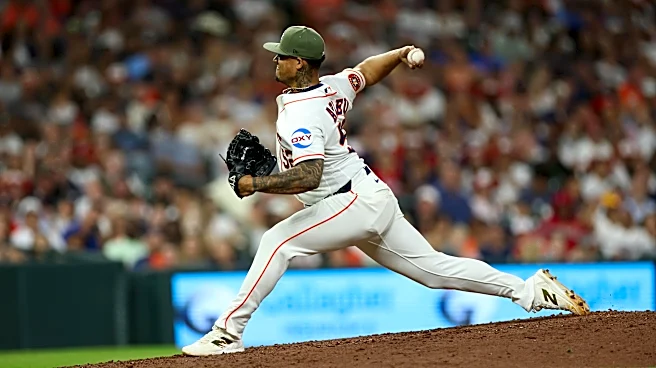




The curious case of Brian Abreu continues to become more intriguing with every appearance he makes for the Houston Astros.
For a pitcher who was once considered one of the most feared setup men in Major League Baseball, it is an understatement to say that Abreu has underperformed this season. A reliever who routinely sat above 97 mph on the radar gun has seen his velocity drop by nearly three miles per hour, and the dominant results that Astros fans had grown accustomed to simply have not been there.
To be fair, Abreu had shown signs of improvement recently, putting together several scoreless appearances and appearing to regain some of the form that made him such a valuable weapon out of the bullpen. However, even during that stretch, the warning signs remained impossible to ignore.
His command issues continue to plague him. Too often he struggles to find the strike zone, frequently walking the leadoff hitter or putting additional runners on base. With a strike percentage hovering only slightly above 50 percent, Abreu is putting himself in difficult situations before opposing hitters even have a chance to do damage.
That simply is not good enough for a pitcher whose role is to enter high-leverage situations and protect slim leads, preserve ties, or keep his team within striking distance. The margin for error is too small, and right now Abreu is creating more problems than he is solving.
Beyond the numbers, he looks different. The confidence that once defined him appears to be missing. The intimidating presence and trademark stare that accompanied his dominance on the mound seem to have faded. His body language tells a story of a pitcher searching for answers rather than one who expects success every time he takes the ball.
The Astros must determine how they want to proceed because Abreu is no longer a reliever that manager Joe Espada can trust. That statement would have been unthinkable just a season or two ago, but it reflects the current reality.
While the recent scoreless outings are encouraging, context matters. The situations in which those appearances occurred matter just as much as the final line in the box score. The usage patterns suggest Espada deploys Abreu only when necessary or when the risk to the outcome of the game is relatively limited.
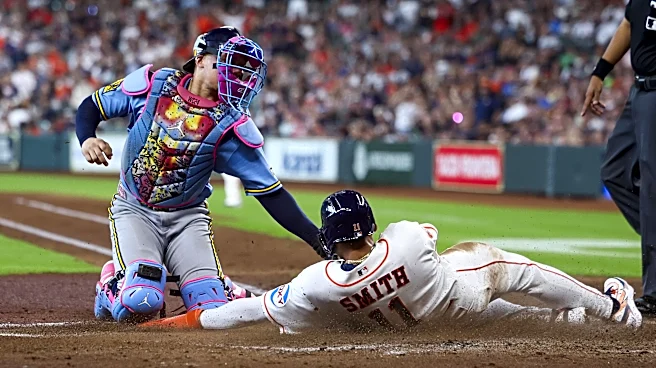
The series against Milwaukee provided another example. Entrusted with a one-run lead against a quality opponent, Abreu entered with an opportunity to secure a meaningful victory. Instead, he left the game with the score tied, and the Astros ultimately lost. It was another reminder that the version of Abreu who once thrived under pressure is nowhere to be found at the moment.
The question becomes: how much longer can the Astros continue expecting different results when placing him in situations he once handled with ease?
With Josh Hader expected to return soon and other bullpen options emerging, it is fair to wonder how long Abreu can maintain his place in the bullpen hierarchy. It may even be reasonable to question how secure his spot on the major league roster remains.
Abreu is approaching free agency, and based on his current performance, it is difficult to imagine owner Jim Crane committing significant money to an extension. The organization has already experienced the consequences of investing heavily in relievers after the disastrous Rafael Montero contract, and it would be surprising to see the Astros repeat that mistake.
As an impending free agent, Abreu is pitching for his next contract as much as he is pitching to rediscover the success that once made him one of baseball’s elite setup men. Unfortunately for both him and the Astros, neither objective appears close to being achieved.
The Astros are also in a position where every victory carries increased importance. After a slow start to the season, they are playing catch-up in the standings and cannot afford to give games away while waiting for a struggling reliever to figure things out.
That brings us to the questions the Astros must answer before the trade deadline.
Is there a physical issue contributing to Abreu’s declining velocity? Are there mechanical flaws causing his inability to consistently throw strikes? Is this something that can be corrected during the season, or does he need a stint on the injured list to address either a physical ailment or make significant adjustments?
There are mental questions as well. Has the constant struggle begun to affect his confidence to the point where he is expecting failure before he ever takes the mound? Has he become trapped in a cycle where poor performances feed self-doubt, which in turn creates more poor performances?
There is also the possibility that the heavy workload of recent seasons is catching up to him. Astros fans have seen similar situations before. One cannot help but wonder whether Abreu is dealing with the effects of overuse, much like Lance McCullers Jr. eventually experienced after years of heavy reliance and repeated arm issues. While the circumstances are certainly different, the concern remains valid when a pitcher’s velocity drops and effectiveness disappears.
Whatever the cause may be, the Astros cannot afford to ignore it much longer.
Brian Abreu was once one of the most reliable and dominant relievers in baseball. Today, he is one of the biggest question marks on a team desperately trying to climb back into contention. Between now and the trade deadline, the Astros must determine whether the answers lie in mechanical adjustments, medical treatment, rest, or simply accepting that the pitcher they once depended on may no longer be the same.
Until then, every appearance will continue to add another chapter to the curious case of Brian Abreu.