





Through 3 rounds of the 2026 NFL Draft, the Bucs have hit on some big needs but their work hasn’t finished.
After a third-round trade, the Bucs now have an extra fifth-rounder to work with, totaling 4 picks in rounds 4-7. We’ll throw out some more names to keep an eye out for.
Offense

Tight End
Joe Royer, Cincinnati: If the Buccaneers want to create competition for their TE2 spot, Royer arguably offers the best combination of receiver and blocker upside. He’s a smooth athlete who shows nice YAC ability (8.9 yards per
reception, which was top 5 in the FBS) and a willing attitude toward blocking. He needs to become technical with route running and blocking, but upside is there.
Tanner Koziol, Houston: Koziol is massive (6-foot-6, 250 pounds) with extremely dependable hands and ball-tracking skills. He’s more of a big slot in the Kyle Pitts mold than a true in-line tight end, but he shows effort and understanding what he’s asked to do when blocking. He’d be more of a higher-upside Devin Culp.
Dan Villari, Syracuse: A converted QB who transferred from Michigan, Villari is a versatile, good-sized athlete who’s still learning the finer points of the position but demonstrates strong competitive fire and urgency. He also offers fun sub-package potential as a direct-snap merchant (4 career rushing TDs and even a passing TD) ala Taysom Hill.

Interior Offensive Line
Beau Stephens, Iowa: Discussed plenty in our Bucs mocks, Stephens is savvy and capable in a variety of assignments. Average athleticism limits his ceiling but he could absolutely be a spot-starter and reliable backup.
Logan Taylor, Boston College: A four-year starter who has played every position on the line outside of center, Taylor offers the competitive toughness, demeanor, and versatility that the Buccaneers tend to love. He’s tall and needs to work on pad level, but there’s upside to suggest a high-level multi-positional backup.
Dillon Wade, Auburn: If the Buccaneers want someone with particularly high upside as a zone blocker, Wade is a good candidate. A college tackle who will kick inside due to suboptimal size and strength, Wade is very athletic (Next Gen Stats’ 3rd-ranked guard athleticism score in the class), which naturally raises his ceiling, but he’ll need to keep bulking up if he wants to be consistently utilized. He’ll definitely be cross-trained at center as well.
Defense

Defensive Line
Darrell Jackson Jr., Florida State: Imposingly large (a well-built 6-foot-5, 315 pounds with 35” arms), Jackson has some Bucs lineage in him — he’s the nephew of former safety and Super Bowl MVP Dexter Jackson. Jackson isn’t a fearsome playmaker, but he’s nasty, motivated, and shows enticing flashes of technique as a run defender and pass rusher. He would add that much-wanted size in the trenches that Tampa has spoken about.
Jordan van den Berg, Georgia Tech: A truly rare athlete, van den Berg logged a perfect 10 Relative Athletic Score, matching only Jordan Davis of the Philadelphia Eagles as the best defensive tackle RAS of the last 40 years. The production did not remotely match that, but he seemed to start getting it in his final season (3 sacks, 11 TFL) so he could be an enticing late bloomer. He has the off-field and on-field traits to excel.
Cameron Ball, Arkansas: Light on production but encouraging flashes of technique and athleticism could make Ball an intriguing waiver in the fifth round. He’s a sturdy 6-foot-4, 308 pounds (though he played heavier) with 33” arms, so there could be more potential hiding beyond his career 3 sacks and 12.5 TFL.

Linebacker
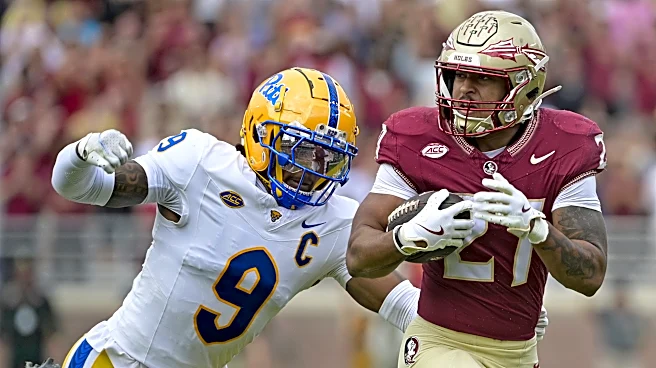
Kyle Louis, Pittsburgh: A linebacker in name only, Louis is more of a big nickel coverage specialist due to his limited size (just about 6-foot, 220 pounds with 31 1/4” arms). He’s extremely fluid out in space and very intelligent, showing the ability to cover any position across the first two levels of the field. He’s too small to be relied upon in the run game, but a creative schemer like Todd Bowles could probably find a good way to use his skills.
Justin Jefferson, Alabama: Another coverage-focused linebacker, Jefferson is also undersized but shows better tenacity and mug potential than Louis does. He’s also not going to be reliable as someone who takes on blocks and makes plays in the run game, but he has strong value as a nickel coverage ‘backer.
Wade Woodaz, Clemson: Woodaz has a much more traditional size profile for an every-down linebacker (6-foot-3, 236 pounds) and plays with his hair on fire in coverage and the run game. He needs to slow his process down, as NFL offenses will feast on his aggressive, impatient approach, but he’d offer immediate special teams value with nice upside on defense.

Secondary
Keith Abney II, Arizona State: If the Bucs want another corner with inside/outside versatility, Abney has the requisite traits. He’s only about 5-foot-10, but he plays much bigger than that in a vein akin to 2025 draft hit Jacob Parrish. Staying on the outside consistently doesn’t seem particularly viable, but he could still provide value depth there and at nickel.
Thaddeus Dixon, North Carolina: Another versatile secondary player who could stick on the boundary or perhaps even play safety, Dixon shows a good floor but potentially limited ceiling due to average athleticism. He has the size to stick on the outside (nearly 6-foot-1, 31” arms).
Cole Wisniewski, Texas Tech: A box safety with imposing size (6-foot-3) and physicality, Wisniewski isn’t a great lateral athlete but could serve the enforcer role in a way the Bucs haven’t quite had since Jordan Whitehead played in his prime.
Skyler Thomas, Oregon State: Thomas is a well-built, aggressive safety with special teams chops and coverage talent to cover tight ends and big slot receivers. He’s far too undisciplined and stiff to be depended on regularly in defense right now, but there’s some potential there.