

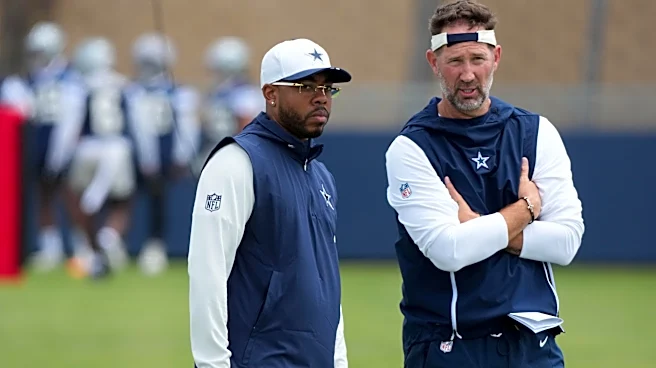
The Cowboys may have quietly changed what they’re looking for in a football player. Not necessarily bigger. Not necessarily faster. Not necessarily more talented.
Just more serious.
Call them “Serious Dudes“, with a hat tip to Voch Lombardi for the moniker.
It’s not a scientific category, and it’s certainly not a requirement that every player walk around the facility looking like he’s preparing for a tax audit. It’s more about how a player approaches the job: preparation, accountability, doing his assignment,
competing through the whistle, and not needing every moment to become a personal statement.
The Cowboys have always had players like that. Every successful team does. What’s interesting is how many of them now seem to be showing up on this roster.
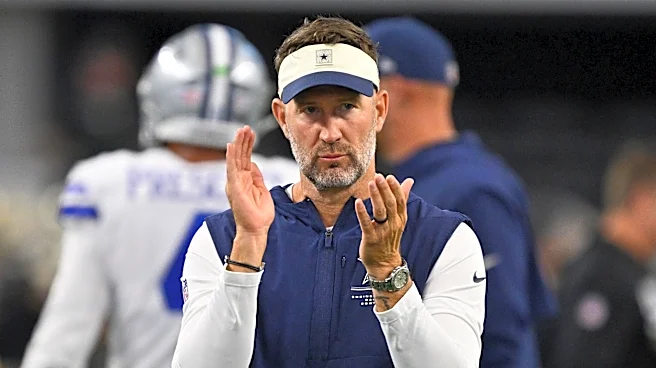
And that makes me wonder whether Brian Schottenheimer has quietly started putting more emphasis on a quality that doesn’t show up particularly well on a draft board or salary-cap spreadsheet: professionalism.
The new generation of Cowboys
Start with Tyler Booker: The second-year guard was identified as a natural leader before he had even played his first NFL season, then followed that up with more than 1,000 snaps and 14 starts as a rookie.
Now, just one year into his career, Booker is already part of the Cowboys’ 11-man Leadership Council. That’s not necessarily because he’s the loudest player in the room. It’s because the organization appears to trust him to help set the standard.
Then there’s Caleb Downs. Downs is an even more interesting case because the expectations attached to him go well beyond simply playing good football.
Dallas traded up to select Downs 11th overall, and the conversation around him quickly became about influence as much as ability. Mel Kiper called him a “culture changer,” while NFL.com’s Lance Zierlein described him as a “culture piece” for a Dallas defense that badly needed one.
But perhaps the most telling assessment came from inside the Cowboys’ locker room.
When DeMarvion Overshown was asked about Downs, he didn’t talk about giving a rookie time to adjust to the NFL. He said the Cowboys weren’t even looking at Downs as a rookie. They were looking at him as someone who could “change this defense around” and “change the culture.”
That’s a remarkable expectation to place on a player who hasn’t yet played an NFL snap.
And it tells us something about what the Cowboys think they drafted. Downs isn’t simply expected to be a good safety. He’s expected to be an influence. Of course, Downs hasn’t yet established himself as a locker-room leader. But the Cowboys expected that potential to be part of his value when they traded up to get him.
And then there is the rest of the next generation.
Jaishawn Barham might be the clearest example of the type. The rookie linebacker was one of the more talked-about players in training camp, and the description coming from the Cowboys themselves was almost tailor-made for this post: “all business.” Schottenheimer also highlighted Barham’s physicality, his ability to get off blocks, and his versatility.
Malachi Lawrence is a quieter example. The first-round pick hasn’t attracted anything like the attention surrounding Downs, but his early approach has been refreshingly straightforward: learn from the veterans, understand what it means to be a professional, and work on the technical details of his game.
That doesn’t prove Lawrence will become a leader in Dallas. It doesn’t even tell us what kind of personality he’ll have five years from now. But it is another example of the type of player the Cowboys appear to be bringing into the building.
Donovan Ezeiruaku is a slightly different case. There is plenty of evidence of the work ethic and football intelligence Dallas likes, and the second-year edge rusher has talked about the importance of standards and learning from veterans. The Cowboys’ training-camp coverage has also highlighted his knowledge and experience.
But Ezeiruaku also plays with an edge. His involvement in several training-camp fights was a reminder that taking football seriously doesn’t necessarily mean being emotionless. A Serious Dude doesn’t have to be boring.
He can be intense. He can be emotional. He can be loud. The distinction is what happens when the helmet comes off.
The veterans who changed the locker room
The pattern becomes more visible when you look at the veterans Dallas added.
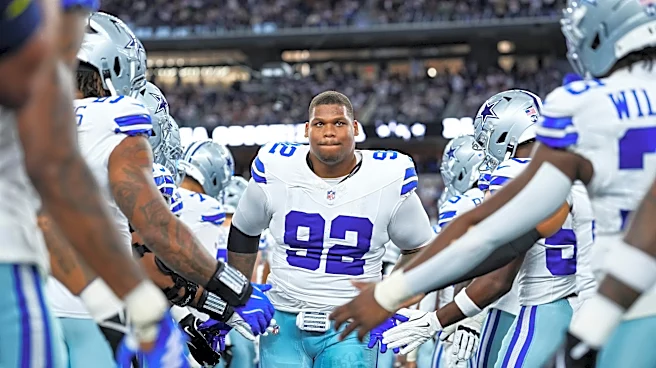
Quinnen Williams and Kenny Clark are probably the two strongest examples. Neither needed the Cowboys to teach them how to be professionals. They came with established reputations, extensive NFL experience, and Pro Bowl credentials.
Yet both quickly became central figures in the locker room. Williams arrived in the middle of last season, when the Cowboys’ defense was already in trouble. Nine months later, he has been elected one of only four team captains by his teammates. Clark was also voted a captain. The other two are Dak Prescott and Brandon Aubrey.
That’s worth noting because the Cowboys have made a distinction this year between their Leadership Council and their team captains. The four captains were chosen entirely by player vote, with Prescott, Williams, Clark, and Aubrey receiving the most votes.
Williams has also been unusually open about what he sees changing. After spending the final seven games of 2025 in a defense that was struggling badly, Williams recently described the defense’s progress as “night and day.” He credited the coaching, the talent, the daily competition, and the overall change in the way the unit approaches its work.
That’s exactly the sort of thing that makes the Serious Dude theory interesting.
It’s not just about individual personalities. It’s about what happens when you put enough of the right people together.
Kenny Clark fits the same mold. Williams has talked about Clark as someone who holds people accountable and does things the right way, both on and off the field.
Jalen Thompson provides another piece of the puzzle. The veteran safety was brought in to stabilize a secondary that badly needed it and was subsequently included in the Leadership Council.
Rashan Gary adds another veteran presence to the defensive front, while Cobie Durant brings experience, versatility, and toughness to the secondary.
Jonathan Bullard and Otito Ogbonnia are less obvious examples of the personality argument, but they matter in another way: they are experienced defensive linemen who add depth around Williams and Clark.
And that’s an important distinction.
Not every new player has to be a Serious Dude in the same sense. Some are simply evidence of a roster being built around more experience, physicality, versatility, and professionalism.
The pattern emerges from the combination.
Meet the Leadership Council
Perhaps the most tangible evidence that this is about more than individual impressions is the Cowboys’ Leadership Council.
The 11-player group consists of:
Dak Prescott
CeeDee Lamb
Tyler Smith
Tyler Booker
Jake Ferguson
Javonte Williams
Quinnen Williams
Kenny Clark
Rashan Gary
Jalen Thompson
Bryan Anger
That’s an interesting collection of players. It’s also interesting because Schottenheimer has made clear that this isn’t just a ceremonial group. He has said that the council could have included as many as 15 players, but he deliberately kept it smaller. More importantly, he described it as “their council, it’s not mine.”
The players are expected to bring issues from the locker room to the coaching staff and help solve problems before they become bigger problems. That’s a very different concept from simply naming a few captains for the coin toss. And it tells us something about what the Cowboys value in their leaders.
You don’t need to be the biggest star on the team. You don’t even need to have been there the longest. You need to be someone your teammates trust.
That helps explain why Booker is on the council after just one NFL season. It explains why Williams and Clark were elevated so quickly. It explains why Javonte Williams, who has spoken about the responsibility of bringing teammates along and being a voice for the locker room, is part of the group.
And it gives us another reason to be interested in Downs. He isn’t on the Leadership Council. He shouldn’t be. He’s a rookie. But the expectations surrounding him suggest that Dallas isn’t merely hoping he becomes a great player. The organization believes he has the potential to become one of the people who sets the standard.
That’s a pretty good definition of a Serious Dude.
Serious doesn’t mean boring
There is an important caveat here. The Cowboys aren’t suddenly trying to build a roster of robots.
CeeDee Lamb is still CeeDee Lamb. Dak Prescott isn’t exactly known for being a wallflower. George Pickens brings plenty of personality. And there is nothing inherently wrong with any of that.
Personality isn’t the problem. The question is what sits underneath it. The best version of this roster would not eliminate individuality, far from it. But it would make individuality secondary to the football.
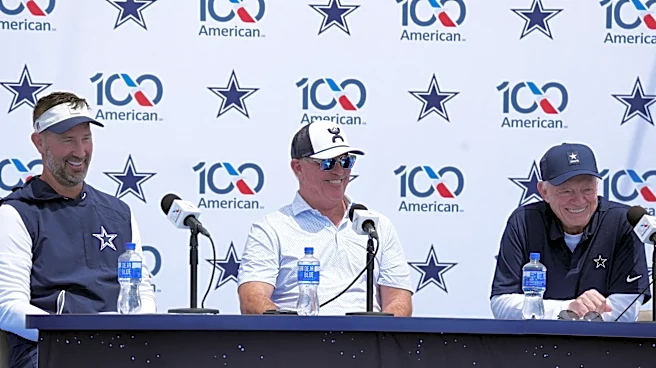
When Schottenheimer talked about his satisfaction with the offseason, he didn’t limit his praise to talent. He specifically talked about the people the organization had brought in — not just what kind of players or coaches they were, but “the way they are as human beings.”
That is an interesting thing for a head coach to emphasize when discussing roster construction.
Talent gets you on the field. Character, professionalism, and accountability determine what happens once everybody gets there.
We’ve seen this before
The great Cowboys teams of the 1990s were not exactly short on personality. Michael Irvin was one of the biggest personalities in the NFL. Deion Sanders will always be Deion Sanders. Charles Haley brought his own particular brand of intensity.
But those teams also had Troy Aikman, Emmitt Smith, and Darren Woodson, and the Great Wall of Dallas. Different personalities. Different leadership styles. What they had in common was that the football came first.
That’s the useful lesson from those teams. Successful locker rooms don’t need to be boring, and they don’t need everyone to behave the same way. But they do need enough people who understand that the team is bigger than the individual.
The current Cowboys don’t have to recreate the 1990s. And comparing a handful of training-camp observations to one of the greatest teams in franchise history would be premature. But the resemblance in roster construction is worth noticing.
So, are the Cowboys becoming a team of Serious Dudes?
Maybe.
It’s far too early to say that Brian Schottenheimer and the front office have engineered some permanent cultural transformation. We’ve seen the roster change. We haven’t yet seen what happens when the games become meaningful. But the ingredients are there.
The Cowboys have added veterans such as Williams, Clark, Gary, Thompson, and Durant. They have drafted players such as Downs, Booker, Barham, Lawrence, and Ezeiruaku. They have created a Leadership Council that includes players from every part of the roster. And four of the players who received the most votes from their teammates are Prescott, Williams, Clark, and Aubrey.
None of that guarantees anything. But it does suggest that Dallas has become more deliberate about the kind of people it wants in the building. Maybe that’s the real shift.
The Cowboys aren’t getting rid of personality. They’re adding people who can keep personality from becoming the defining characteristic of the team.
And perhaps that’s what a Serious Dude really is. Not someone who never smiles. Not someone who never talks. Just someone who keeps his eye on the prize, sets the standard, and puts in the work to get there.