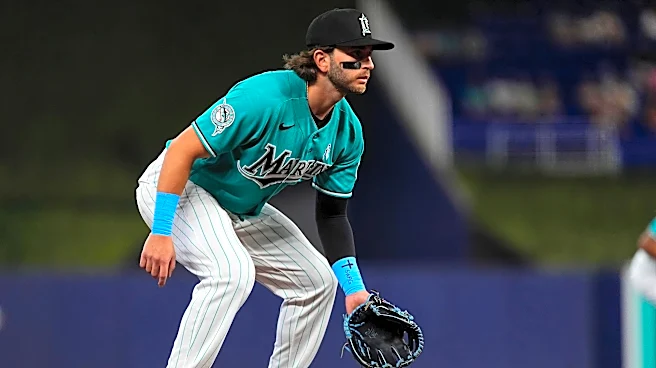

The phone range in the middle of the offseason. Jake Brooks was a couple of weeks from leaving for Marlins camp in Florida, and the name on the screen was John Savage, his head coach at UCLA.
“He gave me a ring and was like, ‘Hey man, how you feeling?’” Brooks said. “I was like, ‘What do you mean?’ And he’s like, ‘Come on, man, how you feeling?’ And I was like, ‘Dude, what are you talking about?’ And he’s like, ‘I think you’re getting traded to the Rockies.’”
Brooks had never been traded before. He
didn’t know how any of it was supposed to work — who calls, in what order, how long you sit with it before anyone official confirms anything.
“I was shocked, obviously,” he said. “And I was like, ‘Dude, I’ve got to start calling some people. I’ve got to figure this out.’”
He called his parents first. Then the calls started coming in the other direction — Miami, then Colorado. Somewhere in there, he texted Kyle Karros.
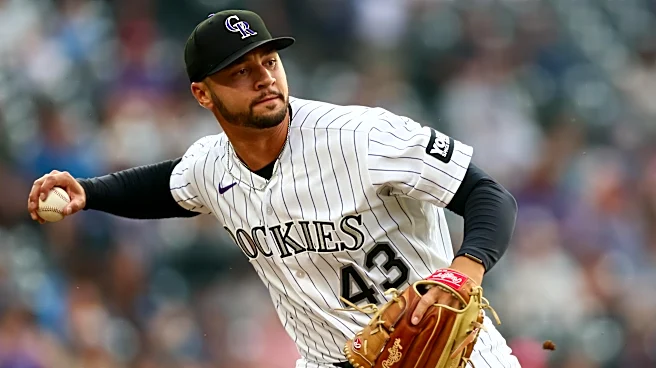
That trade, on January 20, sent Brooks to the Rockies from the Marlins for Bradley Blalock. Six months later, the 25-year-old right-hander is making starts at Triple-A Albuquerque, learning an environment that has humbled better-known arms, and discovering that the organization he landed in had things to tell him about himself that his old one never did.
The seven feet
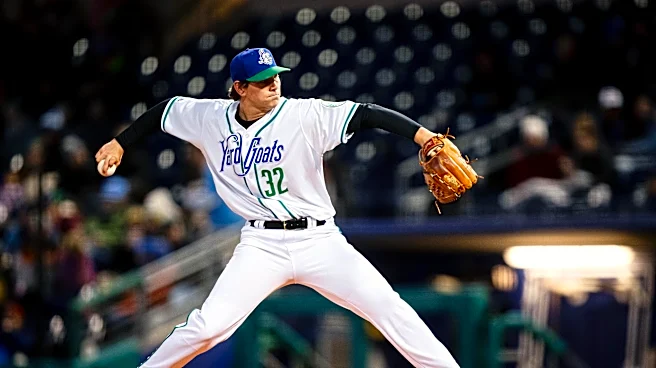
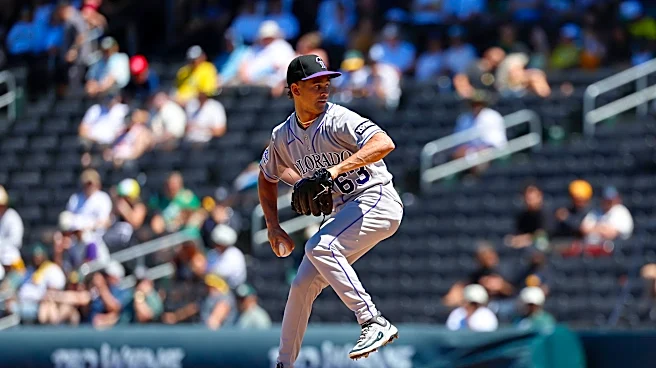
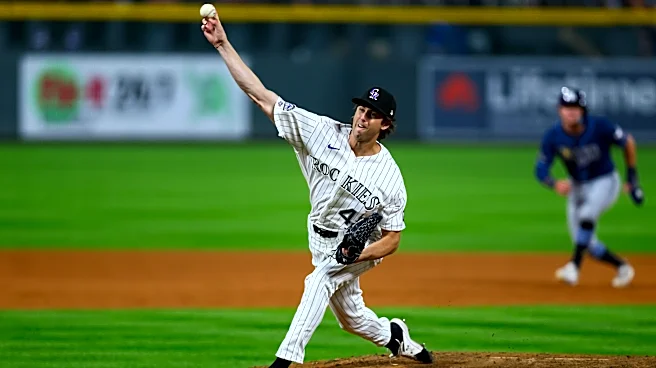
Brooks throws from a low three-quarters arm slot — a Statcast arm angle of 24.4 degrees — and it’s the thing everything else about him is built on.
“I’ve always been, I guess, a lower three-quarters arm slot kind of guy, and that has helped me get the natural sink that I have,” he said
That much he knew. What he didn’t know was how far down the mound he gets before he lets go of the ball.
“My extension that I’ve honestly come to realize this year is pretty far,” Brooks said. “I think I have over seven feet of extension, so that creates a little bit more deception to the hitters as well. But that’s something I didn’t even realize when I was with the Marlins in that organization. I wasn’t really brought to that knowledge that I had that elite extension, so that’s something that I’ve kind of learned about this year and used it to my advantage.”
He’s right about it, and the number backs him up. Brooks releases the ball an average of 7.0 feet from the rubber this season, which grades in the 96th percentile among pitchers in his cohort.
It’s also a real change: In 2024, at Low-A Jupiter, he was releasing around 6.6 feet. He has found roughly five inches, and five inches at that arm slot is the difference between a 91-mph sinker that looks like 91 and one that doesn’t.
Brooks is careful about where credit goes. The pitches themselves were built in Miami.
“They had a higher emphasis on ‘stuff,’ and it was all on like a stuff metric scale,“ he said. ”And I developed stuff there; like my stuff did get better, and I did add a sweeper, which is one of my better pitches, as well as that kick change with them. So I attribute a lot of my stuff to the Marlins and what they gave me. But being in an org where I can use that stuff and use the strength that I do well is really cool.“
The strength he does well is throwing the ball over the plate, and Colorado made a point of telling him to do so.
“The comfort level with Alon [Leichman] was great during spring training,” Brooks said. “I had a couple of conversations with him and some of the other pitching coaches up in the big league staff, and it’s just good to be with an organization that values what you do at an elite level. I know that, ‘Hey, I’m going to pound the zone, I’m going to attack hitters, I’m going to compete.’”
He does. Brooks has thrown 54.1 percent of his Triple-A pitches inside the strike zone and 66.5 percent for strikes overall, both near the top of the level, with a 5.8 percent walk rate. He’s walked 10 hitters in 37 innings.
Learning to pitch backward
The version of Brooks who dominated the Florida State League in 2024 threw his sinker 52 percent of the time. He was a sinker with three pitches behind it. The version in Albuquerque is a different design. The sinker is down to 29 percent. The sweeper has gone from an eighth of his pitches to more than a fifth. He now throws five pitches, and none of them account for even 30 percent of his mix.
Some of that is deliberate, and some of it is Triple-A forcing the issue.
“There’s learning curves at every level, and one of the biggest for me in this Triple-A level is seeing how my stuff best plays off each other, facing better hitters and more veteran hitters,” Brooks said. “Using that four-seam fastball does set up that split change that I have a little bit better. Set that high fastball up to set up that low changeup, because you can’t just use stuff to overpower these guys. Especially with the stuff that I have, it isn’t necessarily overpowering, but I can pitch, and I can locate.”
He isn’t overselling the pitch. Asked what makes it work, Brooks went straight at its limitations.
“That high-four seam fastball, which isn’t metrically great, but still the differential off of the changeup that I throw definitely works and tricks batters,” he said.
The four-seam is a 91-mph pitch with about eight and a half inches of induced vertical break — a fastball that doesn’t ride, thrown from a slot that isn’t built to make it ride. On its own, it isn’t beating anybody at this level.
The differential is the point. Brooks’ changeup arrives ten miles per hour slower with roughly nine inches less carry, out of the same arm slot and the same seven feet of extension. Throw one at the top of the zone and the other under it, and a hitter has to decide early on two pitches that look identical leaving the hand and finish nearly a foot apart.
It’s working the way he says. The changeup has produced a 28.1 percent whiff rate this season, the highest of all his offerings. And the four-seam — the pitch he just told you isn’t metrically great — had held Triple-A hitters to a .288 expected wOBA, better than the sinker it’s spelling.
The pitch above them all is the sweeper. At 80.7 miles per hour with about a foot of glove-side break, it has held Triple-A hitters to a .198 expected wOBA with a 21.1 percent whiff rate. It’s the one offering in the mix that grades out as an unambiguous plus by pitch-model standards, and it’s the one he named unprompted as the thing Miami gave him.
He also got a week with someone who has pitched successfully in the hardest place there is: Gabriel Hughes (No. 12 PuRP).
“I obviously don’t cut it as much as him — his cut fastball is insane,” Brooks said of Rockies right-hander. “But I spoke with him a little bit, and he emphasized just the ability to pitch and be in zone with different speeds was the biggest contributor to his success. I was only with him for half a week, maybe a week, until he got called up.”
Starting lanes
Then there is the altitude, which Brooks describes better than most people who write about it.
“Pitching for me has always been locating first and then stuff second,” he said. “Coming up to Albuquerque and elevation, it’s more so just starting lanes, and knowing that your pitch isn’t going to move as much, but just feeling out throughout the game what your pitch is doing, and then starting them in locations where you want them. So maybe my sinker, I’m starting it more middle instead of outer third to get it in. My sweeper, I’m starting more middle to get it out instead of starting at the batter’s hips.”
He learned it the way everyone learns it.
“That’s been something I’ve learned through adversity, really,” Brooks said. “Because I’ll get guys to two strikes, I’ll get ahead of guys, and then I’ll spin a breaking ball, and it just won’t end up where I want it. And then they’ll hit it for an easy single. More veteran guys are going to take their knocks if they have them. I’m leaving elevated changeups maybe out of the zone, but lefties are flicking it the other way for a single instead of fouling it off or swinging and missing.”
That is, essentially, a scouting report on his own season. Brooks carries a 6.81 ERA in seven Albuquerque starts. He has allowed almost nothing hard: an average exit velocity of 87.0 mph, a hard-hit rate in the 90th percentile of the level, and one barrel across 136 batted balls. His wOBA against is .405. His expected wOBA, based on how the ball has actually left the bat, is .312.
The gap between those two numbers is a .389 batting average on balls in play, and Brooks just told you where it comes from. Singles. Flicked the other way, at 5,000 feet, by hitters who have seen a lot of pitching.
The recovery side of altitude has been easier than the pitching side.
“More hydration tablets, definitely more electrolytes, and a couple more minutes of stretching each day,” he said. “But the recovery has been honestly not too bad.”
The Karros crew

The best part of the trade, for Brooks, had nothing to do with pitch design.
He and Kyle Karros met as freshmen at UCLA, didn’t know each other beforehand, and became close almost immediately. He’s tight with Kyle’s older brother Jared, now in the Dodgers system. The three of them have lived together in the offseason, train together, surf, and play volleyball.
“It’s a childhood dream to be able to play with one of your best friends in the big leagues,” Brooks said. “It was honestly surreal when it happened, the trade, because it’s like, what are the odds that I get traded to the same team that he’s on?”
Karros was, by Brooks’ count, roughly his second phone call that day — ahead of the Marlins, who hadn’t reached him yet.
“I definitely shot him a text, and I was like, ‘Dude, I might be coming to the Rockies. I don’t know yet.’”
There is also a running fantasy football league with the Karros brothers, which Brooks entered once, finished last in, and walked away in embarrassment.
“It was so embarrassing that I had to step away for a few years and do my research, then come back,” he said. “So this is my first year back in, I think, two or three years with that crew. Hopefully I make a new name for myself.
One more Colorado thread runs back further than any of it. In the summer of 2020, Brooks pitched for the Fond Du Lac Dock Spiders of the Northwoods League, where he met a shortstop named Ryan Ritter.
“That’s a fun league,” Brooks said. “That’s the best depiction of pro ball that you can get in summer ball. It’s a grind up there.”
So is this. Brooks spent the first half of the season in Hartford, on a Yard Goats club that won its division’s first half, and he lit up talking about it — “just being on a pitching staff and on a team that wants to win helps you perform to a higher level.”
Then he came to Albuquerque, where the sweeper doesn’t sweep as far, and veteran hitters take what you give them.
He’s still throwing strikes. He’s still finding the lanes. And for the first time, he’s doing it with an organization that told him exactly what he had.
Weekly Pebble Report: August 4th-10th
Triple-A: Albuquerque Isotopes (4-2, 59-55 Overall)
Albuquerque took four of six from the Sugar Land Space Cowboys (Houston Astros) at Isotopes Park, extending a run in which they have won 10 of their last 12. The series had everything: a 10-1 rout, a pair of one-run games, and an 18-10 loss in which Sugar Land scored 11 in the tenth inning and three Isotopes — Zac Veen, Blas Castaño, and manager Pedro Lopez were ejected. The bullpen was otherwise outstanding, with eight different arms finishing the series without allowing an earned run. Albuquerque sits at 20-19 in the second half, still seven games back of first place.
⬆️ Stock Up: Veen’s Three-Homer Night
Zac Veen (PuRP No. 9) went 5-for-5 with three home runs, a triple, and a double on Saturday, driving in seven of Albuquerque’s 10 runs and finishing a single shy of the cycle with 17 total bases. It was the centerpiece of a series in which he hit .478 (11-for-23) with four homers, 10 RBIS, and nine runs scored across all six games. Veen is now at 24 home runs and 87 RBIS — the second straight series in which he has been the best hitter on the field, and the kind of stretch that makes the next roster decision in Denver an interesting one.
⬆️ Stock Up: Ritter Can’t Stop Hitting
Ryan Ritter quietly outhit even Veen, collecting 11 hits in 17 at-bats for a .657 average over five games. He added three doubles, a triple, and three stolen bases, going 4-for-4 with two steals in Friday’s slugfest and 3-for-4 in Sunday’s series-clinching win. Ritter did damage from multiple spots in the order, giving Albuquerque a second bat that opposing pitchers couldn’t navigate.
Upcoming
The Isotopes will visit Oklahoma City for a six-game series with the Comets (Los Angeles Dodgers)
Double-A: Hartford Yard Goats (0-6, 54-53 Overall)
Hartford was swept in six games at Binghamton (New York Mets) — the last-place club in their own division, which entered the week 26 games under .500. The Yard Goats scored 14 runs across the series, and three of those runs came in a 23-3 loss, meaning 11 runs total in the other five games. They hit .18- as a team and struck out 76 times, and they now sit at 15-24 in the second half.
⬆️ Stock Up: Flesland Deserved Better
Stu Flesland III threw seven innings of one-hit baseball Friday, walking one and striking out seven, and left with the game scoreless. Hartford lost it 1-0 an inning later. It continued a strong run of starts following a five-inning no-hit stint at Chesapeake and a win at Richmond, and it dropped his ERA to 2.09 with a 3-0 record. In a week when almost nothing went right for the Yard Goats, Flesland gave them the one game they should have won.
⬇️ Stock Down: Antico Can’t Make Contact
Mike Antico struck out 10 times in 19 at-bats, finishing the series 2-for-19. One of those hits was a home run in the blowout loss, and it accounted for his only RBI of the week. He was the most frequent out in a lineup that made a great many of them.
Upcoming
Hartford returns home for six games with the Erie Seawolves (Detroit Tigers)
High-A: Spokane Indians (1-4, 50-57 Overall)
Spokane drew the toughest opponent on the schedule and paid for it, losing four of five to the Eugene Emeralds (San Francisco Giants). Sunday’s finale was cancelled because of poor air quality in Spokane, ending the series a game early. The Indians were outscored 43-21 and lost three of the four by lopsided margins, though they salvaged the last one on a walk-off — a 7-6 win in which they trailed by three in the sixth. Kelvin Hidaglo’s three-run homer sparked that comeback. The Indians sit in third place in the Northwest League second-half standings, just two games back of first place.
⬆️ Stock Up: Brito Finds His Footing
Roldy Brito (PuRP No. 11) was the Spokane hitter Eugene couldn’t solve, going 11-for-24 (.458) with two home runs, four doubles, and two stolen bases while playing all five games. His homer in the opener accounted for the Indians’ only run in a 13-1 loss, and he closed the series 4-for-5 with a homer, a double, and two RBIs in the walk-off win. Promoted from Fresno in July, Brito has needed a few weeks to settle in at High-A; this was the week he did.
⬇️ Stock Down: Hopfe’s Bat Goes Silent
Tommy Hopfe went 0-for-18 across all five games. The at-bats weren’t ugly — he struck out only once and drew a pair of walks — but nothing found grass, and the one run he drove in came on an out. Two series ago Hopfe hit 542 against Tri-City and appeared in this space for it; this was the mirror image, and it came in a week when Spokane needed anyone in the lineup to get hot.
Upcoming
The Indians head on the road to face the Everett Aqua-Sox (Seattle Mariners) in a six-game set.
Low-A: Fresno Grizzlies (2-4, 59-49 Overall)
Fresno dropped four of six at home to Visalia (Arizona Diamondbacks), a club sitting 18 games under .500 and fell to fourth place in the California League second-half standings. The losses came in different flavors: a 10-9 defeat in 11 innings after leading by three in the eighth, a seven-run fourth inning on Friday, and a finale played in 109-degree heat. Wilder Dalis (PuRP No. 24) kept producing with six RBIs and two triples, and Ronny Ugarte hit .400 with his first Low-A home run.
⬆️ Stock Up: Arguelles Hasn’t Missed a Beat
Two weeks after finishing an Arizona Complex League title run, Cristian Arguelles (HM PuRP) is hitting .333 at Low-A. He collected 1o hits in 23 at-bats across all six games with a home run, two doubles, and two stolen bases, and his biggest swing came Thursday — a go-ahead two-run homer in the sixth inning, one half-inning after Visalia had taken the lead, in a game Fresno won by a run. Arguelles hit .402 in the ACL regular season before the promotion. The level changed; the production hasn’t.
⬇️ Stock Down: Vidourek’s Slide Deepens
Landyn Vidourek went 1-for-18 with 10 strikeouts, the second series in which he has appeared in this space since his acquisition. Two weeks ago it was 1-for-17 with nine strikeouts, and the two stretches combine for 2-for-25 with 19 punch outs. The one silver lining last time — seven walks that kept him on base despite the empty batting line — didn’t carry over either; he drew a single walk this week. Derek Bernard is scuffling alongside him at 1-for-15, leaving Fresno with two regulars simultaneously unable to find a hit.
Upcoming
The Grizzlies head to northern California for a six-game series with the San Jose Giants (San Francisco Giants)
DSL: DSL Colorado (3-1-1) & DSL Rockies (1-5)
The gap between the two Dominican Summer League affiliates widened. DSL Colorado won three, lost one, and tied one — a 4-4 game called with nobody out in the ninth — and moved to 32-16 atop the DSL Southeast, closing the week with a 14-5 rout built on a 10-run fourth and an 8-0 combined shutout in which six pitches held the Rangers Blue hitless with runners in scoring position. Nine different Colorado arms threw scoreless outings across the week. DSL Rockies lost five of six and fell to 19-29, though they did snap a seven-game skid on Friday behind Carlos Mota’s five-RBI afternoon — a win that also featured a triple play.
⬆️ Stock Up: Ferrufino Does the Most Damage
William Ferrufino turned 12 at-bats into four extra-base hits, going 5-for-12 (.417) with a home run, two triples, a stolen base, and a share of the team lead with six RBIs. His three-run homer was the biggest swing of the 10-run fourth inning that buried the Blue Jays Blue on Thursday, and he tripled and drove in another run during Saturday’s shutout. For a lineup with several hitters above .400 for the week, Ferrufino was the one doing damage in bulk.
⬆️ Stock Up: Ramirez Keeps Reaching
On a club that lost five of six and was shut out once, Ramirez reached base 14 times in six games. He hit .500 (7-for-14) with a home run, two doubles, and seven walks, scoring five runs and driving in four. Nobody else in the Rockies’ lineup hit better than .333 for the week, and only two others reached base more than five times.
Join the conversation!
Sign up for a user account and get:
- Fewer ads
- Create community posts
- Comment on articles, community posts
- Rec comments, community posts
- New, improved notifications system!
Please keep in mind our Purple Row Community Guidelines when you’re commenting. Thanks!