


Something feels different this offseason. How to put it? The Baltimore Orioles are … relevant? They’re a player in the AL East, a spending threat, a real free agent destination, for perhaps the first time in our lifetime.
The organization was already making waves at the Winter Meetings when reports emerged this week that the Orioles matched Philadelphia’s five-year, $150 million offer to Kyle Schwarber, and also linked them to top-tier starting pitching like Ranger Suárez, Edward Cabrera, and Michael
King.
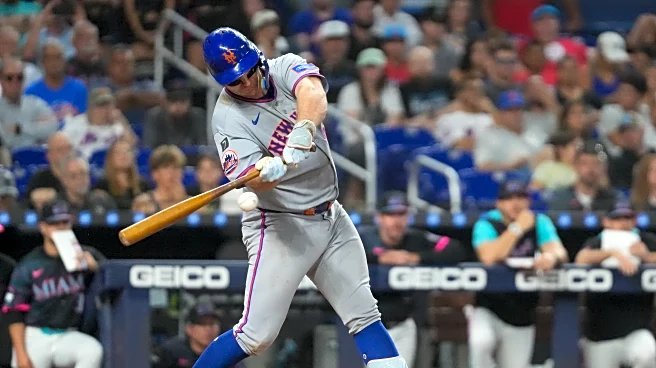
Now, they’ve topped themselves by signing slugging first baseman Pete Alonso, who agreed to an even more lucrative five-year, $155 million deal on Wednesday morning. It’s the second-richest deal ever signed by the team, and a kind of boldness that fans have been begging for, but would have been unthinkable in years past.
Earlier this winter, I’d read talk of big moves in the works, but I was still feeling skeptical. Can you blame me? It’s been over three years since General Manager/VP Mike Elias made that infamous “liftoff” comment. It was August 2022, and the team had just traded away infielder Trey Mancini and reliever Jorge López at the deadline. Perhaps to lessen the sting, Elias declared, “It’s liftoff from here for this team.” It was an electrifying quote, signaling that the Orioles were ready to transition from rebuilding to competing—and that would mean spending!
But “liftoff” turned out to mean something very different to Elias than it did to the fans. In 2023, the Orioles’ big signings were veteran thrower Kyle Gibson (a one-year, $10 million deal), catcher James McCann, inherited from the Mets on a four-year, $40.6 million deal, and infielder Adam Frazier, on a one-year, $8 million deal. The next season, a one-year rental of Corbin Burnes for $15.6 million was nice, but trying to revive Craig Kimbrel’s career as a closer wasn’t. Other new additions: Tony Kemp. Jacob Webb. Whomp whomp.
Fast forward to this past winter, and the pattern repeated itself. The Orioles tried to resign Burnes, but weren’t willing to match Arizona’s six-year, $210 million offer. Nor to make a splash for an impact bat to replace Anthony Santander, whose took his 44 home runs in ’24 to Toronto. Instead, the team took a “depth over quality” approach by signing 41-year-old Charlie Morton (one-year, $15 million deal), 35-year-old Tomoyuki Sugano from Japan (one-year, $13 million), talented but injury-prone outfielder Tyler O’Neill (three-year, $49.5 million), and Dylan Carlson and Gary Sánchez as outfield and catcher depth, respectively.
The main consequences of that conservative approach soon became painfully clear: the rotation imploded, and the team missed the playoffs. Grayson Rodriguez missed the season with elbow and shoulder issues. Zach Eflin hit the injured list with a lat strain. Kyle Bradish and Tyler Wells were already out recovering from Tommy John surgery. Morton was historically bad, posting a 10.89 ERA through his first 20 innings—the worst mark in baseball among pitchers with 11-plus innings. Lefty Cade Povich had an ERA north of 6.00 in that stretch, too. By late April, Baltimore sat at 11-18, fourth-worst in all of baseball, and their playoff odds had cratered from 48.2% on Opening Day to just 14%.
After winning 101 games in 2023 and 91 in 2024, the Orioles’ 2025 offseason approach now seems a bit like malpractice. Elias clarified at one point that “liftoff” hadn’t meant aggressive free agent spending in one dramatic offseason, but rather a gradual “upward arc” of sustained improvement over several years. Fair enough as a philosophical approach to team building, but the word itself became a punchline, a cruel mockery of fan’s hopes.
Which brings us to December 2025.
Elias has acknowledged both deeper pockets and outside pressures as drivers for action this winter. Last year, social media and message boards erupted with frustration when the Morton and Sugano signings were announced, and Birdland Caravan events became venues for fans cross-examining the front office about the team’s commitment to competing. Elias’s statements this year about having payroll room for “multiple moves” suggests he’s aware of how last winter’s approach landed.
Matching a $150 million offer to Schwarber seemed to signal a new level of commitment. Now they’ve actually gone and taken out the checkbook.
There’s good and bad to say about the deal. Alonso brings something Baltimore lacked in 2025: a proven middle-of-the-order power threat who can take pressure off Gunnar Henderson, with his 38 home runs last season and elite exit velocity metrics (97th percentile). It’s also a deal with some risk: Alonso will be 36 in the final year of the contract, he’s a below-average defender at first base, and he offers nothing on the basepaths.
But if nothing else, it signals to the rest of baseball that the Orioles are serious. Brilliant or bust, at least on paper, the deal suggests something in the front office has shifted.
Another thing it signals: more pitching. The Orioles now have a positional logjam at first base, one that stands to be resolved by dangling surplus power-hitting infielders for rotation arms. The team’s aggressive pursuit of Ranger Suárez and Michael King feels a bit more plausible now. And the payroll situation is still sunny enough to make another big signing—they have just $148 million committed for 2026 even after adding Alonso, with minimal commitments beyond that.
For years, Orioles fans have watched other organizations in their division spend freely while being told to trust the process, believe in the farm system, and wait for the right moment. The frustration boiled over in 2025 when conservative roster construction led to a last-place finish despite having MVP-caliber talent. I hate to say “it’s liftoff for real, this time.” But on the final day of the Winter Meetings in Orlando, Mike Elias and David Rubenstein’s ownership group may have finally taken the big swing that will make this fanbase believe.