




In another world, 2026 was Dylan Ross’ time to shine. The right-hander posted a cumulative 2.17 ERA in 54.0 innings in 2025, allowing 49 hits, walking 33, and striking out 80, with the majority of those innings coming in Triple-A Syracuse. He was on the cusp of turning into a bona fide major leaguer, and with the way David Stearns manages bullpens, rotating arms on the margins and calling non-established players with options up-and-down, the pathway forward for Ross to establish himself was there;
all he had to do was seize that brass ring and run with it, something he was perfectly capable of doing thanks to his upper-90s fastball velocity and elite split-finger fastball.
Instead, Dylan Ross had a season that, at best, could be described as a disappointment.
The 25-year-old began the season on Syracuse’s 7-Day Injured List due to arm fatigue. He was activated at the end of April, missing roughly the first month of the season, and his performance was like night-and-day as compared to his time in Triple-A in 2025. Ross got smacked around in his 2026 debut, allowing two earned runs in 2/3 of an inning, and things just never improved. In 38 games from the end of April until the end of August, the right-hander posted a 6.94 ERA in 36.1 innings, allowing 37 hits, walking 31, and striking out 45.
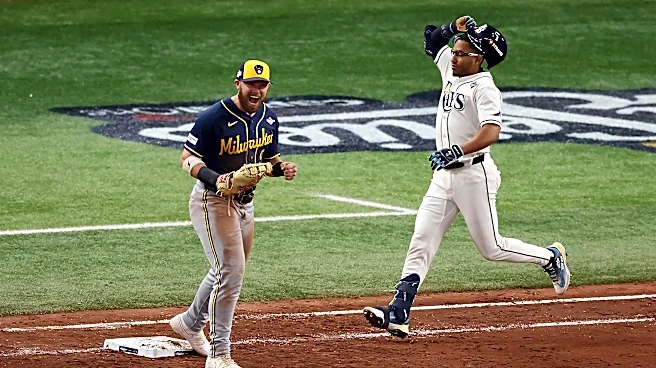
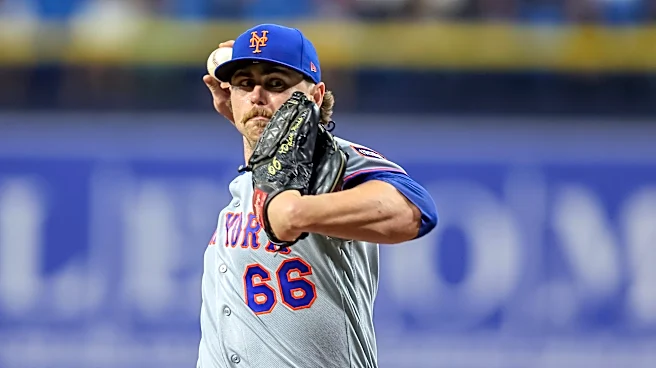
On September 1, when rosters expanded, Ross was recalled by the Mets along with Nick Morabito. He was summoned by Andy Green in the seventh inning of the Mets’ game against the Tampa Bay Rays and threw a scoreless inning, keeping the team in the game and not allowing Tampa to build on their 5-2 lead. He got Jonny DeLuca to ground out weakly to second, got Jorge Mateo to softly pop-up to first, and induced a sharp Chandler Simpson groundout to second.
The right-hander was sent back down to Syracuse after the game and closed out the season stronger, appearing in 7 games and posting a slightly improved 3.53 ERA in 7.2 innings, allowing 8 hits, walking 6, and striking out 9. All in all, he posted a 6.34 ERA in 44.0 innings over 45 appearances with the Syracuse Mets, allowing 45 hits, walking 37, and striking out 54.
Obviously, what sticks out when reviewing his year is the fact that the right-hander issued 37 free passes in 44 innings, translating to a 7.6 BB/9 rate and 17.6% walk percentage. Ross not having the best command and his splitter being most effective dropping out of the zone is something that we already knew that came baked into his profile; in 2025, he walked 33 batters in 54.0 innings, good for a 5.5 BB/9 rate and 14.7% walk percentage, so this was nothing new. But in his second go-around in Triple-A, hitters were seemingly more discerning and guarded against his splitter. In 2025, batters hit a microscopic .024/.180/.024 against the pitch, with a 49% whiff rate, while in 2026, they hit .173/.302/.288 against it with a 42% whiff rate. More pressure was put on his fastball and batters ended up hitting .313/.451/.512 against it, up from .184/.304/.263 in 2025.
In particular, home runs were a problem for Ross. He maintained very strong batted ball spray trends, posting a 17.5% line drive rate, 56.4% groundball rate, and 25.6% flyball rate, but in allowing 9 home runs, he had a catastrophic 30.0% HR/FB rate. Given Ross’ predilection for walks, and the high number of hits he allowed, it ended up being a disastrous combo; five of the nine home runs Ross allowed were solo shots and four came with men on base.
The building blocks for Ross to thrive are certainly there; his strikeout rate was still above-average, his whiff and swinging strike rates are elite, and on the whole, he still limited in-zone contact and hard hits at an above-average level. The question is, can his strengths overcome his weaknesses?