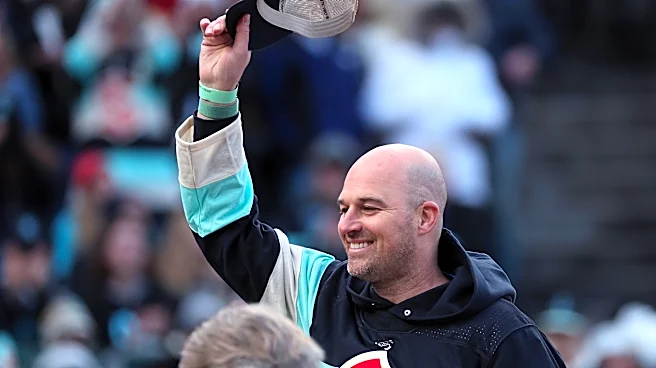









Matt Hasselbeck, one of the most beloved former players for the Seattle Seahawks, recently helped with the ongoing research on CTE. Currently, that disease can only be diagnosed after death. Hasselbeck is healthy and feeling good, yet still underwent testing which will be used to try and develop methods to diagnose CTE in living patients noting that they need “people who are feeling good to step up to the plate and volunteer.”
As a QB, Hasselbeck received his fair share of hard hits, but notes that
many of his former teammates suffered more hits, particularly those in the trenches.
That’s why the three-time Pro Bowl selection recently spent two days at Boston University going through a battery of scans and tests to determine how much all those collisions affected his brain. The hope is that it will be a small step toward a goal that has eluded doctors: diagnosing chronic traumatic encephalopathy in the living.
“They need guys like me. They need people who are feeling good to step up to the plate and volunteer,” Hasselbeck said. “I played quarterback, so I didn’t take some of the hits that a lot of my teammates took.
But the guys who were blocking for me, or playing special teams, or trying to get the ball back for me on defense, I wanted to do something. They had my back, so in a way I’d like to have their back.”
The article notes that while there are similarities between CTE and Alzheimer’s, there are key differences that make the methods for diagnosing Alzheimer’s unable to be used for CTE, which can only be officially diagnosed after death. The study that Hasselbeck participated in is looking into these differences, with two types of participants: former football players, and those who didn’t play contact sports, but were diagnosed with Alzheimer’s. Compared to Alzheimer’s research, CTE studies are in their infancy.
Hasselbeck admitted to having three concussions prior to starting college and suffering more before his playing days were over. He hopes that his contribution to this study will help further the research and lead to diagnosing CTE much earlier.