







Fighter pay discourse is never going away.
For as long as Ultimate Fighting Championship (UFC) has existed, debate surrounding how much fighters should be paid has followed the promotion everywhere — and despite the company now landing a reported $7.7 billion media rights deal with Paramount, the conversation is only getting louder.
Especially when entry-level UFC fighters are still making relatively tiny contracts.
Most fighters who enter the UFC through Contender Series typically sign deals worth
around $10,000 to show and $10,000 to win. Once taxes, management fees, coaching percentages and training camp expenses are factored in, many fighters reportedly walk away with closer to $12,000-$15,000 total after a victory.
And now that UFC has become a sports giant often compared to leagues like the NFL, NBA and MLB, critics continue questioning why rookie pay remains so low.
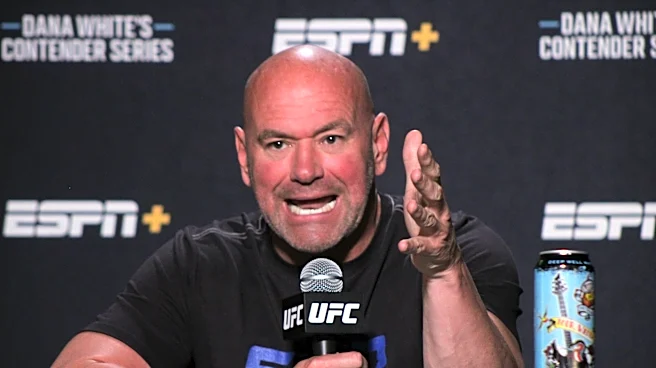
According to UFC CEO Dana White, though, the answer is simple:
The promotion is still figuring out whether those fighters even belong in UFC to begin with.
“When people talk about [fighter pay], you know what they don’t compare it to?” White told Rolling Stone. “What a guy makes when he goes into his boxing debut.”
“The difference is because we’re looked at like a league,” White continued. “Some of these guys are making $100 a round. Since 2001, the pay has gone like this,” he added while motioning upward. “If you look at the deal we just cut with Paramount, imagine how it’s going to look over the next seven years. Fighter pay has continued to go up and will do so as long as we continue to be successful.”
White then pushed back directly against the idea that unproven newcomers should immediately receive massive contracts.
“If you come into the UFC, let’s say you sign a three-fight deal,” White said. “We’re gonna find out if you even belong in the UFC. So, I should pay you $370K to see if you belong in the UFC?”
“The question becomes: what do you pay someone to come in and see if they are good enough to be here?” he continued. “What we built is very successful and guys make a lot of money in the UFC. Plus there is a middle class in the UFC.”
To be fair, White’s argument does carry some logic.
Not every prospect works out.
Did Shem Rock — who went 0-2 in the promotion and got cut — deserve a $370 contract? What about Jose Medina, who went 0-4 and even lost on Contender Series? What about Marek Bujlo, who went 0-1 and got cut after a horrid fight?
There are countless examples of fighters getting signed, losing once or twice and immediately disappearing from the roster. Some newcomers simply are not UFC caliber despite looking dominant on the regional scene.
Still, the optics remain difficult when fighters on the sport’s biggest stage openly discuss needing post-fight bonuses to “change their life” financially.
And despite UFC becoming a billion-dollar sports powerhouse, plenty of lower-level fighters still juggle side jobs while training full-time.
White insists fighter pay has consistently risen every year since the Fertitta brothers purchased the promotion back in 2001.
“When we first bought this, most of these guys had jobs where they would train on the side and fight in the UFC,” White said. “Now it is at a level where everyone is a professional athlete.”
Well… mostly.
Because until those entry-level contracts significantly increase, many UFC newcomers will probably continue balancing both fighting careers and regular jobs at the same time.
And with UFC now reportedly bringing in roughly $1.1 billion annually from the Paramount deal alone, the pressure to raise minimum fighter pay is probably not disappearing anytime soon.